
Certified Shorthand Reporter (CSR) Professional
$69.00
- Buy to unlock unlimited access to all Quiz questions and Answers in this Quiz.
- After purchase you can print a PDF of the whole quiz at any point. The PDF will contain the questions and the correct answers.
About this Exam
The Certified Shorthand Reporter (CSR) designation is a
prestigious certification for individuals pursuing high-level careers in court
reporting, deposition services, and real-time captioning. This exam validates a
reporter's capability to capture and transcribe spoken words with exceptional
speed and accuracy, primarily using a stenotype machine or voice writing
methods. The CSR credential demonstrates proficiency, professionalism, and
readiness for a demanding role in a variety of legal and corporate environments.
It is designed for students who have completed a court reporting program and
are seeking their official state or professional certification, as well as
working reporters looking to advance their credentials.
Ready to test your knowledge?
Buy Now to Access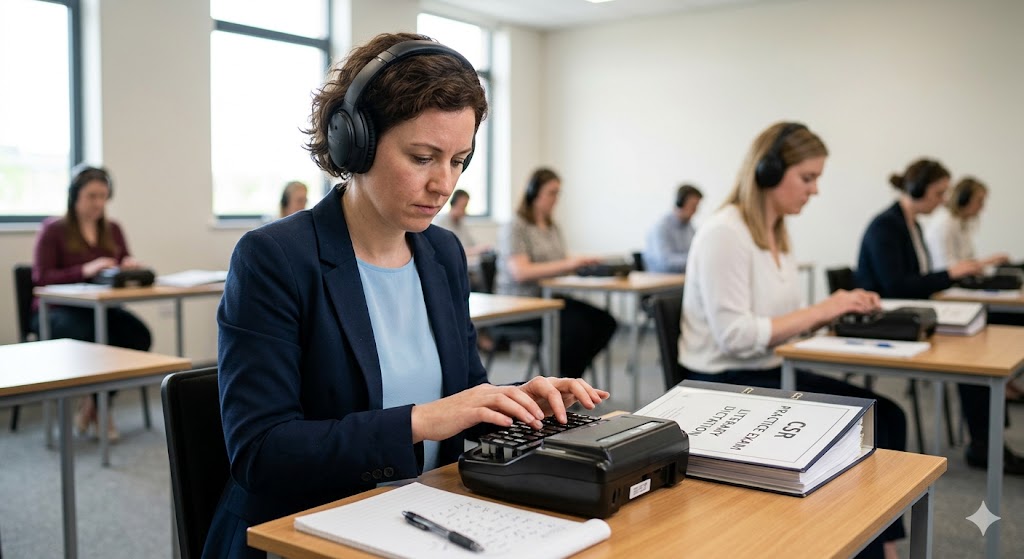
Additional Information
What the Course Entails and Exam Details
A comprehensive CSR preparation course covers a wide range
of critical skills and knowledge. The primary focus is developing high-speed,
accurate shorthand writing. You will study advanced shorthand theory, enabling
you to build speed and reduce errors. Courses also emphasize mastering medical
and legal terminology, as well as a thorough understanding of court procedures
and professional ethics. Grammar, punctuation, and vocabulary are essential
components, ensuring the creation of a precise final transcript. The syllabus
is designed to take you from initial learning to the speed required for
successful certification and a competitive career.
What to Expect in
the Final Exam
The Certified Shorthand Reporter (CSR) exam typically
consists of two distinct parts: a written knowledge test and a practical skills
examination. The written test generally covers a broad range of topics
including terminology, court procedures, grammar, and ethics, often presented
in a multiple-choice format. You will have a specific time limit to complete
this section.
The practical skills portion is a comprehensive test of your
ability to capture and transcribe live speech. This section involves
multi-speed dictation. You will be required to transcribe a series of
dictations at varying speeds, often covering different types of content such as
literary material, jury charge, and testimony (q&a). Passing scores require
exceptional accuracy, with transcription accuracy rates usually exceeding 95%
on the transcribed material within specified time constraints. Some jurisdictions
may have slightly different requirements or additional sections, so it's
crucial to consult your local certifying board for exact details. Expect a
structured and strictly timed environment.
How to Study and
Exam Centers
Effectively preparing for the CSR requires dedicated and
focused effort, combining both theory and practical skill-building. Implement
these actionable study strategies:
- Practice,
Practice, Practice: Consistent, intense, and regular speed drills are
vital. Utilize various audio materials, including professional dictation
software, online resources, and real-world recordings, simulating the exam
format. Gradually increase the speed of your practice material.
- Drill
Theory: Dedicate time each day to drilling shorthand theory, focusing
on briefs and phrases. This is critical for increasing speed and accuracy.
- Transcribe
Your Work: Make sure to transcribe your practice notes. Focus on
creating a perfect final product, paying close attention to grammar and
punctuation.
- Focus
on Accuracy: Accuracy is paramount. Strive for perfection in your
transcriptions. Identify your error patterns and create targeted practice
to eliminate them.
- Utilize
Practice Exams: Practice tests like this one are invaluable. They
familiarize you with the format, types of content, and timing of the
actual exam, helping build confidence.
- Join
a Study Group: Collaborate with other aspiring CSRs. Sharing
strategies and practicing together can provide motivation and different
perspectives.
When it comes to taking the CSR exam, locations and
procedures are typically regulated by the state or organization offering the
certification. You may need to visit a designated physical testing center or a
authorized school. Some exams may even incorporate a remote proctoring
component for specific portions. You'll need to register through the official
website or portal of your state's licensing board or the relevant professional
organization. Ensure you meet all eligibility requirements and are familiar with
the specific rules and equipment allowances well in advance of the test date.
Job Opportunities
from the Course
Achieving your Certified Shorthand Reporter (CSR)
certification opens the door to numerous exciting and stable career paths. This
qualification unlocks a wide range of job opportunities across the legal and
communications industries. Some common job titles include:
- Court
Reporter (within a courtroom environment)
- Freelance
Deposition Reporter
- Captioner
(for live television broadcasts and events)
- Communication
Access Realtime Translation (CART) Provider
- Legal
Transcriptionist
- Realtime
Writer for corporations and official meetings
Frequently Asked Questions
Reviews
5.0
Based on 0 reviews
Leave a Review
No reviews yet. Be the first to review!