
Chemical Dependency Practice Test
$69.00
- Buy to unlock unlimited access to all Quiz questions and Answers in this Quiz.
- After purchase you can print a PDF of the whole quiz at any point. The PDF will contain the questions and the correct answers.
About this Exam
Embarking on a career dedicated to helping individuals
overcome substance abuse is both noble and challenging. The first crucial step
often involves passing a rigorous licensure or certification exam that assesses
your readiness to enter the chemical dependency counseling field. This Chemical
Dependency Practice Exam is designed precisely for that reason: to provide
aspiring counselors with a realistic and valuable resource for assessing their
knowledge and confidence levels before the final test.
It targets individuals completing their education in
chemical dependency counseling, behavioral health, or related fields. The guide
is structured to help students identify their strengths and weaknesses across
core counseling competencies. This information empowers them to focus their
studies effectively, making the journey toward becoming a certified
professional smoother and more assured. Utilizing practice exams is a proven
strategy for reducing test anxiety and increasing first-time pass rates. This
comprehensive guide and accompanying practice materials provide the insights
needed to approach the actual exam day with confidence.
Ready to test your knowledge?
Buy Now to Access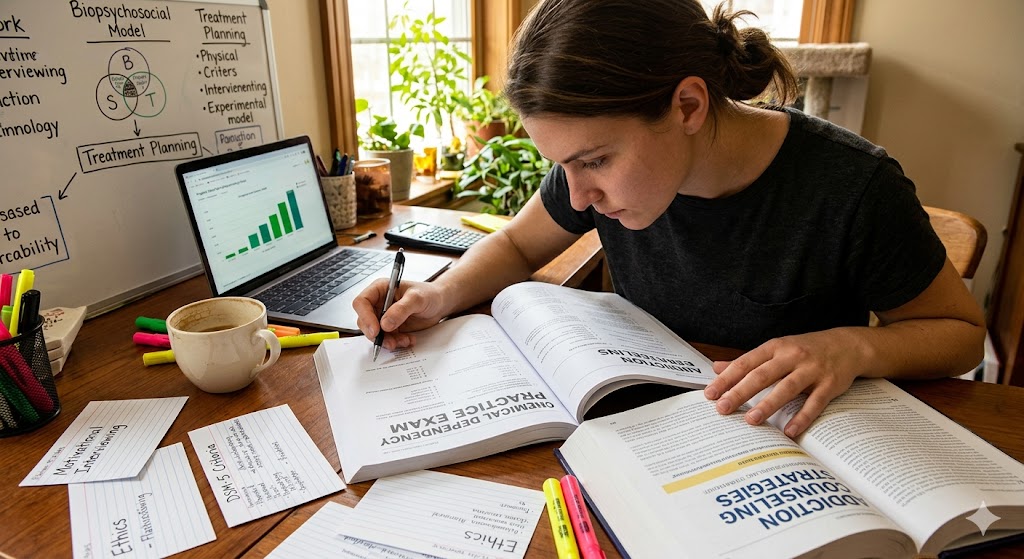
Additional Information
What the Course
Entails and Exam Details
While the specific curriculum and terminology may vary
slightly by state or certification body (such as NAADAC or IC&RC), core
concepts for chemical dependency counseling are universally essential. This
study guide and practice exam are built upon common core competencies. You can
expect to encounter questions that delve deep into these foundational domains.
Understanding these areas is critical not only for passing the test but also
for future professional success.
Core domains typically covered in this study guide include:
- Models
of Addiction: This foundational area explores various theories on the
development of addiction, including biopsychosocial, spiritual, and
medical models. A thorough grasp of these diverse perspectives is crucial
for effective treatment planning.
- Assessment
and Diagnosis: You will be tested on your ability to use standard
screening tools (like the CAGE or AUDIT) and diagnostic criteria (like the
DSM-5) to identify substance use disorders and co-occurring mental health
conditions.
- Counseling
Theories and Approaches: Expect questions regarding major counseling
modalities used in addiction treatment, such as Cognitive Behavioral
Therapy (CBT), Motivational Interviewing (MI), and person-centered
counseling. Understanding how and when to apply these is paramount.
- Group
Counseling: This section addresses the dynamics, techniques, and
ethical considerations inherent in leading therapeutic groups for
individuals struggling with chemical dependency.
- Ethical
and Professional Responsibilities: Understanding legal and ethical
guidelines, maintaining professional boundaries, client confidentiality
(e.g., HIPAA), and prioritizing cultural competence are all vital
components of chemical dependency counseling licensure.
- Family
Counseling and Education: Recognizing addiction as a family disease,
this domain assesses your understanding of family systems, codependency,
and effective strategies for involving families in the recovery process.
- Relapse
Prevention and Recovery Support: Testing your knowledge of trigger
identification, developing relapse prevention plans, and connecting
clients to supportive communities and resources (like 12-step programs).
What to Expect in
the Final Exam
While the format of the actual licensure exam varies by
state and credentialing board, it is typically a multiple-choice,
computer-based examination. It is designed to evaluate both foundational
knowledge and the practical application of counseling skills in real-world
scenarios. Students should familiarize themselves with the specific testing
procedures of their relevant certifying body. Understanding what to expect can
significantly ease pre-test jitters.
Here are some illustrative general expectations for a
typical chemical dependency counselor exam:
- Format:
The exam usually consists of 100 to 200 multiple-choice questions. These
questions may include classic multiple-choice items or scenario-based
questions requiring critical thinking and decision-making.
- Passing
Score Requirements: Passing scores often range from 70% to 75% or a
corresponding scaled score. It is absolutely essential to check with your
specific state licensing board for their required passing threshold.
- Time
Limits: You are typically given between 2 and 4 hours to complete the
examination, allowing sufficient time to carefully review each question.
Proper time management during the test is key.
- Rules
and Regulations: Strict protocols are always in place. Be prepared to
present valid government-issued identification at the test center.
Personal belongings, electronic devices, and dynamic study aids are
generally prohibited. Always consult the official candidate handbook for
complete rules.
How to Study and
Exam Centers
Effective preparation is the single biggest factor in exam
day success. Passing a chemical dependency licensing test requires more than
just knowing facts; it demands an understanding of counseling principles and
their application. Here are some actionable strategies to guide your study
efforts. First, diversify your study materials by utilizing a combination of
textbooks, online resources, and official study guides. Create a consistent
study schedule that allocates dedicated time each day to review core topics.
Actively engaging with practice exams is one of the most
beneficial steps you can take. They provide familiarity with the types of
questions and formatting you will encounter, while simultaneously highlighting
specific knowledge gaps for focused review. Consider forming study groups with
fellow students to discuss challenging concepts and share different
perspectives on counseling scenarios. Focusing on understanding the
"why" behind ethical principles and treatment approaches will prove
invaluable for scenario-based questions. Take time to thoroughly review
questions you answered incorrectly during practice, understanding the rationale
for the correct response.
Most state-level licensure exams for chemical dependency are
administered through dedicated computer-based testing centers. The most common
organizations overseeing these test administrations are Pearson VUE or
Prometric. You will typically be required to register online, pay the exam fee,
and schedule your appointment at a physical location convenient for you. Make
sure to arrive early at the testing center, allowing ample time for check-in
procedures. Remember to bring necessary identification. Planning your route and
check-in ahead of time can significantly reduce stress on exam day.
Job Opportunities
from the Course
Successfully navigating the chemical dependency counseling
exam opens the door to numerous impactful and rewarding career opportunities
within the behavioral healthcare landscape. Individuals with this certification
are in high demand across a diverse range of settings. Working in this field
allows you to make a tangible difference in people's lives on a daily basis.
A certification or license as a Chemical Dependency
Counselor unlocks various job titles and career paths:
- Chemical
Dependency Counselor (CDC)
- Substance
Abuse Counselor
- Addiction
Counselor
- Recovery
Coach / Recovery Support Specialist
- Residential
Treatment Counselor
- Outpatient
Counselor
- Case
Manager in Addiction Services
- Prevention
Specialist
- DUI /
DWI Educator or Assessor
- Behavioral
Health Technician (working specifically with addiction populations)
These professionals work in settings like:
- Residential
treatment centers
- Outpatient
substance abuse programs
- Hospitals
(detox units and general inpatient)
- Community
health clinics
- Government
agencies (correctional facilities, social services)
- Private
counseling practices
- Schools
and universities
- Non-profit
recovery organizations
Frequently Asked Questions
Reviews
5.0
Based on 0 reviews
Leave a Review
No reviews yet. Be the first to review!