
Clinical Practice SWES Practice Exam
$69.00
- Buy to unlock unlimited access to all Quiz questions and Answers in this Quiz.
- After purchase you can print a PDF of the whole quiz at any point. The PDF will contain the questions and the correct answers.
About this Exam
The Clinical Practice SWES Practice Exam, often referred to as a critical stepping stone towards earning Licensed Clinical Social Worker (LCSW) credentials, is a vital tool for social work professionals striving for the next level in their careers. Designed by Social Work Examination Services (SWES), this comprehensive practice resource mirrors the structure, content, and rigor of the official Association of Social Work Boards (ASWB) Clinical level licensing examination. This exam is specifically intended for social workers who have already completed their Master of Social Work (MSW) degree and the requisite supervised clinical experience hours in their jurisdiction, aiming to become fully licensed for independent clinical practice.
Ready to test your knowledge?
Buy Now to Access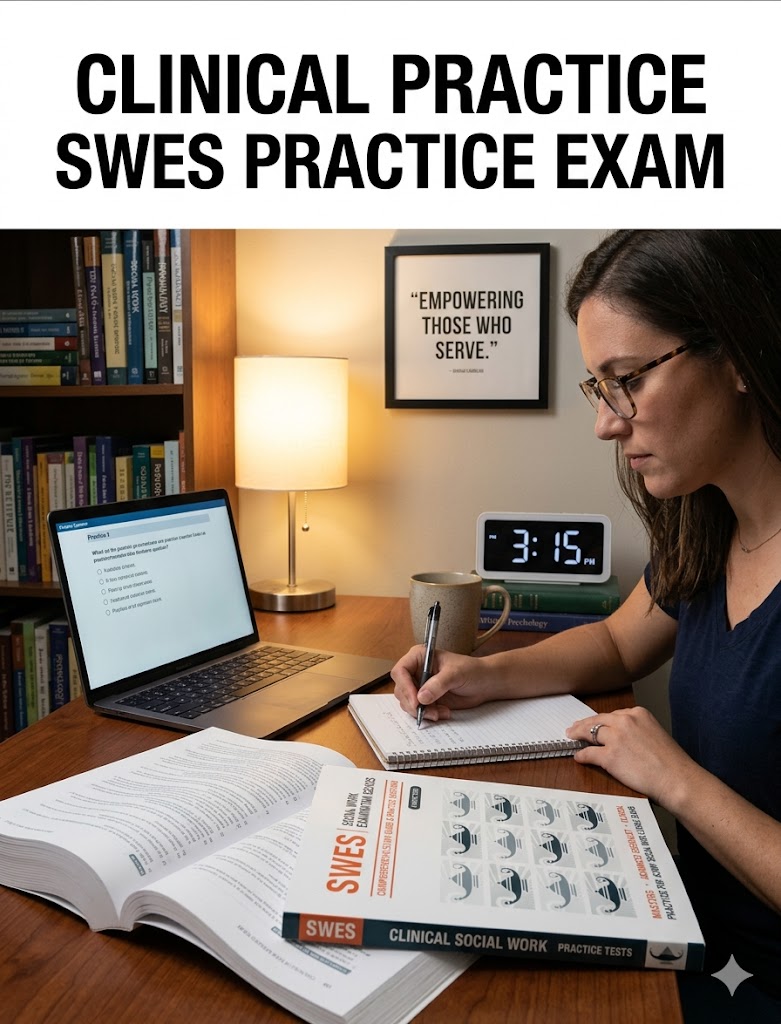
Additional Information
What the Course Entails and Exam Details
As a thorough practice simulation, the SWES resource is structured around the same four major content areas, known as knowledge, skills, and abilities (KSAs), that are tested in the official ASWB Clinical examination. The core topics covered in detail include:
Human Development, Diversity, and Behavior in the Environment (approx. 24% of the exam): This section covers models of human behavior, theories of diversity, and the impact of the environment on clients.
Assessment, Diagnosis, and Treatment Planning (approx. 30% of the exam): This major area assesses competence in clinical assessment, understanding the DSM-5, creating treatment plans, and intervention strategies.
Psychotherapy, Clinical Interventions, and Case Management (approx. 27% of the exam): Students must demonstrate knowledge of various therapeutic techniques, case management principles, and models of practice.
Professional Values and Ethics (approx. 19% of the exam): A crucial component that evaluates understanding of the NASW Code of Ethics, confidentiality, and professional boundaries in a clinical setting.
The SWES practice material provides comprehensive explanations and rationales for every question, ensuring you understand not just the correct answer, but the underlying concepts and clinical reasoning involved.
What to Expect in the Final Exam
While the SWES resource is a practice tool, it is designed to prepare you for the official ASWB Clinical level examination, which is a significant professional milestone. Here is what you can expect during the official licensing exam:
Format: The actual exam is a multiple-choice, computer-administered test consisting of 170 questions. Only 150 of these questions count toward your final score; the remaining 20 are pretest questions used to gather data for future versions of the exam.
Time Limit: You are given four hours to complete the examination. Efficient time management is crucial to ensure all questions are answered.
Passing Score: The passing score is not a fixed percentage but is determined using a scaled score. Candidates are typically required to have a scaled score of 70, which is based on the number of questions answered correctly out of the 150 scored questions.
Specific Rules: On the day of the exam, you must present a valid, government-issued photo ID at the testing center. Standard testing protocols, such as restrictions on personal belongings (phones, notes, bags) in the testing room, are strictly enforced.
How to Study and Exam Centers
Preparation is the key to success. Here are actionable strategies for studying and information on how to take the exams:
Actionable Study Strategies:
Utilize SWES Practice Materials: Actively engage with the SWES Clinical Practice Exam questions. Do not just take the tests; meticulously review both correct and incorrect answers and study the provided rationales.
Focus on Weaknesses: Identify content areas where you struggle. Use the detailed feedback from practice questions to create a targeted study plan that focuses on these domains.
Simulate Exam Conditions: Periodically take full-length practice tests under the same four-hour time constraint and multiple-choice format as the real ASWB exam. This builds endurance and improves time management.
Create a Study Schedule: Develop and adhere to a structured study schedule. Consistency over several weeks or months is generally more effective than cramming.
Use Supplemental Resources: While the SWES material is comprehensive, supplementing with additional resources, such as textbook reviews of key theories or ethics workshops, can provide a deeper understanding.
Where and How to Take the Exams:
Practice Exam: The SWES Clinical Practice Exam and materials are typically available through the official SWES website.
Final Licensing Exam: The official ASWB Clinical examination is administered exclusively at Pearson VUE testing centers throughout the United States and Canada. You must first apply for licensure through your state or provincial social work board. Once approved, you will receive an Authorization to Test (ATT) and can schedule your exam directly with Pearson VUE.
Job Opportunities from the Course
Successfully preparing for and passing the ASWB Clinical level exam (the ultimate goal this practice resource supports) leads directly to obtaining clinical licensure. This credential unlocks a wide array of career paths for independent and specialized practice, including:
Licensed Clinical Social Worker (LCSW) / Independent Clinical Social Worker (ICSW): This is the ultimate career path, enabling independent clinical practice and supervision of other social workers.
Private Practitioner / Psychotherapist: LCSWs often establish successful private practices, providing direct counseling and therapy to individuals, couples, and families.
Clinical Supervisor: With appropriate experience, an LCSW can supervise newer social workers pursuing their clinical licensure.
Medical / Hospital Social Worker: LCSWs are in high demand in hospitals, clinics, and healthcare systems, often in specialized roles like oncology or palliative care.
Mental Health Social Worker / Crisis Interventionist: Employment in community mental health agencies, leading therapeutic programs and providing crisis support.
Social Work Administrator / Director: Moving into leadership and management roles within social service agencies, healthcare organizations, or non-profits.
Obtaining clinical licensure significantly increases career autonomy, specialization possibilities, and earning potential within the social work profession.
Frequently Asked Questions
Reviews
5.0
Based on 0 reviews
Leave a Review
No reviews yet. Be the first to review!