
Coaching Principles Practice Test
$69.00
- Buy to unlock unlimited access to all Quiz questions and Answers in this Quiz.
- After purchase you can print a PDF of the whole quiz at any point. The PDF will contain the questions and the correct answers.
About this Exam
The Coaching Principles examination is a seminal step for aspiring athletic coaches seeking formalized certification and a deeper understanding of the profession.
This exam validates foundational knowledge required to lead teams effectively, ensuring a safe, positive, and competitive environment for athletes.
It is designed for new and experienced coaches alike, working at youth, high school, and collegiate levels, who need to shorten their learning curve and master the psychological, tactical, and administrative aspects of coaching.
By passing this test, coaches demonstrate their commitment to the holistic development of their athletes and their adherence to national standards for sport education.
Ready to test your knowledge?
Buy Now to Access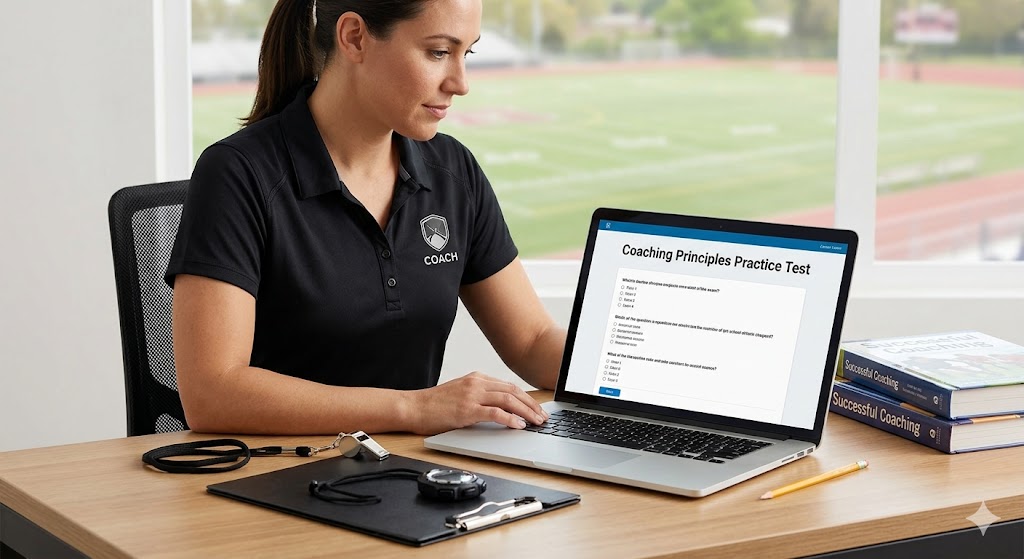
Additional Information
What the Course Entails and Exam Details
The course preceding this practice exam is highly comprehensive, covering five core pillars of successful coaching derived from leading sport sciences and the wisdom of veteran coaches.
Candidates must dive deep into Foundational Skills, which involve developing a strong coaching philosophy, determining clear objectives, and mastering leadership styles that drive team culture.
A significant focus is placed on Understanding and Managing Athletes’ Behavior, exploring communication techniques, motivational strategies, and corrective discipline methods appropriate for different development stages.
The syllabus also extensively covers Teaching and Management, instructing coaches on how to teach technical and tactical skills, plan and conduct effective practices, and implement the games approach to learning.
Furthermore, critical information regarding Physical Training and Nutrition, including basic training principles, fueling athletes, and addressing drug abuse, is essential knowledge.
Finally, the course addresses Management Skills, ensuring coaches understand team management, relationship building with parents and officials, and critical risk management strategies to protect themselves and their athletes.
What to Expect in the Final Exam
The final Coaching Principles Exam is typically administered online, allowing flexibility for busy coaches to complete it at their own pace.
The standard format consists of 50 to 100 multiple-choice and true/false questions.
These questions do not merely test rote memorization but rather assess your ability to apply the principles of coaching to real-world scenarios depicted through interactive content and case studies.
You can often expect an open-book format, where you are encouraged to refer to your textbook or course materials to ensure accuracy in your responses.
While the exam may not be strictly timed, most candidates complete it within one to two hours.
The typical passing score is 80 percent.
Upon passing, you are usually added to a national coaches registry, and a certificate of completion is made available for download immediately to present to athletic administrators.
How to Study and Exam Centers
Preparation for the Coaching Principles Exam requires a strategic approach that goes beyond casual reading.
Start by treating your designated textbook, such as Human Kinetics' Successful Coaching, as your primary resource.
Read each unit carefully, focusing on the interactive scenarios and video summaries, as these form the basis of the scenario-based exam questions.
Utilize the Coaching Principles Practice Test repeatedly; analyze not just the correct answers, but why the incorrect answers are wrong, which deepens your understanding of the principles.
Many study guides and course portals offer ready-made 10-question quizzes for each unit, which are excellent tools for checking comprehension before moving on.
Regarding testing centers, the Coaching Principles exam is most commonly taken through online portals managed by organizations such as Human Kinetics Coach Education or state-specific high school associations (e.g., IHSA, CIF).
You log in, purchase the course package, study the material, and access the exam directly from your dashboard when ready.
Some athletic departments or specialized sports schools may set up physical computer labs for group testing, but the process remains digitally based.
Job Opportunities from the Course
A Coaching Principles certification unlocks multiple career paths within the sports industry.
It serves as a prerequisite for leading roles in various educational and community organizations.
Here are specific job titles this certification helps you secure:
Head Coach (Youth League, Middle School, or High School levels)
Assistant Coach (all levels, including collegiate roles)
Athletic Director
Recreational League Coordinator
Sports Program Administrator
Fitness or Strength and Conditioning Instructor
Camp Director
Personal Athletic Trainer or Private Coach
Sports Mentor or Youth Development Specialist
Frequently Asked Questions
Reviews
5.0
Based on 0 reviews
Leave a Review
No reviews yet. Be the first to review!