
Collateral Duty Inspector (CDI) Practice Test
$69.00
- Buy to unlock unlimited access to all Quiz questions and Answers in this Quiz.
- After purchase you can print a PDF of the whole quiz at any point. The PDF will contain the questions and the correct answers.
About this Exam
Thinking about becoming a Collateral Duty Inspector (CDI)? It’s a key safety role, primarily in aviation and maritime maintenance, where you’re responsible for verifying and documenting the quality of work performed by other technicians. This certification, or qualification, demonstrates your advanced knowledge and commitment to rigorous safety standards, ensuring that maintenance tasks are completed correctly and adhere strictly to regulations. This study guide is designed for dedicated aircraft mechanics, maintenance technicians, and quality control personnel in relevant fields who are aiming to achieve this critical designation. Achieving CDI status often signifies a stepping stone in responsibility and expertise within your technical trade.
Ready to test your knowledge?
Buy Now to Access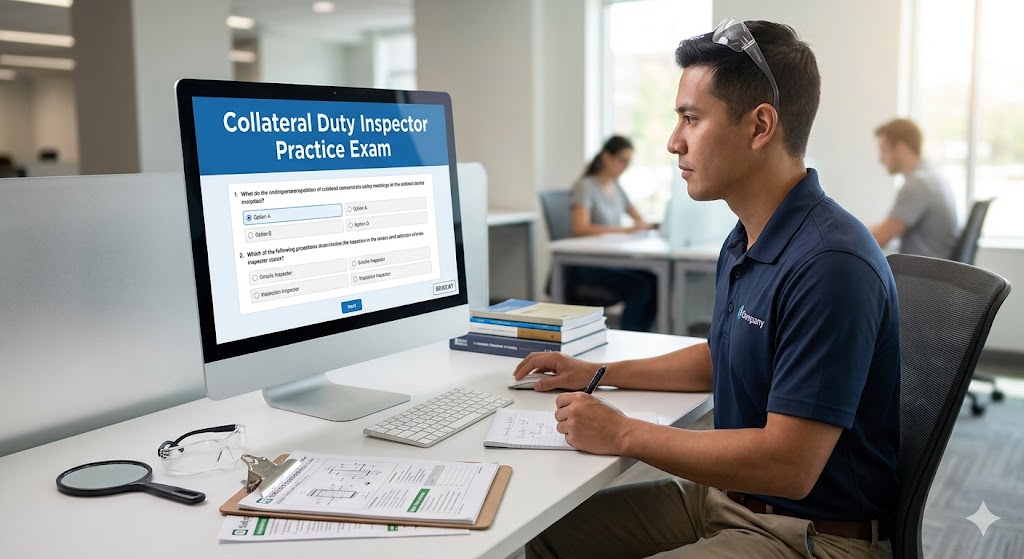
Additional Information
What the Course Entails and Exam Details
Preparing for the CDI exam, which a practice test can help with, involves mastering a range of crucial topics. You will dive deep into detailed knowledge of technical publications, maintenance manuals, safety protocols, inspection techniques, and documentation requirements specific to your branch (e.g., aviation, specific airframes, or maritime systems). Key skill areas covered typically include: understanding complex blueprints and specifications; interpreting and applying Federal Aviation Regulations (FARs) or equivalent maritime rules; identifying defects, wear, and improper maintenance practices; ensuring correct use of specialized tools and equipment; and impeccably documenting inspections and sign-offs in accordance with established quality systems. You’re effectively validating safety-critical repairs and modifications.
What to Expect in the Final Exam
The actual CDI examination, while specific details can vary slightly depending on the branch and certifying authority, is typically rigorous. You should expect it to be primarily a comprehensive, multiple-choice written exam, though some systems might include limited practical or oral components. It assesses theoretical knowledge across the key areas mentioned above. Achieving a passing score requires a solid understanding of all material; typically, you’ll need to score well above 70% or 80% to demonstrate proficiency, though exact requirements are set by the administering organization. Don’t underestimate the complexity of the material! Expect strict time limits – often ranging from one to several hours depending on the exam’s depth – making time management during the test absolutely essential for success. Like most professional certification exams, the CDI exam is proctored, closed-book (meaning no reference materials are allowed during the test itself), and maintains high security standards. Proper identification will be required upon entry to testing facilities.
How to Study and Exam Centers
Effective preparation is paramount. Leverage every resource: first, thoroughly review all relevant official maintenance publications, technical manuals, and safety regulations multiple times. Active study methods are best – create flashcards for key terms and procedures, form study groups with colleagues to discuss complex regulations, and, crucially, utilize comprehensive CDI practice tests! Taking practice exams allows you to identify your weak areas, manage your time under pressure, and get familiar with the types of questions and format you’ll encounter on the actual test. Simulate real exam conditions as closely as possible. Consider seeking mentorship from experienced CDIs to gain practical insights into the role beyond just textbook knowledge.
Regarding exam centers and logistics, you must first confirm the specific certifying authority or organization applicable to your industry sector (e.g., specific branches of military, particular aviation maintenance organizations). Exams are usually scheduled through these official channels. Depending on the authority, tests are administered at authorized physical testing centers, specific training facilities or schools approved for CDI instruction, or potentially through monitored online testing portals (though in-person proctoring is very common for this level of safety certification). You will need to apply for eligibility before scheduling your exam date.
Job Opportunities from the Course
Earning your Collateral Duty Inspector designation opens up significant career progression and increased responsibility. Common job titles and career paths this qualification can unlock include:
Collateral Duty Inspector (the primary role itself, within maintenance teams)
Quality Control Inspector (in aerospace, maritime, or manufacturing)
Senior Aircraft/Marine Technician with inspection privileges
Maintenance Supervisor/Team Lead
Aviation/Marine Safety Officer
Technical Trainer (teaching maintenance and inspection procedures)
Quality Assurance Auditor
Regulatory Compliance Specialist (focusing on maintenance standards)
Frequently Asked Questions
Reviews
5.0
Based on 0 reviews
Leave a Review
No reviews yet. Be the first to review!