
Collection of Blood and Non-Blood Specimens Practice Exam
$69.00
- Buy to unlock unlimited access to all Quiz questions and Answers in this Quiz.
- After purchase you can print a PDF of the whole quiz at any point. The PDF will contain the questions and the correct answers.
About this Exam
The Collection of Blood and Non-Blood Specimens Practice Exam is a vital preparatory tool for aspiring healthcare support professionals.
It is designed for individuals seeking to validate their competency in specimen collection, which is a foundational skill in the diagnostic process.
This exam is ideal for students enrolling in phlebotomy technician programs, medical assistant trainees, and other laboratory personnel looking to earn essential certifications.
By passing this assessment, candidates demonstrate their understanding of safe, accurate, and ethical specimen acquisition.
Ready to test your knowledge?
Buy Now to Access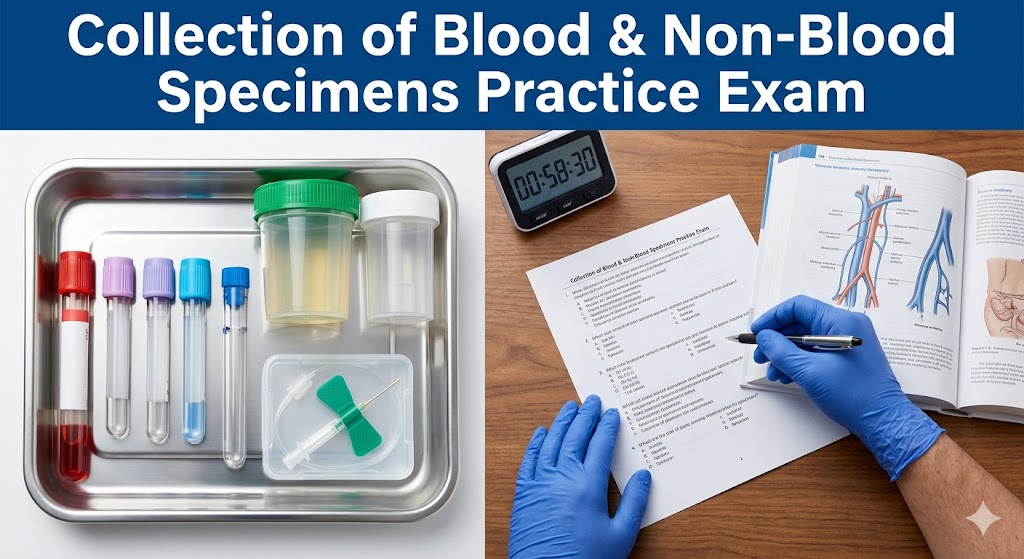
Additional Information
What the Course Entails and Exam Details
This specialized program of study covers the exhaustive protocols for collecting human specimens used for medical analysis.
Students will dive deep into anatomy and physiology, focusing heavily on the circulatory system and proper vein selection for phlebotomy.
The curriculum includes detailed training on venipuncture techniques, capillary stick procedures, and the correct order of draw for vacuum tubes.
Crucially, this course extends beyond blood, mastering the standardized protocols for gathering non-blood specimens, such as urine, sputum, and stool.
Emphasis is placed on patient identification, infection control, safety standards (including OSHA guidelines), and maintaining specimen integrity through proper transport.
What to Expect in the Final Exam
While a practice exam is meant to build confidence and knowledge, the final certification exam (which this guides prepares you for) is a rigorous assessment of professional readiness.
Candidates should typically expect a computerized test comprising multiple-choice questions.
The exam often assesses both cognitive knowledge and situational judgment regarding patient care.
While specific passing score requirements can vary between different certifying bodies (such as the NHA or ASCP), a score of 70% or higher is commonly required to pass.
Time limits are strictly enforced, generally allowing candidates between 1.5 to 2.5 hours to complete the test, demanding both accuracy and speed.
How to Study and Exam Centers
The most effective way to prepare for the final certification is by utilizing the Collection of Blood and Non-Blood Specimens Practice Exam iteratively.
Treat each practice session like the real event: time yourself and remove distractions to build mental stamina.
Analyze your results thoroughly; understand why the correct answer is right and why you missed any questions.
Supplement practice tests with textbook review, focusing on diagrams of venous anatomy and mnemonic devices for the order of draw.
When you are ready for the official certification, you will likely register through major organizations.
The actual exams are typically administered through secure online proctoring portals or at authorized, professional testing centers, such as Pearson VUE, located in cities nationwide.
In many cases, your training school or authorized medical facility may also act as an in-person testing site.
Job Opportunities from the Course
Successfully completing this training and passing the subsequent certification exam unlocks numerous entry-level opportunities within the booming healthcare sector.
Certified individuals are highly sought after by hospitals, private diagnostic laboratories, and outpatient clinics.
Specific job opportunities unlocked by this training include:
Certified Phlebotomy Technician (CPT)
Medical Assistant (CMA)
Laboratory Assistant
Specimen Processor
Donor Phlebotomy Technician (Blood Banks)
Mobile Phlebotomist
Frequently Asked Questions
Reviews
5.0
Based on 0 reviews
Leave a Review
No reviews yet. Be the first to review!