
College of Massage Therapists of British Columbia (CMTBC) Practice Exam
$69.00
- Buy to unlock unlimited access to all Quiz questions and Answers in this Quiz.
- After purchase you can print a PDF of the whole quiz at any point. The PDF will contain the questions and the correct answers.
About this Exam
The College of Massage Therapists of British Columbia (CMTBC) is the regulatory body for Registered Massage Therapists (RMTs) in the province. Its primary role is to protect the public by setting high standards for entry-to-practice and ongoing professional competence. The licensing examinations administered by the CMTBC are the essential gateway to achieving your RMT designation. These comprehensive exams are designed to evaluate a candidate’s foundational knowledge, clinical judgment, and practical application of massage therapy principles. They ensure that every new registrant is fully prepared to deliver safe, effective, and ethical care to the public in British Columbia.
This article focuses on the CMTBC Practice Exam, an invaluable tool specifically created to help candidates familiarize themselves with the style, structure, and content of the official Entry-to-Practice examinations. This resource is designed for graduates of recognized massage therapy programs who are embarking on the final stage of their journey toward professional licensure. Utilizing this practice opportunity is a strategic step for optimizing your preparation and increasing your confidence before attempting the final exam.
Ready to test your knowledge?
Buy Now to Access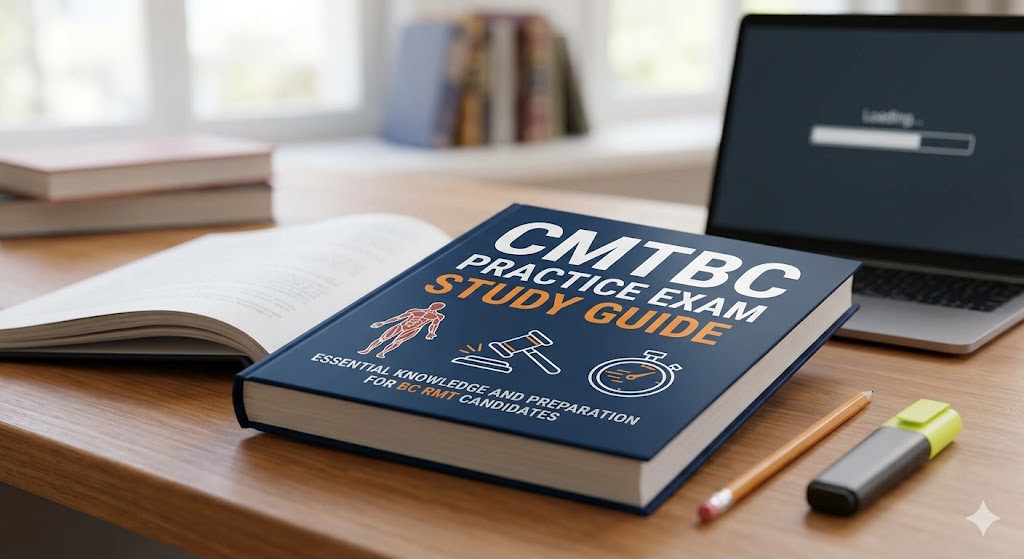
Additional Information
What the Course Entails and Exam Details
While the "practice exam" is a preparatory tool, it draws directly from the same competencies assessed in the formal CMTBC Entry-to-Practice examinations. Understanding what the full examination process covers is essential for leveraging the practice exam effectively. The formal examination is a modular system that comprehensively tests all facets of a successful RMT's practice. It assesses your theoretical knowledge through computer-based testing, your practical application through hands-on simulation, and your understanding of legal and ethical obligations.
The core syllabus that the practice exam aims to simulate includes three main areas:
Clinical Knowledge and Theory (CKT): This component tests your understanding of the essential sciences and therapeutic foundations. Key topics include anatomy and physiology, pathology, kinesiology, orthopedic assessment, treatment planning, massage techniques, hydrotherapy, and therapeutic exercise. The practice exam provides representative questions in this domain, allowing you to gauge your academic preparedness.
Law, Ethics and Professionalism (LEP): This area evaluates your ability to navigate the complex professional landscape of an RMT. It covers critical topics such as the scope of practice, professional boundaries, informed consent, confidentiality, record-keeping, client safety, and the CMTBC's specific bylaws and standards of practice. A strong command of these principles is non-negotiable for professional licensure.
Performance Based Assessment (PBA): This is the hands-on, practical component of the entry-to-practice requirements. It is designed to evaluate your clinical skills through simulated interactions with standardized patients. You will be assessed on clinical reasoning, assessment performance (including range-of-motion and muscle testing), treatment delivery, professional communication, and safety. While a practice exam cannot fully replicate a dynamic practical station, it often includes scenario-based theoretical questions that test your procedural and clinical thinking.
What to Expect in the Final Exam
It is important to clearly distinguish the format of the CMTBC Practice Exam from the official CMTBC Entry-to-Practice Examination. The practice exam itself is typically an online, self-paced tool consisting of multiple-choice questions (MCQs) designed for self-assessment. Its purpose is to familiarize you with the question format, time constraints (if simulated), and content difficulty you will face. Your performance on a practice exam is not a formal predictor of pass or fail, but it is an exceptionally effective diagnostic tool.
The official Entry-to-Practice Examination is a much more robust, multi-stage process:
Clinical Knowledge and Theory (CKT) Exam: This is a proctored, computer-based written exam. It features 150 multiple-choice questions, which can be either independent or case-based (where several questions relate to a common clinical scenario). You are given a total of three hours to complete this component.
Law, Ethics and Professionalism (LEP) Exam: This component includes both a self-paced online course, consisting of multiple modules and quizzes, and a formal, proctored exam. The LEP exam is 90 minutes long. A minimum score of 70% is required to successfully pass the LEP.
Performance Based Assessment (PBA): This is the hands-on practical exam, generally considered the most rigorous component. It is an objective structured clinical examination (OSCE) conducted in-person at a dedicated facility in the Lower Mainland. You will move through approximately eight standardized stations, interacting with simulated patients. Each station has a strict time limit and assesses specific skills, such as client interviewing, palpation, assessment, or treatment. Your interactions are observed and scored by experienced RMT examiners.
Scoring and retake policies are strict. Each of the three components must be passed independently to achieve overall success. Results are typically released approximately six weeks after the final component is completed. Candidates must pass all required parts within three years of their first attempt. Failed components can be retaken individually, though specific remedial actions or additional approval may be required after a certain number of failed attempts.
How to Study and Exam Centers
Preparation is the cornerstone of success for the CMTBC examinations. Start by creating a detailed study schedule that covers all components, balancing theoretical review with practical practice. Cramming is highly ineffective for this type of comprehensive assessment. Consistency is key; studying every day, even for shorter durations, is more effective than infrequent, long sessions.
Your study strategy should be multi-faceted and include the following actionable methods:
Official Blueprints and Resources: This is your map for success. The CMTBC and the central regulatory body (CCHPBC) provide essential blueprints, reference lists, and guidelines. Master the documents that outline the specific competencies assessed. Review the recommended textbooks, such as Clinical Massage Therapy by Rattray and Ludwig, Trail Guide to the Body by Biel, Therapeutic Exercise by Kisner and Colby, and Orthopedic Assessment by Magee.
Practice with Multiple-Choice Questions (MCQs): Utilize the official practice exam and other reputable MCQ banks to improve your test-taking speed and stamina. Go beyond simply finding the correct answer; use each question to understand why the alternatives are incorrect and to identify areas where your knowledge is weak.
Simulate the Performance Based Assessment (PBA): This component requires deliberate, in-person practice. Use a study partner or family member as a standardized patient. Review the assessment criteria and practice each skill set: client interviewing, explaining assessment steps, palpation, executing orthopedic tests, communicating comfort levels, and providing home care. Time yourself to build efficiency and flow. Record your sessions to review and critique your body mechanics and communication style.
Master the Law and Ethics Content: Read the CMTBC bylaws and standards of practice multiple times. Focus on practical applications: How do you handle a boundary crossing? What is required for valid informed consent for a minor? Prepare for this like you would a legal reasoning case study.
Regarding exam locations, the practice exam is generally accessible online through the CMTBC’s candidate portal, allowing you to take it from the convenience of your own computer. However, the formal entry-to-practice examinations require specific testing centers:
For the Clinical Knowledge and Theory (CKT) Exam: This is delivered via computer-based testing at authorized Pearson VUE testing centers. There are multiple locations throughout British Columbia and across Canada, which you will be able to select when scheduling your exam.
For the Performance Based Assessment (PBA): This exam is conducted exclusively in-person at a designated testing facility, typically located in the Lower Mainland region (e.g., Burnaby or Vancouver). Candidates from other parts of the province will need to travel to this location for their practical assessment.
For the Law, Ethics and Professionalism (LEP) Exam: This consists of an online course followed by a proctored exam, also administered at authorized Pearson VUE testing centers.
Job Opportunities from the Course
Becoming a Registered Massage Therapist in British Columbia opens the door to a diverse range of dynamic and rewarding career paths. RMTs are essential members of the health care team and can find employment in many different settings, from collaborative multidisciplinary clinics to independent entrepreneurship. The designation of RMT is a protected title and is in high demand, offering excellent income potential and a flexible work-life balance.
Upon successful completion of the licensing exams and achieving your CMTBC registration, you will unlock numerous professional opportunities and career trajectories, including:
Registered Massage Therapist (RMT)
Multidisciplinary Clinic RMT (working alongside physiotherapists, chiropractors, and doctors)
Hospital-Based Massage Therapist
Sports Massage Therapist (working with professional teams or sports organizations)
RMT in long-term and rehabilitation facilities
Entrepreneur and Clinic Owner
Massage Therapy College Instructor or Educator
Clinical Supervisor (at a massage therapy school)
Massage Therapy Continuing Education Provider
Corporate or On-site Massage Therapist
Spas and Wellness Center RMT
Frequently Asked Questions
Reviews
5.0
Based on 0 reviews
Leave a Review
No reviews yet. Be the first to review!