
Colorado Boating License Practice Test
$69.00
- Buy to unlock unlimited access to all Quiz questions and Answers in this Quiz.
- After purchase you can print a PDF of the whole quiz at any point. The PDF will contain the questions and the correct answers.
About this Exam
Earning your Colorado boater safety certificate is not just a regulatory hurdle; it is your passport to responsibly enjoying the state’s spectacular waterways. This certification, often colloquially called a boating license, is essential for demonstrating fundamental safety knowledge and adherence to state regulations. While highly recommended for all mariners, Colorado state law mandates this safety course and successful exam for any person between the ages of 14 and 17 who wishes to operate a motorized vessel, including personal watercraft (PWC), on public waters. This practice test is specifically designed to prepare these young operators and any adult looking to refresh their knowledge, ensuring everyone shares the water safely and respectfully. Completing a recognized safety course is a prerequisite to taking the actual certification exam, and this guide provides the crucial steps to ensure you pass confidently on your first attempt.
Ready to test your knowledge?
Buy Now to Access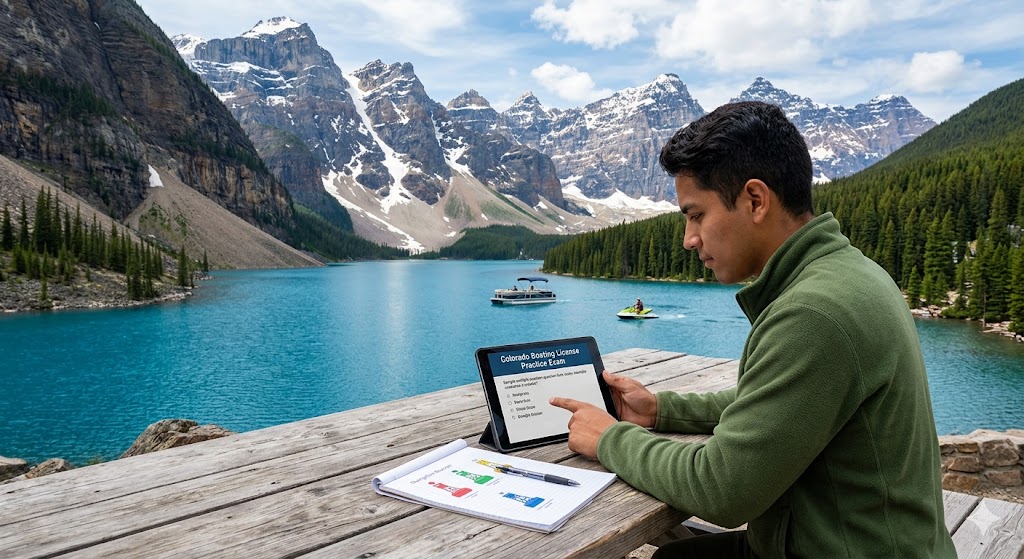
Additional Information
What the Course Entails and Exam Details
The comprehensive boater safety course covers all essential aspects of safe and legal vessel operation in Colorado. This extensive syllabus ensures operators understand both the mechanics of their craft and the rules that govern their environment. The course modules include:
Vessel Basics: Identifying the parts of a boat, understanding different hull designs, and mastering essential engine maintenance.
Navigation Rules and Aids: A deep dive into the 'rules of the road' for waterways, including determining right-of-way, understanding navigation lights, and interpreting the complex system of regulatory buoys and markers.
Trip Planning and Preparation: Crucial pre-departure steps such as filing float plans, conducting safety checks, checking weather forecasts, and practicing proper fueling procedures.
Safe Boat Operation: Techniques for launching, docking, casting off, and navigating high-traffic areas, with special emphasis on the unique handling characteristics of personal watercraft.
Colorado State Regulations: Specific laws governing registration, age requirements, speed limits, noise ordinances, environmental protection, and strict boating under the influence (BUI) policies.
Emergency Procedures: Critical training on how to handle capsizing, overboard situations, fire emergencies, and rendering assistance to other distressed vessels.
What to Expect in the Final Exam
The final certification exam is the decisive step in proving your competency on the water. This is a comprehensive, multiple-choice assessment drawn directly from the course material outlined above. While the exact length may vary slightly depending on the course provider (e.g., online vs. in-person classroom), students should typically expect around 60 questions. These questions are designed to test not just rote memorization, but also the practical application of navigation rules and state laws.
A strong passing score, typically 80% or higher, is required to obtain your Colorado boater safety certificate. For most students, there is no strict time limit for the online exam, allowing you to carefully consider each scenario presented. In classroom settings, a time limit (such as one hour) may apply. If you successfully complete a state-approved online course, the exam is usually integrated directly into the final module, ensuring a seamless transition from learning to certification.
How to Study and Exam Centers
The key to success is a blend of thorough review and active self-assessment.
1. Leverage Your Course Material: Before attempting any practice questions, diligently study the provided course content, whether in the official textbook or the interactive online modules. Pay close attention to definitions, legal requirements, and navigation rule scenarios.
2. Practice Makes Perfect: The single best study method is to consistently take practice exams. These simulate the real testing environment and highlight your knowledge gaps. For an excellent preparatory resource, you can access a dedicated Colorado Boating License Practice Test here to test your readiness and build confidence.
3. Note Common Mistake Areas: Identify subjects you struggle with (e.g., distinguishing marker buoys or memorizing light configurations) and dedicate extra study time to those sections.
In-person testing is rarely necessary for this certificate now that comprehensive online options are the standard. The vast majority of operators take both the state-approved safety course and the final proctored exam online. Students can access these courses through official, Colorado Parks and Wildlife (CPW)-approved providers. Once you pass the final exam online, you can instantly download or print a temporary certificate.
Job Opportunities from the Course
While this specific certification is a legal requirement for certain recreational operators, the safety knowledge it provides is foundational for anyone considering an entry-level position in the maritime or outdoor recreation industry. It acts as a necessary step toward gaining the professional competence required for various roles on the water.
Marina Attendant: Responsibilities often include fueling vessels, assisting with launching and docking, and maintaining the marina grounds. Fundamental safety knowledge is essential.
Boat Rental Agent/Instructor: Working for rental companies, these individuals ensure customers know how to operate vessels safely. Possessing this knowledge is mandatory to guide others effectively.
Deckhand (Private or Commercial): While a commercial license (like a Merchant Mariner Credential) is needed for piloting large commercial vessels, the core safety principles from this course are vital knowledge for all crew members.
Park Ranger / Wildlife Officer: These law enforcement roles within CPW are highly competitive and involve significant on-water patrol duties. Demonstrating established boating competency through this certificate is a strong baseline.
Outdoor Educator / Guide: Guides focusing on fishing or eco-tours benefit significantly from this certification, ensuring they are prepared to handle emergencies and keep their clients safe.
Colorado Boating License Practice Exam
Description
Earning your Colorado boater safety certificate is not just a regulatory hurdle; it is your passport to responsibly enjoying the state’s spectacular waterways. This certification, often colloquially called a boating license, is essential for demonstrating fundamental safety knowledge and adherence to state regulations. While highly recommended for all mariners, Colorado state law mandates this safety course and successful exam for any person between the ages of 14 and 17 who wishes to operate a motorized vessel, including personal watercraft (PWC), on public waters. This practice test is specifically designed to prepare these young operators and any adult looking to refresh their knowledge, ensuring everyone shares the water safely and respectfully. Completing a recognized safety course is a prerequisite to taking the actual certification exam, and this guide provides the crucial steps to ensure you pass confidently on your first attempt.
What the Course Entails and Exam Details
The comprehensive boater safety course covers all essential aspects of safe and legal vessel operation in Colorado. This extensive syllabus ensures operators understand both the mechanics of their craft and the rules that govern their environment. The course modules include:
Vessel Basics: Identifying the parts of a boat, understanding different hull designs, and mastering essential engine maintenance.
Navigation Rules and Aids: A deep dive into the 'rules of the road' for waterways, including determining right-of-way, understanding navigation lights, and interpreting the complex system of regulatory buoys and markers.
Trip Planning and Preparation: Crucial pre-departure steps such as filing float plans, conducting safety checks, checking weather forecasts, and practicing proper fueling procedures.
Safe Boat Operation: Techniques for launching, docking, casting off, and navigating high-traffic areas, with special emphasis on the unique handling characteristics of personal watercraft.
Colorado State Regulations: Specific laws governing registration, age requirements, speed limits, noise ordinances, environmental protection, and strict boating under the influence (BUI) policies.
Emergency Procedures: Critical training on how to handle capsizing, overboard situations, fire emergencies, and rendering assistance to other distressed vessels.
What to Expect in the Final Exam
The final certification exam is the decisive step in proving your competency on the water. This is a comprehensive, multiple-choice assessment drawn directly from the course material outlined above. While the exact length may vary slightly depending on the course provider (e.g., online vs. in-person classroom), students should typically expect around 60 questions. These questions are designed to test not just rote memorization, but also the practical application of navigation rules and state laws.
A strong passing score, typically 80% or higher, is required to obtain your Colorado boater safety certificate. For most students, there is no strict time limit for the online exam, allowing you to carefully consider each scenario presented. In classroom settings, a time limit (such as one hour) may apply. If you successfully complete a state-approved online course, the exam is usually integrated directly into the final module, ensuring a seamless transition from learning to certification.
How to Study and Exam Centers
The key to success is a blend of thorough review and active self-assessment.
1. Leverage Your Course Material: Before attempting any practice questions, diligently study the provided course content, whether in the official textbook or the interactive online modules. Pay close attention to definitions, legal requirements, and navigation rule scenarios.
2. Practice Makes Perfect: The single best study method is to consistently take practice exams. These simulate the real testing environment and highlight your knowledge gaps. For an excellent preparatory resource, you can access a dedicated Colorado Boating License Practice Test here to test your readiness and build confidence.
3. Note Common Mistake Areas: Identify subjects you struggle with (e.g., distinguishing marker buoys or memorizing light configurations) and dedicate extra study time to those sections.
In-person testing is rarely necessary for this certificate now that comprehensive online options are the standard. The vast majority of operators take both the state-approved safety course and the final proctored exam online. Students can access these courses through official, Colorado Parks and Wildlife (CPW)-approved providers. Once you pass the final exam online, you can instantly download or print a temporary certificate.
Job Opportunities from the Course
While this specific certification is a legal requirement for certain recreational operators, the safety knowledge it provides is foundational for anyone considering an entry-level position in the maritime or outdoor recreation industry. It acts as a necessary step toward gaining the professional competence required for various roles on the water.
Marina Attendant: Responsibilities often include fueling vessels, assisting with launching and docking, and maintaining the marina grounds. Fundamental safety knowledge is essential.
Boat Rental Agent/Instructor: Working for rental companies, these individuals ensure customers know how to operate vessels safely. Possessing this knowledge is mandatory to guide others effectively.
Deckhand (Private or Commercial): While a commercial license (like a Merchant Mariner Credential) is needed for piloting large commercial vessels, the core safety principles from this course are vital knowledge for all crew members.
Park Ranger / Wildlife Officer: These law enforcement roles within CPW are highly competitive and involve significant on-water patrol duties. Demonstrating established boating competency through this certificate is a strong baseline.
Outdoor Educator / Guide: Guides focusing on fishing or eco-tours benefit significantly from this certification, ensuring they are prepared to handle emergencies and keep their clients safe.
Frequently Asked Questions
Reviews
5.0
Based on 0 reviews
Leave a Review
No reviews yet. Be the first to review!