
Commercial Modular Practice Test
$69.00
- Buy to unlock unlimited access to all Quiz questions and Answers in this Quiz.
- After purchase you can print a PDF of the whole quiz at any point. The PDF will contain the questions and the correct answers.
About this Exam
The Commercial Modular Practice Test is a crucial assessment tool designed for professionals aspiring to enter or advance within the commercial modular construction industry. This examination evaluates candidates' knowledge and proficiency in the specialized methods, regulations, and quality control standards required for building commercial modular units. These units are prefabricated sections of a building—such as offices, classrooms, healthcare facilities, and retail spaces—that are constructed in a controlled factory environment and transported to a final site for installation.
This certification is highly relevant for construction managers, quality control inspectors, factory supervisors, design technicians, engineers, and skilled tradespeople focusing on modular manufacturing. Achieving success on this exam validates an individual’s understanding of the unique challenges and requirements of off-site commercial construction, demonstrating their readiness to contribute effectively to projects that demand speed, efficiency, and strict adherence to specific modular building codes. It serves as a recognized benchmark of competence in an increasingly vital sector of the construction landscape.
Ready to test your knowledge?
Buy Now to Access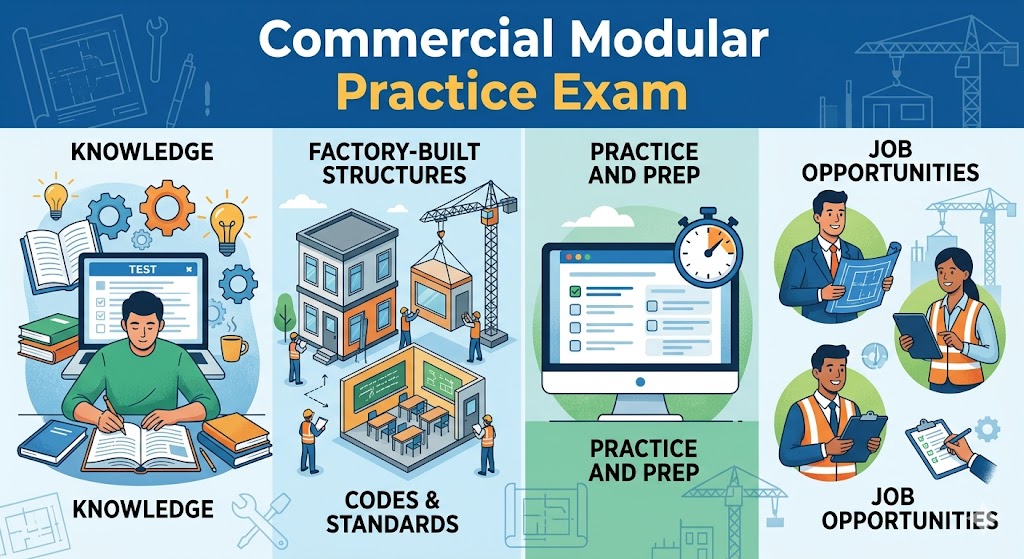
Additional Information
What the Course Entails and Exam Details
This examination covers a broad spectrum of technical knowledge specific to the commercial modular building industry. The curriculum and assessment focus on several core domains, reflecting the complexities of designing, manufacturing, and installing non-residential modular structures. Candidates will be tested on their understanding of the following key topics:
Modular Design Concepts and Engineering Principles: Understanding the differences between traditional on-site construction and volumetric modular construction, including structural requirements for transport and lifting.
Building Codes and Regulations: In-depth knowledge of international and local building codes (like the IBC) as they apply specifically to factory-built structures, including fire safety, accessibility (ADA), energy efficiency, and MEP (Mechanical, Electrical, and Plumbing) systems integration in a modular context.
The Manufacturing Process: Detailed familiarity with the assembly line workflow, from framing and rough-ins to interior finishing and transportation preparation, prioritizing safety protocols and quality control (QC) procedures at each station.
Materials and Quality Assurance: Recognizing materials commonly used in commercial modular construction and the specific quality assurance (QA) programs required to maintain compliance with third-party inspection agency standards.
Transportation and Installation (Site Work): Understanding the logistics of modular transport, foundation preparation, "set" (installation) procedures, and the complexities of stitching modules together to create a cohesive building.
Sustainability and Lean Manufacturing: Knowledge of sustainable building practices (like LEED) applicable to modularity and the application of lean principles to reduce waste and improve efficiency in the factory.
What to Expect in the Final Exam
The Commercial Modular Practice Exam is a comprehensive assessment typically delivered in a computerized format. It is designed to evaluate practical application and critical thinking rather than simple rote memorization. Candidates should be prepared for the following structural elements:
Exam Format: The test primarily consists of multiple-choice questions. These questions are carefully crafted to present scenarios relevant to factory management, design, and code compliance, asking the candidate to identify the correct procedure or regulation. Some versions may include scenario-based questions requiring the selection of the best action from several options.
Passing Score: The required passing score is typically determined by a curve based on the difficulty of the specific exam version and the minimum competency standard established by the certifying body. This score is often represented as a percentage.
Time Limit: There is a strict time limit (e.g., 2 hours). This time pressure is intentional, requiring candidates to manage their time effectively and demonstrating their ability to retrieve critical information quickly and accurately.
Rules and Requirements: The exam is strictly proctored. This means the testing environment, whether digital or physical, will be monitored. Unauthorized materials, calculators (unless specified), or communication with others will not be permitted.
How to Study and Exam Centers
Preparation for this rigorous exam requires a blend of professional experience, structured study, and practical application. Candidates can pursue several effective strategies:
Actionable Study Strategies: Start by thoroughly reviewing the officially recommended study guide or body of knowledge (BOK). Supplement this by diving deep into specific chapters of relevant building codes (e.g., IBC Chapter 31 regarding Special Construction). Focus on the "why" behind modular procedures, not just the "how." Create flashcards for critical definitions and regulatory requirements. Forming study groups with colleagues can be incredibly beneficial, allowing for discussions on practical modular scenarios.
Practice Methods: This is where utilization of high-quality practice exams becomes vital. Engaging with realistic practice tests helps candidates identify knowledge gaps, familiarize themselves with the question formats, and refine their time management skills under exam conditions. Look for reputable practice tests that offer explanations for the correct answers.
Exam Centers: The exam is frequently administered through authorized testing organizations, such as major professional test delivery networks (e.g., Pearson VUE). Candidates must typically register and schedule their exam through these official portals. Sometimes, relevant industry associations (such as the Modular Building Institute or MBI) facilitate the examination at dedicated test sites or recognized educational institutions offering modular construction programs.
Job Opportunities from the Course
Earning the certification associated with passing the Commercial Modular Practice Exam significantly enhances a professional’s credentials within the rapid growth sector of off-site construction. Successfully completing this course validates critical skills and knowledge, opening doors to diverse and in-demand roles, including:
Commercial Modular Quality Control Inspector: Ensuring that fabricated units strictly adhere to all relevant building codes, design specifications, and quality standards before leaving the factory.
Factory Supervisor/Manager (Modular Construction): Leading a production team, optimizing manufacturing workflows, managing schedules, and prioritizing safety on the factory floor.
Modular Project Manager (Commercial Projects): Overseeing modular building projects from conception (design and factory production) through transportation and final installation at the site.
Modular Design Technician (Commercial Specialist): Creating detailed blueprints and shop drawings for modular units, ensuring they are optimized for both factory production and site installation.
Compliance Specialist (Modular Industry): Navigating the complex landscape of regulatory submissions, inspections, and certifications for a modular manufacturing company.
Off-Site Construction Consultant: Providing expertise to clients on utilizing modular technology effectively for commercial developments.
Frequently Asked Questions
Reviews
5.0
Based on 0 reviews
Leave a Review
No reviews yet. Be the first to review!