
Companion Animal Parasite Council (CAPC) Practice Exam
$69.00
- Buy to unlock unlimited access to all Quiz questions and Answers in this Quiz.
- After purchase you can print a PDF of the whole quiz at any point. The PDF will contain the questions and the correct answers.
About this Exam
The Companion Animal Parasite Council (CAPC) is the leading authority on diagnostic methods, treatment protocols, and prevention strategies for parasites that affect pets and the humans who share their lives.
While CAPC doesn’t offer a single standardized "practice exam" leading to a standalone certification, they provide extensive educational resources, comprehensive guidelines, and assessment tools associated with their material.
Mastering this content is essential for a wide range of veterinary professionals, including veterinarians, veterinary technicians, assistants, and even diagnostic laboratory staff.
The ultimate goal of this knowledge base is to elevate the standard of care for pets by implementing the most effective parasite control strategies based on the latest scientific expert consensus.
Using educational materials and practice tests derived from CAPC guidelines ensures you are operating with the most current and authoritative information in the industry.
Ready to test your knowledge?
Buy Now to Access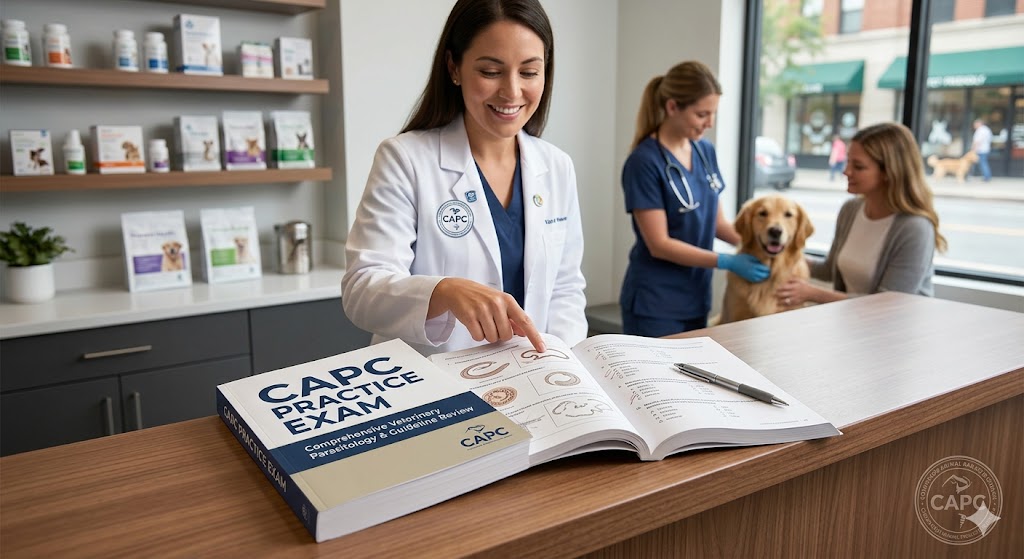
Additional Information
What the Course Entails and Exam Details
Any study program or practice exam designed to master CAPC guidelines will cover a broad spectrum of veterinary parasitology.
The content typically encompasses the identification, life cycles, clinical signs, diagnosis, treatment, and control of all major parasites affecting dogs and cats.
Core topics covered in these assessments usually include:
Common Endoparasites: Comprehensive knowledge of helminths (heartworms, roundworms, hookworms, whipworms, and tapeworms) and protozoa (Giardia, Coccidia, and Tritrichomonas).
Major Ectoparasites: Identification and control strategies for fleas, various tick species, and mites (Demodex and Sarcoptes).
Diagnostic Techniques: Best practices for fecal analysis methods (e.g., floatation vs. sedimentation), heartworm testing (antigen and microfilaria detection), and other specialized diagnostics.
CAPC Prevention Guidelines: Familiarity with the official recommendations for year-round prevention, parasite-specific treatment protocols, and public health implications (zoonotic disease prevention).
Case Study Application: Applying guideline principles to realistic clinical scenarios to develop effective diagnostic and treatment plans.
The specifics of any individual practice resource, module-end quiz, or assessment will depend on the source providing the material, but all are rooted in the official CAPC comprehensive recommendations.
What to Expect in the Final Exam
Because CAPC resources are used across various educational platforms (such as veterinary schools, vet tech programs, and professional development courses like CAPC VetTech), the format and details of a "final exam" can vary significantly.
However, standard professional veterinary assessments generally follow a predictable structure.
You should typically prepare for a multiple-choice examination format, which is the most common method for assessing knowledge across a wide topic base.
The exam might be structured chronologically by parasite type, or it may present complex scenarios that require you to synthesize information and apply various principles simultaneously.
There is often a set time limit, encouraging both accuracy and efficiency in recalling and applying knowledge.
Passing score requirements are usually determined by the specific institution or organization offering the assessment, often aligning with typical academic passing grades or certification standards (e.g., 70% or 80%).
The rules regarding re-taking the exam or accessing reference materials during the test are also set by the specific course provider, so always clarify these points beforehand.
How to Study and Exam Centers
Effective study for CAPC-based assessments requires a combination of rote memorization and practical application.
Here are actionable strategies to prepare:
Study the Source Material Directly: The single most important resource is the current CAPC guidelines themselves, available online. Thoroughly read the specific recommendations for each parasite.
Use Visual Tools: Create or utilize flashcards to memorize parasite appearances (under a microscope), life cycle diagrams, and treatment drug classes. Visual learning is crucial for identifying different species.
Practice Diagnostic Procedures: Review step-by-step the recommended procedures for fecal examinations and other diagnostic tests. Understand the rationale behind each method.
Review Sample Cases: Practice applying the guidelines to hypothetical patient scenarios. Determine the appropriate next diagnostic steps and treatment recommendations based on age, location, and lifestyle.
Where and How to Take the Assessment:
Assessments derived from CAPC content are typically administered online through various professional development portals or academic learning management systems.
They do not generally require you to visit a physical Pearson VUE testing center unless they are part of a larger, different certification (like the VTNE).
If you are a veterinary student or vet tech student, your university or college will facilitate the assessment, often through online portals or in-class digital systems.
For veterinary professionals seeking continuing education, CAPC offers their own structured resources (like CAPC VetTech) and other providers often use CAPC guidelines as the basis for their CE modules, which are accessed and completed entirely online at your convenience.
Job Opportunities from the Course
Mastering CAPC guidelines and successfully passing associated assessments doesn't unlock a new job title on its own, but it validates and enhances your expertise, making you a highly desirable asset in several roles:
Credentialed Veterinary Technician: Demonstrating specialized knowledge in parasitology can lead to a niche role as a lead tech in internal medicine or a promotion within a general practice.
Veterinary Assistant: Possessing this validated knowledge allows you to better educate clients and assist more effectively in the laboratory, making you a vital member of the medical team.
Veterinary Diagnostic Laboratory Technician: This expertise is essential for roles focused on parasitology diagnostics, ensuring accurate sample preparation and species identification.
Veterinary Pharmaceutical Representative: Mastery of CAPC recommendations is a major advantage for sales roles focusing on parasite preventatives or diagnostic products.
Pet Industry Educator/Writer: Educational copywriters and content creators with this deep veterinary knowledge are in high demand to produce accurate, authoritative content for pet owners and businesses.
General Practice Advancement: For existing staff, this validated expertise can be the key differentiator for promotions to lead technician, laboratory coordinator, or clinic education officer.
Frequently Asked Questions
Reviews
5.0
Based on 0 reviews
Leave a Review
No reviews yet. Be the first to review!