
Compressed Natural Gas (CNG) Certification Practice Exam
$69.00
- Buy to unlock unlimited access to all Quiz questions and Answers in this Quiz.
- After purchase you can print a PDF of the whole quiz at any point. The PDF will contain the questions and the correct answers.
About this Exam
A Compressed Natural Gas (CNG) Certification signifies specialized expertise in handling and inspecting alternative fuel systems for vehicles and infrastructure. The [Exam Name] Practice Exam is designed for professionals and aspiring students looking to work safely and effectively in the growing alternative fuels industry. This comprehensive guide helps you master key concepts, essential skills, and industry standards required for success. It is an ideal resource for mechanics, inspectors, facility managers, and safety professionals.
Ready to test your knowledge?
Buy Now to Access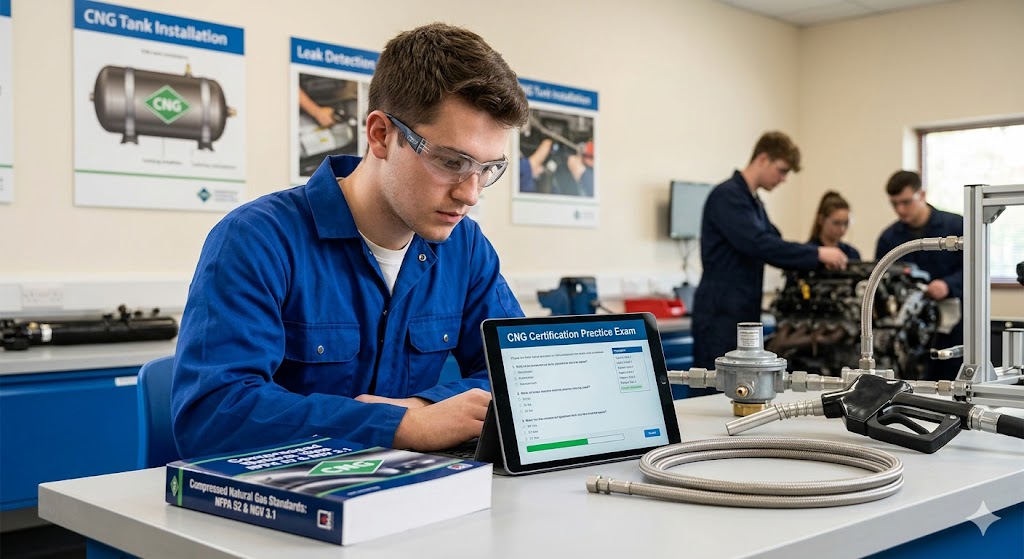
Additional Information
What the Course Entails and Exam Details
A proper CNG certification course and its corresponding exam detail a wide range of essential topics, ensuring technical proficiency and regulatory compliance. The syllabus typically covers:
Properties of Compressed Natural Gas and safety procedures.
Design and installation standards for CNG fuel systems on vehicles (e.g., CSA, ANSI, NFPA 52).
Identifying and inspecting fuel system components like cylinders, valves, pressure regulators, high-pressure fuel lines, and refueling receptors.
Understanding cylinder inspection criteria, service life, and disposal methods.
Leak detection techniques and non-destructive testing procedures.
Vehicle maintenance and refueling station operations.
Environmental regulations and legal requirements governing CNG use and transportation.
What to Expect in the Final Exam
The actual CNG certification exam is a rigorous assessment that measures your understanding of safety protocols and technical procedures. Understanding the structure and what to expect is crucial for preparation.
Exam Format: The exam usually consists of 60-100 multiple-choice questions designed to test both theoretical knowledge and practical problem-solving. Some certifications also include a hands-on practical skills evaluation where you demonstrate competency in inspection or maintenance procedures.
Time Limit: You will typically be given 2 to 3 hours to complete the multiple-choice section. The practical exam has separate time allotments depending on the tasks required.
Passing Score: Most institutions require a minimum passing score of 70% to 80%.
Exam Rules: Testing conditions are typically strictly monitored. You must bring valid photographic identification. For some physical components, specific safety gear (e.g., eye protection) may be required.
How to Study and Exam Centers
Effective preparation is key to succeeding on your CNG exam. Follow these strategies to build your confidence and knowledge.
Review Course Materials: Revisit your lecture notes, textbooks, standard manuals (like NFPA 52 or CSA/ANSI guidelines), and any hands-on training materials thoroughly.
Use Study Guides and Flashcards: Condense key formulas, regulatory codes, safety procedures, and definitions into flashcards or summary sheets for quick review.
Take Practice Exams: Dedicate time to full-length practice tests to simulate the actual exam experience. The [Exam Name] Practice Exam is an essential tool for identifying knowledge gaps, practicing time management, and familiarizing yourself with question formats.
Hands-on Practice: For certifications involving physical components, practice inspection or installation techniques whenever possible in a safe, supervised environment. Exam Centers and Registration: The primary certification exam is offered through several avenues:
Online Testing Portals: Many providers offer remote-proctored online exams that you can take from a computer at home or in an office.
Authorized Training Schools: Vocational schools, colleges, and training centers that offer CNG coursework are often registered testing locations.
Pearson VUE and Other National Centers: Look for test providers like Pearson VUE, Prometric, or state-specific certification boards, which may administer the exam at their network of physical testing centers.
Job Opportunities from the Course
Obtaining your CNG certification unlocks diverse career paths and strengthens your qualifications in the burgeoning alternative fuel and transportation sectors. This certification demonstrates your expertise to employers looking for skilled professionals to operate safely with natural gas technologies. Prominent job opportunities and career paths include:
CNG Vehicle Inspector
Alternative Fuel Vehicle (AFV) Technician
Alternative Fuel Fleet Manager
Heavy-Duty CNG Truck Mechanic
Transit Authority Maintenance Supervisor
CNG Fueling Station Operator
Energy and Sustainability Consultant
Environmental Compliance Officer
Transportation Safety Inspector
Frequently Asked Questions
Reviews
5.0
Based on 0 reviews
Leave a Review
No reviews yet. Be the first to review!