
Conduction System Pacing Practice Test
$69.00
- Buy to unlock unlimited access to all Quiz questions and Answers in this Quiz.
- After purchase you can print a PDF of the whole quiz at any point. The PDF will contain the questions and the correct answers.
About this Exam
The Conduction System Pacing Practice Test is a vital educational resource designed for cardiac electrophysiology professionals aiming to master the latest techniques in physiological pacing. This exam is specifically tailored for cardiologists, EP fellows, cardiac device technicians, and advanced practice providers (NPs/PAs) specializing in rhythm management. It aims to validate the specialized knowledge required to implement His Bundle Pacing (HBP) and Left Bundle Branch Area Pacing (LBBAP) safely and effectively. By simulating the rigors of a true certification environment, this practice test ensures you are fully prepared to transition from traditional right ventricular pacing to more physiologic, synchrony-preserving methods in clinical practice.
Ready to test your knowledge?
Buy Now to Access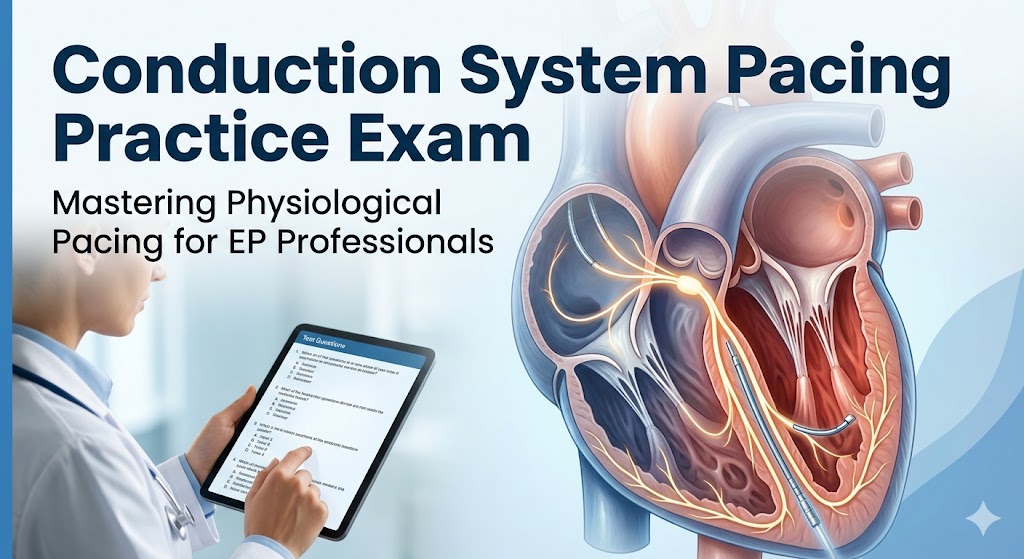
Additional Information
What the Course Entails and Exam Details
This comprehensive practice evaluation is structured to cover the full spectrum of Conduction System Pacing (CSP). The curriculum focuses heavily on relevant cardiac anatomy, specifically detailing the precise location of the His bundle, the left bundle branch, and its fascicles within the interventricular septum. You will be tested on your ability to interpret complex intracardiac electrograms and confirm specific capture types, such as selective versus non-selective His capture and left bundle branch capture. Furthermore, the exam details the unique implantation techniques and specialized tools, including specific delivery sheaths and leads, required for these procedures. Candidates must also demonstrate proficiency in troubleshooting common issues and optimizing device programming specifically for CSP configurations.
What to Expect in the Final Exam
When sitting for the final assessment, candidates should expect a comprehensive, computer-based testing format. The exam consists primarily of multiple-choice questions that require not only factual recall but also the clinical application of knowledge based on specific patient scenarios. Many questions will require you to analyze visual aids, including fluoroscopic images of lead placements and actual ECG/EGM tracings to identify capture thresholds or lead positions. While the exact number of questions and time limits may vary based on the specific certifying body, these exams generally run between two to four hours. A passing score is typically set between 70% and 80%, reflecting a high standard of competency required for this advanced clinical skill.
How to Study and Exam Centers
Effective preparation for the Conduction System Pacing exam requires a blend of dynamic practice and theoretical review. We strongly recommend that you dedicate significant time to analyzing real-world ECGs and intracardiac electrograms, focusing on distinguishing between myocardial and conductive tissue capture. Taking this practice exam multiple times is essential to increase your speed and build familiarity with the question phrasing and visual analysis requirements. Furthermore, review the latest consensus documents and guidelines from recognized heart rhythm societies regarding physiologic pacing. Regarding test administration, standard professional certification exams are typically held at authorized computerized testing centers, such as Pearson VUE locations globally. Some specialized organizations may also offer secure, remotely proctored online exams that you can take from a compliant home or office computer.
Job Opportunities from the Course
Mastering Conduction System Pacing is a highly desirable skill set that can significantly elevate a cardiac professional's career trajectory. Validating this expertise through certification opens the door to specialized roles within progressive heart centers and EP labs. Hospitals are actively seeking professionals who can help implement and grow physiologic pacing programs to improve patient outcomes. Below are specific job titles and career paths this proficiency unlocks:
Cardiac Electrophysiologist (Focusing on advanced physiologic pacing techniques)
Certified Cardiac Device Specialist (CCDS) with CSP expertise
Cardiac Catheterization/EP Lab Technologist (Specialized in CSP lead implantation support)
Clinical Applications Specialist for medical device companies (Focusing on HBP/LBBAP products)
Arrhythmia Service Coordinator
Electrophysiology Nurse Practitioner or Physician Assistant (Leading specialized device clinics)
Frequently Asked Questions
Reviews
5.0
Based on 0 reviews
Leave a Review
No reviews yet. Be the first to review!