
Confined Space Awareness Practice Test
$69.00
- Buy to unlock unlimited access to all Quiz questions and Answers in this Quiz.
- After purchase you can print a PDF of the whole quiz at any point. The PDF will contain the questions and the correct answers.
About this Exam
The Confined Space Awareness certification is an essential safety credential designed for individuals working in or around hazardous environments. Confined spaces are defined as areas not necessarily designed for continuous human occupancy, with limited means of entry or exit, and which may pose atmospheric or physical hazards.
This certification is ideal for workers in industries such as construction, utilities, manufacturing, oil and gas, and telecommunications. Completing this training demonstrates your fundamental understanding of how to recognize, assess, and safely navigate the unique dangers associated with confined spaces, prioritizing the well-being of yourself and your team.
Ready to test your knowledge?
Buy Now to Access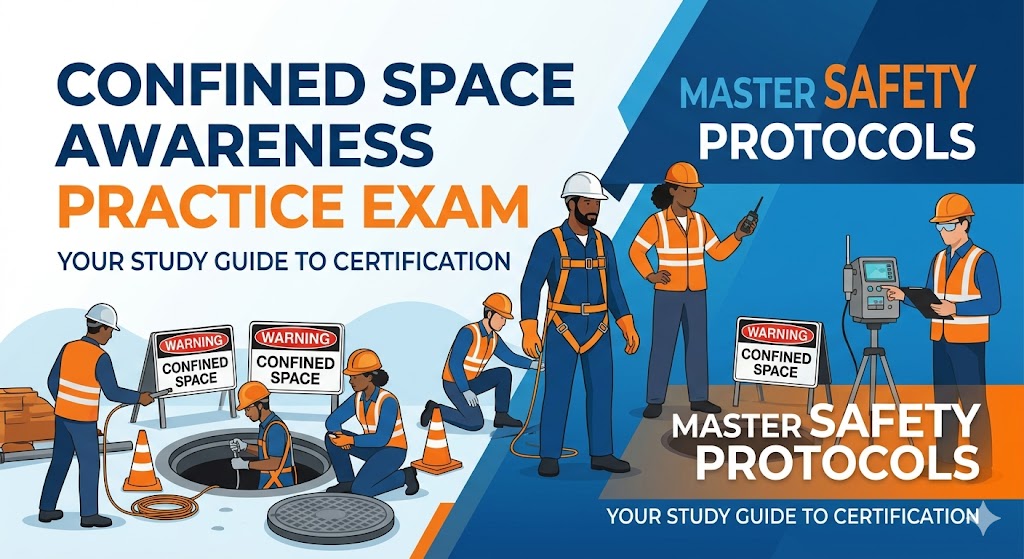
Additional Information
What the Course Entails and Exam Details
This comprehensive course covers critical safety topics to ensure you are fully prepared for the workplace. The syllabus typically focuses on key knowledge areas mandated by safety regulations.
Core topics included in the curriculum generally cover:
Identifying Confined and Permit-Required Confined Spaces
Recognizing Atmospheric and Physical Hazards (e.g., toxic gases, oxygen deficiency, engulfment)
Reviewing OSHA (Occupational Safety and Health Administration) Standards for Confined Spaces
Understanding Roles and Responsibilities (Entrant, Attendant, Supervisor)
Overview of Hazard Control Measures and Safe Work Practices
Importance of Atmospheric Monitoring and Equipment Use
Emergency Response and Rescue Procedures Overview
What to Expect in the Final Exam
While exact specifications can vary by provider, candidates should generally expect a standardized, multi-choice format to assess their knowledge retention.
Key exam details often include:
Exam Format: Typically multiple-choice or true/false questions designed to test your understanding of safety protocols and hazard recognition.
Number of Questions: Standard exams usually consist of approximately 20 to 50 questions.
Time Limit: You will generally have a set time window, often between 30 and 90 minutes, to complete the exam.
Passing Score: Most providers require a score of at least 70% to 80% to achieve certification.
Delivery Method: Exams are increasingly offered online for convenience, although some physical classes may still administer paper tests.
How to Study and Exam Centers
Effective preparation is the key to passing your Confined Space Awareness exam on the first attempt. Start by thoroughly reviewing the educational materials provided by your training course.
Actionable study strategies include:
Take Practice Tests: Utilizing [Confined Space Awareness Practice Tests] is one of the most effective ways to familiarize yourself with the question formats and identify knowledge gaps.
Focus on Definitions: Ensure you know the precise regulatory definitions of what constitutes a "confined space" and a "permit-required confined space."
Understand Roles: Clearly distinguish the required duties of the Authorized Entrant versus the Attendant.
Review Hazard Symbols: Be comfortable identifying different types of atmospheric and physical hazards.
Regarding exam centers, this certification is highly accessible. Many authorized safety training organizations offer the course entirely through online portals, allowing you to study and take the exam from anywhere. Alternatively, physical training facilities and vocational schools offer instructor-led sessions where you may complete the assessment in person. Check with your specific provider to confirm their authorized testing methods.
Job Opportunities from the Course
A Confined Space Awareness certification is frequently a prerequisite for many high-demand technical and industrial roles. Obtaining this credential unlocks numerous career paths where working near or in restricted spaces is common.
This certification is highly valuable for job titles such as:
Construction Laborer
Industrial Maintenance Technician
HVAC Technician
Telecom and Utility Worker
Utility Line Worker
Environmental Field Technician
Safety Inspector or Safety Coordinator
Pipefitter and Welder
Sewer and Water Treatment Operator
Oil and Gas Roustabout
Frequently Asked Questions
Reviews
5.0
Based on 0 reviews
Leave a Review
No reviews yet. Be the first to review!