
Connecticut 3A Supervisor License Practice Test
$69.00
- Buy to unlock unlimited access to all Quiz questions and Answers in this Quiz.
- After purchase you can print a PDF of the whole quiz at any point. The PDF will contain the questions and the correct answers.
About this Exam
The Connecticut 3A Supervisor License is a crucial certification for professionals in the green industry who wish to advance their careers and take on supervisory roles. This license, issued by the Connecticut Department of Energy and Environmental Protection (DEEP), authorizes individuals to purchase, use, and supervise the application of restricted-use pesticides.
Specifically, the Category 3A (Ornamental and Turf) designation is designed for individuals working in the maintenance of ornamental trees (with a mature height of five meters or less), shrubs, flowers, and turf. This includes a wide range of professionals, such as lawn care technicians, landscape supervisors, and groundkeepers.
Earning this license demonstrates a high level of competence in pesticide safety, regulations, and integrated pest management (IPM) practices, making you a vital asset to any landscaping or property management team.
Ready to test your knowledge?
Buy Now to Access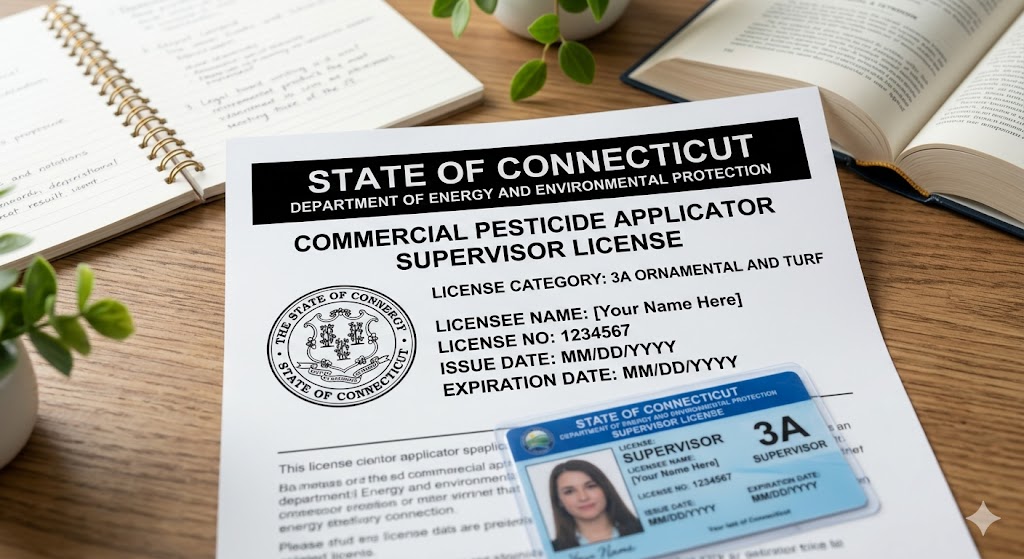
Additional Information
What the Course Entails and Exam Details
To obtain your Connecticut 3A Supervisor License, you must demonstrate a comprehensive understanding of core concepts related to pesticide application and supervision. The certification process generally covers the following areas:
Pesticide Laws and Regulations: Federal and state laws governing pesticide use, including the Federal Insecticide, Fungicide, and Rodenticide Act (FIFRA) and specific Connecticut regulations.
Pesticide Safety: Principles of toxicology, proper personal protective equipment (PPE), safe handling, mixing, loading, and disposal procedures.
Integrated Pest Management (IPM): A sustainable approach to pest control that combines biological, cultural, physical, and chemical tools to minimize economic, health, and environmental risks.
Pest Identification and Biology: Recognizing common pests affecting ornamental plants and turf in Connecticut, understanding their life cycles, and identifying the damage they cause.
Pesticide Formulations and Adjuvants: Understanding different types of pesticide products and how to choose the right one for the job.
Labeling and Comprehension: How to read, understand, and strictly follow all instructions on a pesticide label.
Application Equipment: Proper calibration, operation, and maintenance of various sprayers and spreaders.
Environmental Considerations: Protecting groundwater, surface water, non-target organisms, and pollinators from pesticide drift and runoff.
What to Expect in the Final Exam
The path to licensure involves passing a formal examination administered by the state of Connecticut. Here is a breakdown of what you can typically expect:
Exam Format
The Supervisor examination consists of two main parts:
Written Examination: This is a comprehensive, multiple-choice test that assesses your knowledge of the core topics and specific Category 3A technical information. It often includes calculations related to application rates and area measurements.
Oral Examination: If you pass the written portion, you will be scheduled for an oral exam in Hartford. This portion consists of a 20 to 30-minute interview with 2-4 board members, who will ask practical questions related to regulatory compliance, pesticide choice, pest identification, and hypothetical application scenarios.
Specific Details
Passing Score: You must achieve a minimum score, usually 70%, on the written exam to advance to the oral portion.
Time Limit: You are typically given up to 3 hours to complete the written portion, which may cover core material and up to three different supervisor categories, including 3A.
Retest Rules: If you do not pass, you must wait at least 30 days before re-attempting the exam for the same category. You must pay a new exam fee for each attempt.
How to Study and Exam Centers
Preparation is key to succeeding on both the written and oral components of the 3A Supervisor exam. Here are proven strategies for your study guide:
Study Strategies
Obtain Official Study Materials: The primary resource is the official Connecticut study materials, which include the Pesticide Core Manual and the Cornell University Category 3A Manual. These are the basis for the written exam.
Review Regulations: Thoroughly study the pertinent Connecticut General Statutes and Regulations for Certified Commercial Supervisors.
Enroll in Training Courses: Consider enrolling in prep courses, such as the UConn Extension Ornamental and Turf Short Course, which provides an in-depth, structured review designed specifically for this license.
Use Practice Exams: Take advantage of practice tests and sample questions to simulate the exam experience and identify areas where you need further study.
Master Calculations: Be sure you can confidently solve arithmetic problems related to area, dosage, and equipment calibration.
Practice for the Oral Exam: Form a study group and practice answering open-ended questions about how you would handle real-world supervisory challenges.
Exam Centers and Process
Register for the Exam: You must apply for the exam through the Connecticut elicense.ct.gov portal and pay the required exam fee (currently $200).
Schedule the Written Exam: Once registered, you will be directed to an online proctoring service, currently Everblue, to schedule and take your written exam remotely.
Schedule the Oral Exam: If you pass the written test, you will be contacted by email to schedule your required in-person oral examination at the DEEP headquarters: 79 Elm Street, Hartford, CT.
Job Opportunities from the Course
A Connecticut 3A Supervisor License unlocks a significant career path, transforming you from a supervised applicator into a recognized leader in your field. This certification is a prerequisite for roles that involve management, decision-making, and regulatory compliance.
Potential job opportunities and career paths unlocked by this license include:
Landscape Supervisor
Lawn Care Branch Manager
Golf Course Superintendent (often requires 3A and 3B, depending on the course)
Grounds Manager (for universities, parks, or corporate campuses)
Pest Control Service Manager
Arborist Supervisor (if combined with an Arborist license)
Pesticide Safety Trainer/Educator
Sales Representative for Green Industry Products
Business Owner (every commercial pesticide application company in CT must have at least one licensed supervisor)
Your supervisor license signifies your readiness to manage teams, make high-level decisions, and uphold the highest standards of safety and compliance in the turf and ornamental industry.
Frequently Asked Questions
Reviews
5.0
Based on 0 reviews
Leave a Review
No reviews yet. Be the first to review!