
Construction Estimating 2 Practice Exam
$69.00
- Buy to unlock unlimited access to all Quiz questions and Answers in this Quiz.
- After purchase you can print a PDF of the whole quiz at any point. The PDF will contain the questions and the correct answers.
About this Exam
The [Construction Estimating 2 Practice Exam] is designed as a powerful study tool for students and industry professionals preparing for their final comprehensive exam in advanced construction estimating courses or for recognized certifications in the field. This resource is essential for those who have moved beyond the basics and are tackling complex quantity takeoffs, precise pricing across various project elements, and the structured bidding process. Whether you are aiming for a certificate from an educational institution or seeking the coveted Certified Professional Estimator designation from bodies like the ASPE, this practice exam helps validate your knowledge and build the necessary confidence to succeed. It is ideal for aspiring estimators, cost engineers, project managers, and anyone looking to enhance their analytical and pricing skills within the dynamic construction industry.
Ready to test your knowledge?
Buy Now to Access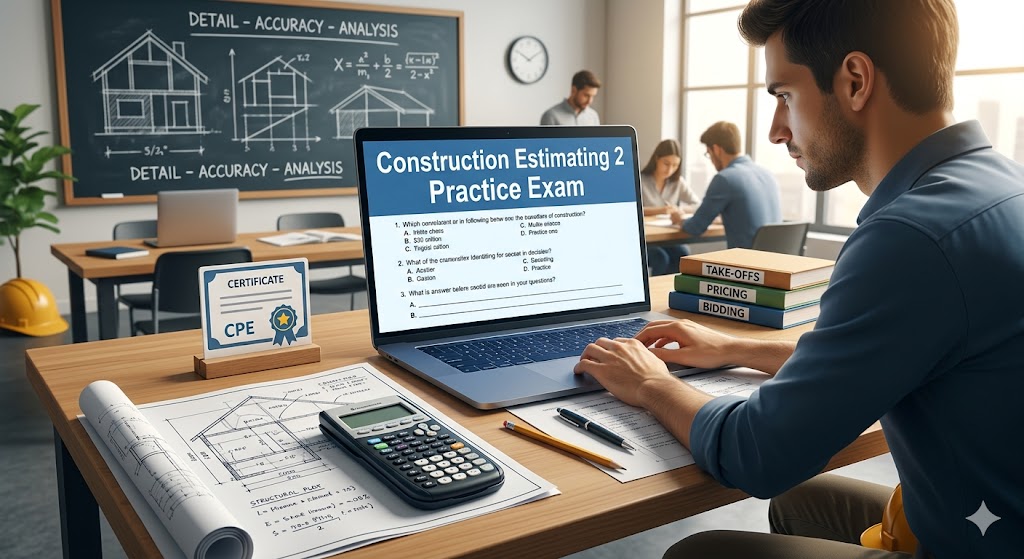
Additional Information
What the Course Entails and Exam Details
This practice exam covers the advanced topics and critical skills typically taught in a comprehensive Construction Estimating 2 course. While specific curricula vary, you can generally expect questions to test your proficiency in:
Advanced Interpretation of Plans and Specifications: Moving beyond basic symbols to understand complex architectural, structural, and MEP (Mechanical, Electrical, Plumbing) drawings.
Detailed Quantity Takeoffs (QTO): Precise measurement and quantification of materials and work hours for residential, commercial, and potentially industrial projects. This includes everything from earthwork and concrete to finishes, fixtures, and specialized systems.
Labor Productivity & Costing: Estimating labor hours based on productivity rates and calculating comprehensive labor costs.
Material & Equipment Pricing: Sourcing accurate costs from industry data, vendors, and databases, accounting for various factors like delivery and inflation.
Direct & Indirect Costs: Distinguishing between and calculating both direct project expenses and indirect overhead.
Profit Margins & General Conditions: Applying suitable profit percentages and factoring in project general conditions and site overhead.
Bidding Processes & Documentation: Understanding different bid formats, required documentation, bid closing procedures, and general ethical considerations.
Use of Estimating Software & Excel: While theoretical questions dominate, basic proficiency and understanding of common tools and methodologies are often implied.
What to Expect in the Final Exam
The final comprehensive exam that this [Construction Estimating 2 Practice Exam] prepares you for can vary significantly. Some exams are solely multiple-choice, while others feature combination formats including short answers, calculation problems, and even small practical takeoff exercises based on provided drawings.
Passing score requirements typically range between 70% and 80%, depending on the school, certification body, or program. The time limit can be substantial, often spanning 2 to 4 hours or more, reflecting the intense calculation and detail-oriented nature of the discipline. Candidates may be allowed specific approved calculators and sometimes standardized estimating reference materials, but strictly no external help or unauthorized resources. It's crucial to check the specific policies of your testing authority well in advance.
How to Study and Exam Centers
Effective preparation is key. Here are proven study methods:
Utilize the Practice Exam Extensively: Take the [Construction Estimating 2 Practice Exam] under timed conditions. Review not only your incorrect answers but also the reasoning behind every answer, including the ones you got right. Use it to identify specific weak areas that need focused review.
Practice on Real Drawings: Whenever possible, practice performing detailed takeoffs on actual construction blueprints, using real-world data and specifications. Combine this with manual calculations and, where appropriate, practice in Excel.
Review Coursework and Materials: Thoroughly re-read your textbook, course notes, and any supplementary materials. Work through any available example problems.
Stay Updated on Industry Data: Be aware of the commonly used construction cost data sources, such as RSMeans, and understand how they are applied.
Form Study Groups: Collaborating with peers can expose you to different perspectives, estimation techniques, and problem-solving approaches.
Exam Centers: The final exam is typically administered in one of several ways:
Authorized School/Organization Facilities: For students in academic or specialized training programs, exams are often held at the same physical campus or institution where the course was taken.
Online Proctored Portals: Many certifications and courses now offer online exams with robust live or automated proctoring services, allowing you to take the test from your home or office.
Designated Testing Centers (e.g., Pearson VUE, Prometric): Major professional certifications may require you to schedule and take your exam at one of their approved commercial testing centers located globally. You will receive specific information about available locations upon registering for your formal examination.
Job Opportunities from the Course
A strong understanding of Construction Estimating 2 and successfully passing the relevant exam opens doors to numerous rewarding career paths. Specific job titles you will be well-qualified to pursue include:
Construction Estimator
Senior Construction Estimator
Cost Estimator
Cost Engineer
Project Estimator
Bid Manager
Preconstruction Manager
Quantity Surveyor (with relevant further specialization/certification in some regions)
Commercial Manager (often in broader contracting or sub-contracting roles)
Procurement Manager (with focus on material and trade costing)
Armed with advanced estimating skills, you will be a valuable asset to general contractors, subcontractors, engineering and architectural firms, government agencies, and real estate developers, all of whom rely on accurate cost projections for project viability and success.# Construction Estimating 2 Practice Exam
Frequently Asked Questions
Reviews
5.0
Based on 0 reviews
Leave a Review
No reviews yet. Be the first to review!