
Correctional Counselor (CC1) Practice Exam
$69.00
- Buy to unlock unlimited access to all Quiz questions and Answers in this Quiz.
- After purchase you can print a PDF of the whole quiz at any point. The PDF will contain the questions and the correct answers.
About this Exam
The Correctional Counselor (CC1) certification exam is a pivotal assessment designed for professionals seeking to advance their careers within the criminal justice and corrections field. This exam evaluates the knowledge, skills, and abilities essential for individuals aspiring to become effective Correctional Counselors, who play a vital role in the rehabilitation, supervision, and reintegration of incarcerated individuals. It is specifically tailored for correction officers, case managers, social workers, and other criminal justice professionals who are dedicated to facilitating positive behavior change and ensuring public safety through effective inmate management. Earning this certification validates your expertise and readiness to take on the multifaceted responsibilities of a Correctional Counselor I.
Ready to test your knowledge?
Buy Now to Access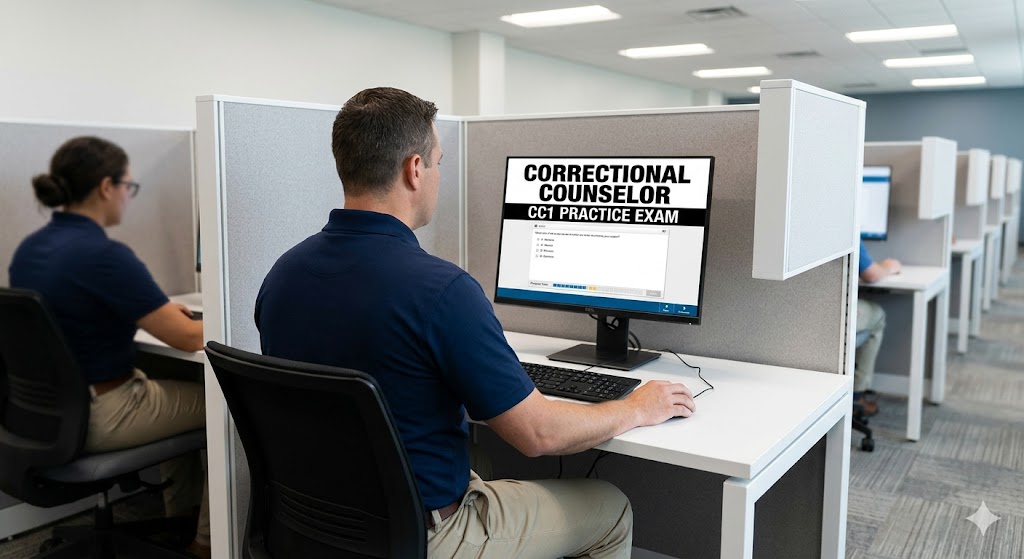
Additional Information
What the Course Entails and Exam Details
This comprehensive study guide and the subsequent CC1 exam cover a broad range of critical topics that are essential for success in correctional counseling. The core curriculum typically entails in-depth study in areas such as:
Correctional Theories and Practices: Understanding the history, philosophy, and current trends in corrections and rehabilitation.
Counseling Techniques: Master fundamental counseling skills, including motivational interviewing, cognitive-behavioral approaches, and crisis intervention.
Inmate Assessment and Classification: Learning how to evaluate inmate needs, risks, and strengths to develop appropriate treatment and supervision plans.
Case Management: Acquiring skills in documentation, progress monitoring, and coordinating resources for inmates.
Ethics and Professional Responsibility: Adhering to the highest standards of conduct and ethical guidelines in correctional counseling.
Crisis Management and De-escalation: Developing techniques to effectively manage conflict, crises, and potentially volatile situations within a correctional setting.
Cultural Competence: Understanding the importance of cultural sensitivity and diversity when working with a diverse inmate population.
Relevant Laws and Regulations: Familiarizing yourself with state and federal laws, institutional policies, and legal issues affecting correctional practice.
The exam details involve demonstrating proficiency in these core areas through a rigorous examination process.
What to Expect in the Final Exam
The final CC1 exam is typically administered in a controlled environment and uses a multiple-choice format to assess your understanding of the material. Candidates can expect:
Format: A standardized exam consisting of multiple-choice questions designed to test both knowledge and application of correctional counseling principles.
Question Count: While the exact number may vary, most CC1 exams consist of approximately 100 to 150 questions.
Time Limit: Candidates are generally allotted a specific time frame, often ranging from 2 to 3 hours, to complete the examination.
Passing Score: To successfully achieve the CC1 certification, candidates must achieve a minimum passing score, typically around 70% or higher, as determined by the certifying body.
Rules: The exam is closed-book, meaning no study materials, notes, or electronic devices are permitted. Proper identification is required, and strict adherence to exam protocols is mandatory.
How to Study and Exam Centers
Effective preparation is key to success on the CC1 exam. Here are some actionable study strategies and information on exam logistics:
Practice Exams are Crucial: Utilize reputable Correctional Counselor CC1 Practice Exams extensively. These are invaluable for familiarizing yourself with the types of questions, exam format, and time constraints. They help identify your areas of strength and weakness.
Study the Core Topics: Create a structured study plan that covers all the key topics outlined in the exam syllabus. Focus on understanding concepts rather than just memorizing facts.
Use Study Guides and Textbooks: Consult official study guides, criminal justice textbooks, and relevant professional resources to deepen your understanding of correctional counseling.
Form Study Groups: Collaborating with peers can provide different perspectives, help clarify difficult concepts, and keep you motivated.
Simulate Exam Conditions: When taking practice exams, do so under timed, quiet conditions to build your stamina and confidence for the actual test.
Exam Centers: The CC1 exam is typically administered through authorized testing centers, which may include physical testing locations managed by organizations like Pearson VUE or specific facilities designated by state departments of corrections. Increasingly, online proctored exam options may also be available, allowing you to take the exam from a secure location with a stable internet connection. Be sure to check the official certifying body's website for specific information on authorized testing centers, registration procedures, and available formats in your area.
Job Opportunities from the Course
Obtaining the CC1 certification opens up a variety of rewarding career opportunities within the corrections and criminal justice sectors. Some of the specific job titles and career paths unlocked by this certification include:
Correctional Counselor I
Inmate Case Manager
Rehabilitation Counselor
Classification Specialist
Probation and Parole Officer
Juvenile Justice Counselor
Community Corrections Officer
Correctional Program Coordinator
Social Service Coordinator (within correctional facilities)
Frequently Asked Questions
Reviews
5.0
Based on 0 reviews
Leave a Review
No reviews yet. Be the first to review!