
Correctional Officer Basic Training Practice Test
$69.00
- Buy to unlock unlimited access to all Quiz questions and Answers in this Quiz.
- After purchase you can print a PDF of the whole quiz at any point. The PDF will contain the questions and the correct answers.
About this Exam
The Correctional Officer Basic Training program and its associated exam serve as the foundational gateway for individuals seeking to enter the challenging yet rewarding field of corrections. This certification process is designed to equip aspiring correctional professionals with the critical knowledge, practical skills, and ethical understanding required to safely and effectively manage inmate populations within various correctional facilities, such as prisons, jails, and detention centers. The course is for those dedicated to public safety and ensuring security and rehabilitation in institutional settings. Utilizing a specialized practice test is an essential strategy for thorough preparation, enabling candidates to gauge their readiness and increase their confidence for the actual exam.
Ready to test your knowledge?
Buy Now to Access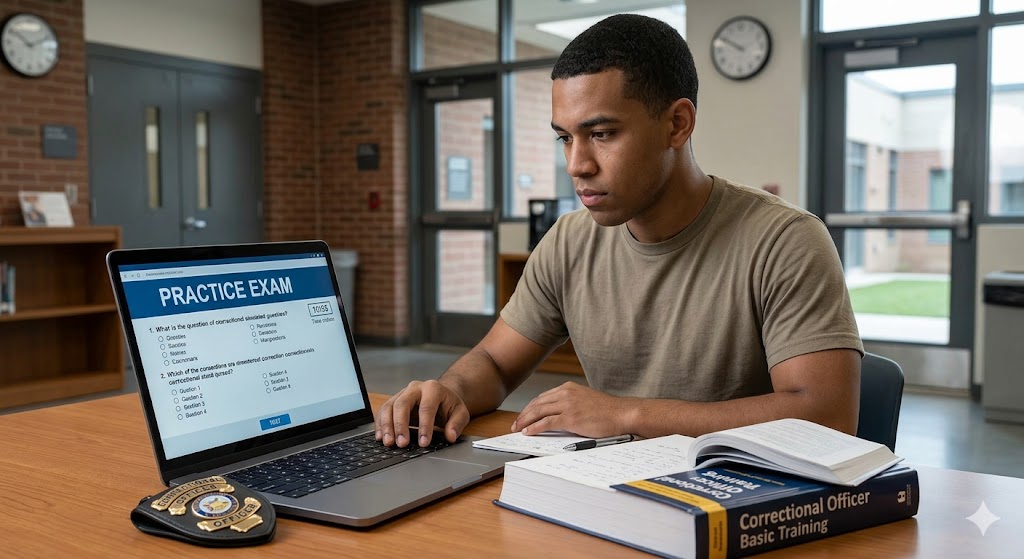
Additional Information
What the Course Entails and Exam Details
The Correctional Officer Basic Training curriculum combines rigorous academic instruction with hands-on practical training to prepare candidates for the multifaceted responsibilities of the role. While specific topics can vary by state and agency, core areas generally include:
Legal principles, ethics, and inmate rights.
Facility security procedures, including searches and control measures.
Inmate supervision and management strategies.
Defensive tactics, physical conditioning, and arrest procedures.
Firearms and other security equipment training.
Crisis intervention, de-escalation techniques, and emergency response (e.g., first aid, CPR).
Report writing and effective communication skills.
Mental health, substance abuse, and cultural diversity awareness within correctional contexts.
What to Expect in the Final Exam
The final certification exam for Correctional Officer Basic Training typically features a standardized, multiple-choice format designed to assess a candidate's mastery of the essential knowledge areas. Questions often focus on policy application, situational judgment, and understanding legal requirements. Depending on the jurisdiction, there may also be practical components, such as defensive tactics or firearms proficiency tests, which must be passed. While exact requirements are determined by the specific agency and state, a predetermined minimum passing score must be achieved. Candidates must often adhere to strict time limits and follow standard test procedures, such as presenting identification and working under proctor supervision. Utilizing a realistic practice test can help simulate these conditions and identify specific areas needing improvement.
How to Study and Exam Centers
Effective preparation for the Correctional Officer Basic Training exam is crucial for success. Here are several actionable study strategies:
Take Multiple Practice Tests: This is perhaps the single most important method. Use dedicated practice exams like the one mentioned in the title to understand the typical question style, identify knowledge gaps, and practice managing your time.
Thoroughly Review Academy Materials: Deeply engage with all textbooks, lecture notes, policy manuals, and study guides provided during your basic training course.
Focus on Key Policies and Procedures: Pay close attention to standard operating procedures for various scenarios, including safety, security, and emergency response.
Practice Practical Skills: Do not neglect physical and practical training. Consistently practice defensive tactics, report writing, and emergency protocols.
Utilize Study Groups: Collaborate with fellow candidates to discuss complex topics, share insights, and quiz each other on course content.
Simulate Exam Conditions: When taking practice tests, replicate the final exam environment as closely as possible—time yourself and minimize distractions.
Exam centers for the final certification are usually predetermined by the training agency or state-level governing body. They may be located within official training academies, state department of corrections facilities, or other designated and proctored testing venues. Some components, especially theoretical parts, might be administered online, but practical examinations typically require in-person attendance. It is vital to confirm all logistics, including specific locations and requirements, with your local training program or the relevant state corrections authority.
Job Opportunities from the Course
Successfully completing the Correctional Officer Basic Training and passing the associated exam opens numerous career paths in the field of corrections. Job opportunities and titles typically include:
Correctional Officer: General duties in supervising and managing inmates in prisons and jails.
Detention Officer: Supervising and securing individuals in shorter-term detention centers.
Jailer: Often used in county-level facilities to describe personnel managing jail populations.
Juvenile Justice Officer: Specialized role working with youths in secure detention or residential programs.
Transport Officer: Specialized role focused on the secure movement of inmates between facilities or for court appearances.
Corrections Supervisor: After gaining experience, officers can advance to supervisory roles like sergeant, lieutenant, or captain.
Specialized Units: Opportunities exist for further specialization in areas like tactical teams, intelligence units, or inmate program facilitation.
Frequently Asked Questions
Reviews
5.0
Based on 0 reviews
Leave a Review
No reviews yet. Be the first to review!