
Cough Reflex Test (CRT) Practice
$69.00
- Buy to unlock unlimited access to all Quiz questions and Answers in this Quiz.
- After purchase you can print a PDF of the whole quiz at any point. The PDF will contain the questions and the correct answers.
About this Exam
The Cough Reflex Test (CRT) is a vital, non-invasive assessment in the medical field, used to gauge a patient's natural cough mechanism. This practice exam is designed for healthcare students and professionals, such as respiratory therapists and speech-language pathologists, who need to become proficient in this critical skill to identify potential airway protection issues and the risk of silent aspiration. Mastering the principles and application of the CRT ensures patient safety and contributes to effective clinical decision-making. Embarking on this practice helps confirm your clinical readiness and builds essential confidence.
Ready to test your knowledge?
Buy Now to Access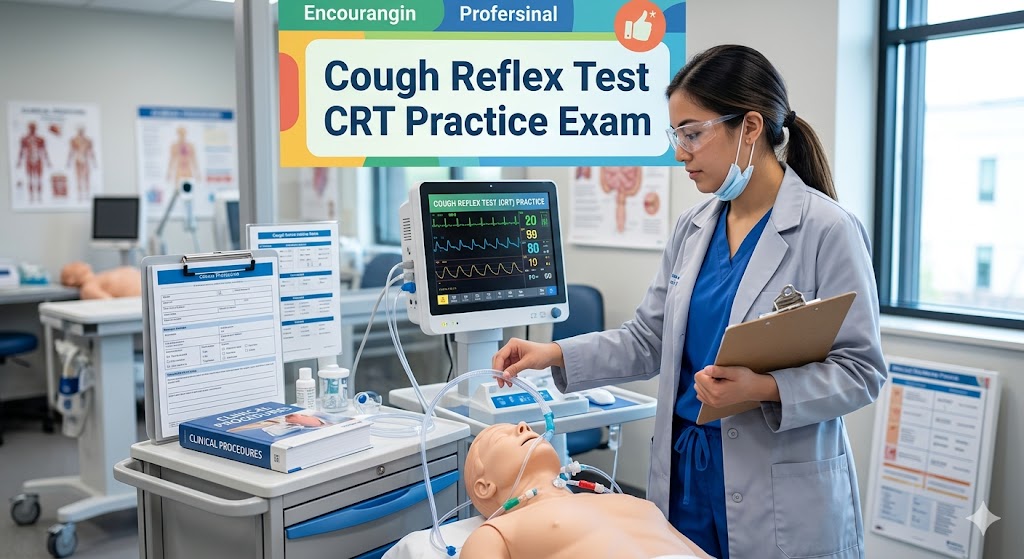
Additional Information
What the Course Entails and Exam Details
This guide focuses on the comprehensive knowledge and application of the Cough Reflex Test. Students should expect to cover areas such as:
Mechanism of the Cough Reflex: Understand the neurobiology and physiology behind voluntary and reflexive coughing.
Clinical Indications: Learn precisely when and why the CRT is required for patient assessment (e.g., post-stroke evaluation, neurological disorders).
Administration Protocols: Become familiar with standardized methods, including the use of tussigenic agents (like citric acid or tartaric acid) and necessary medical equipment.
Interpreting Responses: Learn to accurately assess the presence, strength, and latency of a cough reflex, and to differentiate between a healthy response and potential dysfunction.
Patient Communication & Safety: Master techniques for clear patient instruction, obtaining consent, ensuring patient comfort, and mitigating risks.
Documentation & Reporting: Understand how to properly record CRT results within medical records.
The practice for this component reflects general medical exam formats and assesses understanding and application through various methods, such as case study analyses and clinical simulation scenarios. It is typically integrated into larger clinical programs and certifications, with details and assessment methods specified by individual institutions and boards.
What to Expect in the Final Exam
While specific details, passing scores, and rules vary greatly depending on the broader certification body or academic program, here are common elements and general features of clinical skills assessments that test this type of knowledge. Often, you will face:
Multiple Choice Questions: Testing theoretical knowledge, mechanism understanding, and protocol adherence.
Scenario-Based Questions: Analyzing hypothetical patient cases to determine the appropriate use and interpretation of the CRT.
Practical or Simulation Components: Demonstrating the administration and interpretation of the test on a simulator or under clinical supervision. Note: Fixed statistics like total questions, passing score percentages, or time limits are specific to each examining body and are not standardized for this individual practice guide. The goal of any final evaluation is to ensure safe, effective clinical competence.
How to Study and Exam Centers
Effective preparation is essential for clinical proficiency. Consider these strategies for CRT practice:
Hands-on Practice: Seek opportunities to practice the CRT under supervision during your academic training or clinical rotations. Use training models if available.
Protocol Review: Rigorously study standardized protocols and guidelines from reputable medical sources and professional bodies.
Mock Clinical Scenarios: Create or participate in simulation scenarios with peers or instructors, focusing on test administration, patient management, and result interpretation.
Utilize Educational Resources: Study relevant textbooks, peer-reviewed journals, and reputable medical websites to deepen your theoretical understanding.
Practice Quizzes & Scenarios: Regularly test your knowledge with study guides, flashcards, and practice scenarios, focusing on diverse patient populations.
Regarding exam centers and administration, this skill is typically evaluated as a component within existing medical education or through recognized professional certification exams. Therefore, you may take relevant courses, practical assessments, and comprehensive exams in locations such as:
Authorized Academic Institutions: University and college programs in respiratory therapy, speech-language pathology, or nursing.
Specialized Clinical Training Programs: Hospitals, medical centers, or recognized training facilities.
Authorized Test Centers: Standard clinical examination centers or official locations for broader professional licensure and certification exams. It is critical to verify the specific requirements and testing locations for the overarching certification or academic program you are pursuing.
Job Opportunities from the Course
A strong understanding and demonstrated competence in the Cough Reflex Test can enhance career opportunities and are often a required skill in various roles. Relevant career paths include:
Registered Respiratory Therapist (RRT)
Certified Respiratory Therapist (CRT)
Speech-Language Pathologist (SLP)
Nurse Practitioner
Registered Nurse (with specialized training in relevant areas)
Neurologist/Medical Doctor (as a component of neurological assessment)
Clinical Researcher (in respiratory or neurological studies)
Frequently Asked Questions
Reviews
5.0
Based on 0 reviews
Leave a Review
No reviews yet. Be the first to review!