
Counseling for Related Professions Practice Test
$69.00
- Buy to unlock unlimited access to all Quiz questions and Answers in this Quiz.
- After purchase you can print a PDF of the whole quiz at any point. The PDF will contain the questions and the correct answers.
About this Exam
The Counseling for Related Professions Practice Exam is an essential tool designed for individuals preparing for careers in the helping professions who require a strong foundation in counseling principles and skills.
This certification or exam is typically intended for professionals working in roles such as social work assistants, addiction support specialists, community health workers, case managers, and other human services positions where supportive counseling is a key component of the job, rather than independent licensure as a therapist.
The exam evaluates a candidate's understanding of fundamental counseling theories, ethical guidelines, communication techniques, and cultural competence.
Successfully passing this exam demonstrates readiness to apply counseling skills effectively and ethically within a supportive professional framework.
Ready to test your knowledge?
Buy Now to Access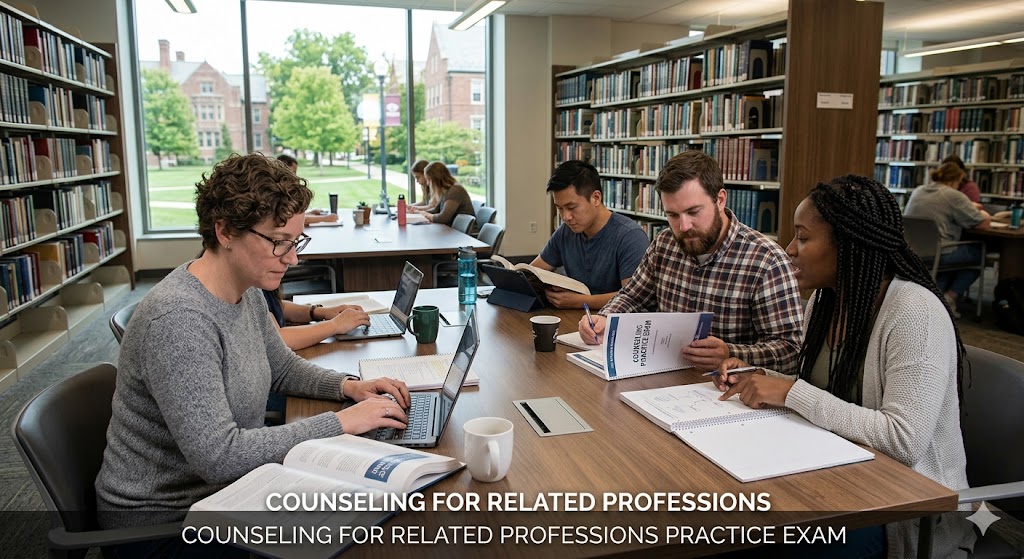
Additional Information
What the Course Entails and Exam Details
This comprehensive study program and the resulting exam focus on the practical application of counseling concepts in diverse professional settings.
Candidates can expect the course content and exam questions to cover several core areas crucial for effective supportive counseling:
Foundational Counseling Theories and Approaches: An overview of major counseling models such as Person-Centered Therapy, Cognitive Behavioral Therapy (CBT) basics, and Solution-Focused Brief Therapy, emphasizing their application in supportive roles.
Essential Communication Skills: Mastery of active listening, empathy, reflection, summarization, and clarifying techniques to build rapport and facilitate positive change with clients.
Ethics and Professional Standards: In-depth knowledge of ethical guidelines, including confidentiality, informed consent, professional boundaries, and mandatory reporting requirements within human services.
Cultural Competence and Diversity: Understanding the impact of culture, race, ethnicity, gender, and other identity factors on the counseling relationship and intervention strategies.
Assessment and Goal Setting: Basic skills in assessing client needs, identifying strengths and challenges, and collaborative goal-setting processes.
Crisis Intervention and Referral: Recognizing signs of crisis and understanding appropriate immediate responses, safety planning, and making effective referrals to licensed professionals.
What to Expect in the Final Exam
The final certification exam typically follows a standardized format designed to assess both theoretical knowledge and practical application:
Format: The exam usually consists of multiple-choice questions. Some versions may also include scenario-based or case study questions where candidates must apply their knowledge to hypothetical situations.
Time Limit: Candidates are generally allotted between 2 and 3 hours to complete the examination.
Passing Score: The passing score is determined by the specific credentialing body or institution offering the certification, but it typically ranges around 70% to 75%.
Specific Rules: Standard testing protocols apply, including verification of identity, prohibition of outside resources during the test, and adherence to academic integrity guidelines.
How to Study and Exam Centers
Preparation for the Counseling for Related Professions Practice Exam requires a strategic approach focused on both knowledge retention and practical application:
Utilize Comprehensive Study Guides and Textbooks: Review recommended textbooks on foundational counseling skills, ethics in human services, and communication techniques.
Take Advantage of Practice Tests: Regularly taking practice exams is one of the most effective ways to identify knowledge gaps, familiarize yourself with the question format, and improve time management skills. Focus on understanding the rationale behind correct answers.
Create Flashcards: Develop flashcards for key counseling terms, ethical principles, and theories to reinforce memory.
Engage in Role-Playing: Practice active listening and communication skills with peers or mentors to build practical confidence.
Form Study Groups: Collaborating with others preparing for the exam can provide diverse perspectives and mutual support.
Regarding exam logistics, registration for the official certification exam is typically handled through the credentialing organization or academic institution offering the program. Candidates will receive specific instructions upon registration regarding testing options. These often include:
Authorized Testing Centers: Many exams are administered at secure, proctored testing facilities such as Pearson VUE or Prometric centers located globally.
Online Proctoring: For flexibility, many organizations now offer online proctored exams, allowing candidates to take the test from a secure location with a stable internet connection while being monitored remotely.
Educational Institutions: Some programs allow candidates to take the exam at their specific college or vocational school testing center.
Job Opportunities from the Course
Earning a certification supported by passing the Counseling for Related Professions exam opens doors to numerous rewarding career paths in the social services and helping sectors. This qualification validates your skills for supportive counseling roles, leading to diverse job opportunities, including:
Case Manager
Social Work Assistant
Substance Abuse Counselor Aide
Community Health Worker
Family Support Specialist
Mental Health Technician
Intake and Referral Specialist
Residential Care Caretaker
Client Advocate
Youth Program Leader
Frequently Asked Questions
Reviews
5.0
Based on 0 reviews
Leave a Review
No reviews yet. Be the first to review!