
Cow-Calf Certification Practice Exam
$69.00
- Buy to unlock unlimited access to all Quiz questions and Answers in this Quiz.
- After purchase you can print a PDF of the whole quiz at any point. The PDF will contain the questions and the correct answers.
About this Exam
The Cow-Calf Certification and its corresponding exam are designed for individuals who work with, or aspire to manage, beef cattle operations that maintain cowherds to breed, raise, and sell calves. This professional certification, often part of programs like Beef Quality Assurance (BQA), validates your understanding of best practices, welfare standards, and efficient management techniques in the crucial cow-calf stage of beef production. Achieving this certification demonstrates a commitment to industry standards, animal welfare, and the production of high-quality beef from the very beginning of the supply chain. It is an excellent credential for producers, ranch managers, farm hands, and anyone looking to advance their career in livestock production.
Ready to test your knowledge?
Buy Now to Access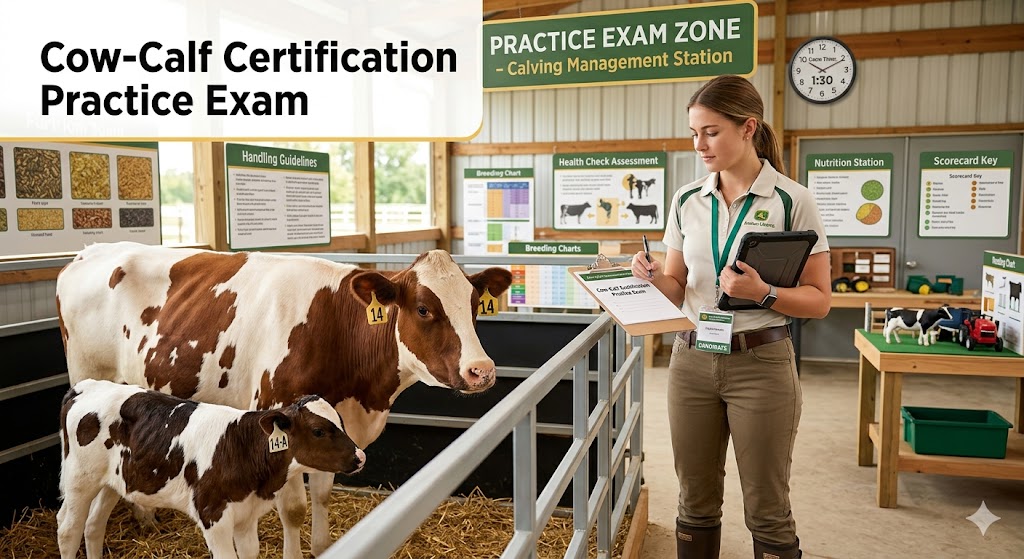
Additional Information
What the Course Entails and Exam Details
This comprehensive course typically covers a wide array of vital topics crucial for successful cow-calf management. Key areas include:
Herd Health Management: Understanding disease prevention, vaccination protocols, and general animal well-being.
Nutrition and Feeding Practices: Developing effective feeding programs for cows, bulls, and calves, from colostrum management to weaning.
Breeding and Genetics: Principles of reproduction, calving management, selection of breeding stock, and understanding Expected Progeny Differences (EPDs).
Cattle Handling and Stockmanship: Safe, low-stress handling techniques for diverse situations.
Facility and Environmental Management: Proper design of pens, housing, and pastoral care.
Record Keeping and Data Analysis: Essential tracking of performance, health, and economic data.
Welfare and Quality Assurance: Adhering to humane treatment standards and industry-required protocols.
The Cow-Calf Certification process usually involves two main components: complete participation in an educational course (often available online or in-person) and successful completion of a final examination to test your knowledge of the materials covered.
What to Expect in the Final Exam
While specific details can vary by the certifying organization or state, you can generally expect the following format for your final Cow-Calf Certification exam:
Format: The exam is typically comprised of multiple-choice, true/false, and sometimes short-answer questions. These questions are designed to assess your understanding and application of the practical skills and knowledge presented during the course.
Method: Many modern certifications, such as the BQA online modules, deliver the exam directly through an online learning platform. In-person training sessions may offer written or computer-based tests at the conclusion of the training.
Passing Score: A passing score, often around 70-80% or higher, is usually required to earn your certification. Be sure to check the specific requirements for your program.
Time Limit: Most exams will have a predetermined time limit to ensure efficient and consistent assessment, though online modules may offer some flexibility to work at your own pace through the material before the test.
Specific Rules: Online exams often allow for the open-book style review of course materials, while in-person or proctored settings might have stricter closed-book policies. Always review the specific examination rules provided by your certifying body.
How to Study and Exam Centers
Preparation is the key to success, and using practice exams can be one of your most effective study tools! Here’s how you can prepare:
Study Guides and Official Materials: Your primary study resource should be the official curriculum and guides provided by the certifying organization. Review all online lessons, manuals, and videos thoroughly.
Use Practice Exams: Look for official practice exams or quizzes offered by your program. If specific "practice exams" aren't available, review course quizzes and homework assignments to understand the question style and focus areas. Treat these practice sessions seriously to identify weak spots.
Hands-on Experience: Practical experience on a working farm or ranch is invaluable. Apply the theoretical concepts you learn directly to real-world interactions with cattle.
Join Study Groups: Discussing concepts, practical scenarios, and practice questions with peers can provide different perspectives and deepen your understanding.
Locating Exam Centers:
Online Portals: Many popular cow-calf certifications (e.g., BQA online modules) allow you to complete the course and the final exam entirely online from the comfort of your home or office.
Extension Offices: Local University Extension offices and agricultural services frequently host in-person training sessions and proctor exams.
Colleges and Universities: Agricultural schools and community colleges often deliver relevant courses and testing.
State and National Organizations: The BQA program, state cattlemen's associations, and relevant breed associations are the best sources for the most up-to-date information on upcoming courses, online portals, and authorized testing locations near you. Always verify registration procedures and any potential fees directly with the official certifying body.
Job Opportunities from the Course
Earning your Cow-Calf Certification opens the door to numerous fulfilling and diverse career paths within the beef and livestock industry. This credential can qualify you for roles such as:
Cow-Calf Producer/Operator
Ranch Manager or Assistant Manager
Herd Health Technician
Farm Hand or Stockperson with specialized skills
Livestock Evaluation and Selection Specialist
Breeding Manager or Technician
Calf Rearing and Youngstock Manager
Agricultural Educator or Extension Assistant
Breeding Association Staff Member
Field Service Representative for agricultural companies
Cattle Procurement Assistant for feedyards or processors
Animal Welfare Compliance Officer in relevant settings
Good luck on your journey to becoming a certified cow-calf management professional! Stay focused, utilize all your resources, and approach both your practice and final exams with confidence.
Frequently Asked Questions
Reviews
5.0
Based on 0 reviews
Leave a Review
No reviews yet. Be the first to review!