
Credentia CNA Practice Test
$69.00
- Buy to unlock unlimited access to all Quiz questions and Answers in this Quiz.
- After purchase you can print a PDF of the whole quiz at any point. The PDF will contain the questions and the correct answers.
About this Exam
The Certified Nursing Assistant (CNA) exam is a crucial step for individuals aspiring to enter the vital field of direct patient care. administered by Credentia in many states, this certification is the primary requirement to practice as a CNA.
It ensures that candidate nursing assistants possess the necessary knowledge and fundamental skills to provide safe, respectful, and effective care to residents in diverse healthcare settings, including long-term care facilities, hospitals, and assisted living communities.
Sample Questions
Explanation:
Explanation:
Explanation:
Explanation:
Explanation:
Ready to test your knowledge?
Buy Now to Access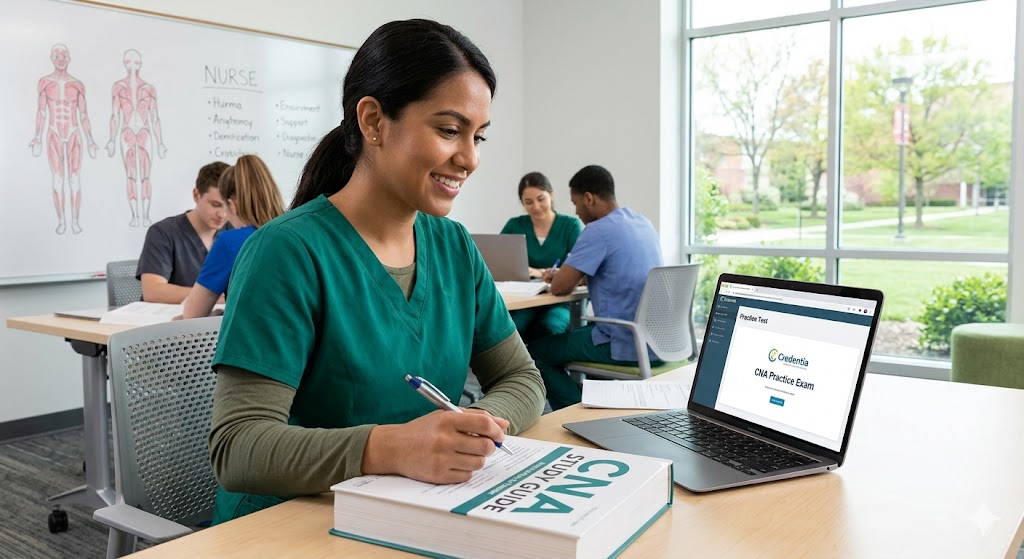
Additional Information
What the Course Entails and Exam Details
Before a candidate is eligible to take the Credentia CNA exam, they must typically complete a state-approved nurse aide training program.
These programs cover the core syllabus, including infection control, safety procedures, basic nursing skills, personal care, mental health concepts, data collection, and communication.
The final exam is split into two distinct parts: a Written (or Oral) Examination and a Skills Evaluation.
What to Expect in the Final Exam
The Written Examination: This part of the test consists of multiple-choice questions that assess your knowledge of the essential skills and responsibilities of a CNA.
It covers a range of topics, including resident rights, safety, basic care skills, and communication. The number of questions and time limit can vary by state, so checking your state’s specific Credentia handbook is essential. A common format is roughly 60-70 questions to be completed within a specific timeframe (e.g., 90 minutes or two hours).
The Skills Evaluation: The practical skills evaluation is where candidates must demonstrate their proficiency in performing a set of randomly selected nursing assistant tasks.
These skills are drawn from a predetermined list and include fundamental duties such as handwashing, transferring a resident, measuring vital signs, and providing personal hygiene.
You will be evaluated by an approved proctor who watches you perform each skill on a volunteer. A passing grade requires correctly performing all key steps within each selected skill within a specified time. Failure on either the written or skills part generally means the entire exam must be retaken.
How to Study and Exam Centers
Effective preparation for the CNA exam requires a structured approach that covers both theoretical knowledge and hands-on skills.
Utilize Credentia CNA Practice Exams frequently. These simulate the real written test environment and highlight areas for improvement. Reviewing course textbooks, making flashcards for key terms and procedures, and forming study groups are excellent strategies. For the skills part, practice is paramount. Work with peers or use a patient simulation mannequin to refine your technique, paying close attention to the evaluator's criteria.
Credentia partners with many states to manage CNA testing. Depending on your state, you might be able to schedule your exam online through Credentia’s secure candidate portal. Online proctored exams may be an option in some jurisdictions. However, the most common route is through designated, physical exam centers. These are often located within approved training schools, local community colleges, or professional testing facilities. Your training program director can guide you on the closest authorized testing locations and registration process.
Job Opportunities from the Course
Earning your CNA certification through Credentia opens up several rewarding career paths and provides a solid foundation for growth within the healthcare industry. Potential job opportunities include:
Certified Nursing Assistant (CNA)
Home Health Aide (HHA)
Nursing Home Assistant
Hospital Patient Care Technician (PCT)
Resident Aide
Assisted Living Caregiver
Geriatric Aide
Direct Support Professional (DSP)
Frequently Asked Questions
Reviews
5.0
Based on 0 reviews
Leave a Review
No reviews yet. Be the first to review!