
Crematory & Cemetery Comprehensive Practice Exam
$69.00
- Buy to unlock unlimited access to all Quiz questions and Answers in this Quiz.
- After purchase you can print a PDF of the whole quiz at any point. The PDF will contain the questions and the correct answers.
About this Exam
The Crematory & Cemetery Comprehensive Practice Exam is a specialized preparatory tool designed to ensure candidates are fully equipped for official certification in the death care industry.
This exam is meticulously crafted for aspiring crematory operators, cemetery managers, burial authorities, and administrators seeking professional licensure or enhancement of their current credentials.
As the death care sector becomes increasingly complex, this exam serves as a crucial benchmark, testing the comprehensive knowledge required to manage operations safely, ethically, and in full compliance with state and federal regulations.
By simulating the rigors of actual certification, this tool offers invaluable insights, helping students bridge the gap between educational content and practical application.
It is an essential step for anyone committed to upholding the highest professional standards in serving grieving families.
Ready to test your knowledge?
Buy Now to Access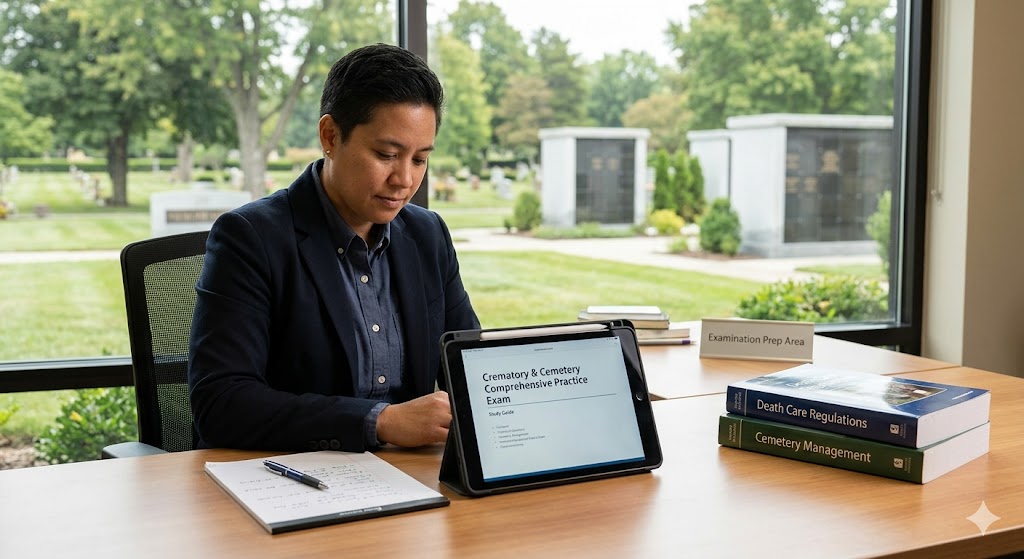
Additional Information
What the Course Entails and Exam Details
This comprehensive practice assessment covers the essential domains critical to successful crematory and cemetery operations.
While it is not a "course" in itself, it is designed to evaluate mastery of the typical curricula found in premier death care training programs.
The syllabus reflected in the exam is vast, focusing on several foundational pillars.
First, candidates must demonstrate an in-depth understanding of Cremation Theory and Practice, including equipment operation, maintenance schedules, combustion science, and processing protocols.
Second, significant emphasis is placed on Cemetery Administration and Operations, covering interments, disinterments, property maintenance, and record-keeping.
Third, and perhaps most critically, the assessment heavily weighs Regulatory Compliance and Safety, testing knowledge of OSHA, EPA standards, FTC Funeral Rule regulations, and ethical best practices.
Furthermore, candidates are evaluated on their knowledge of environmental impact, health risks, and the appropriate handling of hazardous materials.
Mastering these diverse topics ensures that practitioners can operate facilities efficiently while strictly adhering to safety and legal requirements.
What to Expect in the Final Exam
The actual final exam simulated by this practice test generally adheres to a standardized format common in professional certification.
Candidates should expect a rigorous assessment primarily composed of multiple-choice questions designed to test both factual recall and practical scenarios.
While formats vary by jurisdiction, standard certification exams typically include between 75 and 150 questions.
The examination is usually timed, with candidates typically allotted approximately 90 minutes to two hours to complete the test.
A closed-book environment is standard to ensure the measurement of retained knowledge.
Passing score requirements fluctuate slightly depending on the issuing body or state board, but a score of 70% to 75% is typically required for certification.
Candidates must approach the exam with diligence, ensuring they are prepared to apply regulatory knowledge to real-world scenarios rather than simply memorizing facts.
How to Study and Exam Centers
Achieving success on this exam requires a strategic and multifaceted study approach.
Candidates should begin by thoroughly reviewing the core study guides provided by recognized organizations, such as the International Cemetery, Cremation and Funeral Association (ICCFA) or the National Funeral Directors Association (NFDA).
Utilizing practice exams repeatedly is one of the most effective strategies; this practice exam allows students to identify specific knowledge gaps, particularly in challenging areas like regulatory compliance and equipment maintenance.
We recommend dedicating significant study time to reviewing state-specific regulations and environmental laws relevant to your testing area.
Formation of study groups or seeking mentorship from experienced death care professionals can also provide practical context that is invaluable for the scenario-based questions.
When candidates are ready to take the official examination, they will typically register through the relevant state board or their specific certifying association.
Official exams are often administered through secure, proctored testing centers, including widely recognized providers such as Pearson VUE.
In many cases, authorized educational institutions, funeral service colleges, or large industry conventions may also serve as authorized physical testing locations.
Always verify the specific testing requirements and available centers for your certification with the issuing authority before scheduling your exam.
Job Opportunities from the Course
Gaining certification through the mastery validated by this practice exam unlocks numerous critical roles within the stable and evolving death care industry.
Professionals holding this comprehensive knowledge are essential for the operation of modern funeral establishments, cemeteries, and crematories.
Potential career paths and job titles include:
Certified Crematory Operator
Cemetery Manager/Superintendent
Bereavement Coordinator
Family Service Counselor
Death Care Compliance Officer
Cemetery Administrator/Record-Keeper
Licensed Funeral Director (Depending on state licensing boards)
Frequently Asked Questions
Reviews
5.0
Based on 0 reviews
Leave a Review
No reviews yet. Be the first to review!