
Criminal Justice Practice Exam
$69.00
- Buy to unlock unlimited access to all Quiz questions and Answers in this Quiz.
- After purchase you can print a PDF of the whole quiz at any point. The PDF will contain the questions and the correct answers.
About this Exam
This comprehensive practice exam is specifically designed as a vital resource for students and aspiring professionals preparing for careers in the field of criminal justice. This practice exam is an excellent tool for individuals studying for roles such as police officers, paralegals, probation officers, and security personnel. It serves to gauge a candidate's readiness and mastery of fundamental concepts and procedures in the United States criminal justice system. By simulating the actual exam experience, it helps build confidence, identify knowledge gaps, and develop essential test-taking strategies. Whether you are aiming for entry-level positions or advancement within the sector, this practice exam offers practical preparation to help you achieve certification and career goals.
Ready to test your knowledge?
Buy Now to Access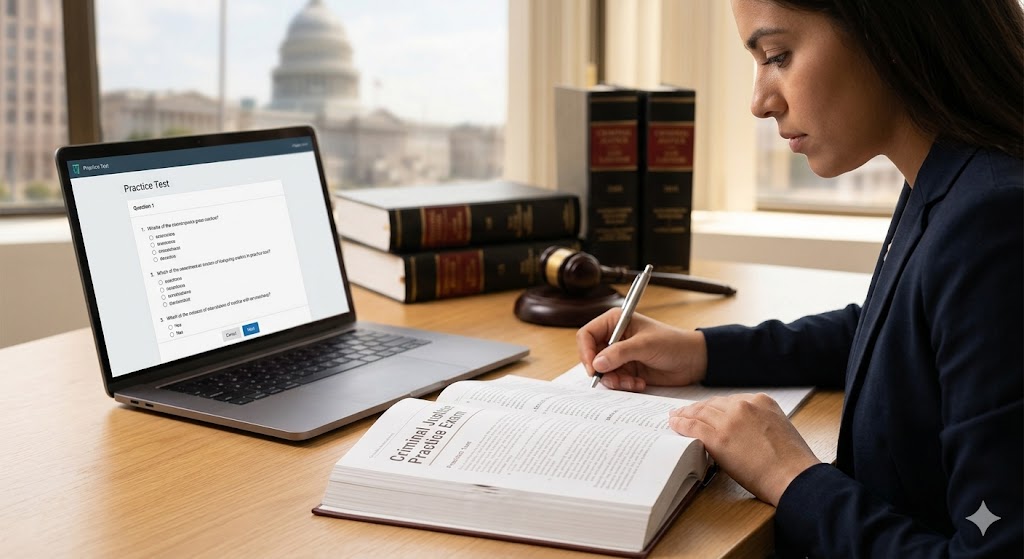
Additional Information
What the Course Entails and Exam Details
This practice exam covers a broad spectrum of critical topics relevant to the criminal justice sector. The core curriculum reflects the knowledge and skills tested on major criminal justice exams across the nation.
Key areas covered include:
Introduction to the Criminal Justice System: Understanding the roles and responsibilities of the three primary components: law enforcement, the courts, and corrections.
Constitutional Law: Key concepts regarding the US Constitution, Bill of Rights, and their applications in criminal procedures, including search and seizure (Fourth Amendment) and due process (Fifth Amendment).
Criminal Law Principles: Distinguishing between different types of crimes (e.g., felonies, misdemeanors), understanding criminal intent (mens rea), and defenses to criminal liability.
Law Enforcement Procedures: Knowledge of police operations, investigations, arrest procedures, and ethics in policing.
Court Systems and Process: Overview of court jurisdiction, the roles of prosecutors, defense attorneys, and judges, and the phases of a criminal trial (arraignment, plea bargaining, trial).
Corrections and Rehabilitation: Examines different theories of punishment, the prison system, probation and parole procedures, and alternative sentencing.
Juvenile Justice: Differences in handling juvenile offenders compared to adults, the goals of the juvenile court, and juvenile rights.
What to Expect in the Final Exam
While the exact structure may vary by state or organization, the general format of standard criminal justice exams is typically a computerized test consisting of multiple-choice questions.
Format: The exam predominantly uses multiple-choice questions, requiring you to select the single best answer from a provided list.
Number of Questions: The number of questions can vary significantly, often ranging from 100 to 200 questions depending on the specific exam or certification.
Time Limit: You will be given a set time limit, typically ranging from 2 to 4 hours, requiring efficient time management.
Passing Score: Requirements also vary, but a common passing score is usually set at or above 70% to 75%.
Specific Rules: Depending on the testing provider, the exam may be proctored, requiring proper identification. Note that most exams do not allow reference materials to be used during the test. Understanding these parameters beforehand is essential for effective preparation.
How to Study and Exam Centers
Effective preparation for this exam requires consistent and focused effort. It is highly advisable to follow a structured approach to study all the key topics thoroughly.
Study Strategies and Practice Methods:
Develop a Study Plan: Create a realistic schedule, allocating time to review each key subject area systematically.
Utilize Comprehensive Resources: Refer to standard criminal justice textbooks, relevant online courses, and legal resources to deepen your understanding.
Use Flashcards for Key Terms: Memorize important legal definitions, constitutional amendments, and operational protocols using flashcards.
Practice with Sample Questions: Continually work through practice questions from various sources to familiarize yourself with the question formats and types of content.
Take Multiple Practice Exams: Simulating full-length practice tests under timed conditions is crucial for building stamina and improving time management.
Identify Weak Areas: Use results from practice tests to focus your further study on topics where you need improvement.
Where and How to Take the Exam:
Testing Providers: Many criminal justice exams are administered by well-known organizations such as Pearson VUE, which has extensive networks of secure testing centers worldwide.
Online Portals: Some specific certifications may offer proctored online exams that you can take from a suitable, secure location with a stable internet connection.
Physical Testing Centers: In many instances, candidates must schedule their exams at designated physical testing locations within their state or locality.
Authorized Schools/Academies: For certain positions, like becoming a police officer, the exam might be taken as part of the academy training program or at authorized police training facilities. You will typically need to pre-register and pay a fee to schedule your examination date and location.
Job Opportunities from the Course
Successfully navigating and passing exams in criminal justice opens the door to a diverse and rewarding array of career paths within the legal and public safety sectors. While some roles may require additional specialized training (such as police or correctional academies), certification and demonstrated knowledge are fundamental prerequisites.
Police Officer: Enforces laws, maintains public order, and investigates crimes.
Detective/Investigator: Conducts detailed investigations into criminal activities.
Correctional Officer: Supersees individuals in prisons, jails, and reformatories.
Probation/Parole Officer: Manages and supports individuals released on probation or parole.
Court Clerk: Handles administrative and clerical duties for the judicial system.
Bailiff: Maintains order and security within the courtroom.
Paralegal/Legal Assistant: Supports lawyers by conducting legal research and drafting documents.
Security Manager/Officer: Oversees security operations for private companies or public institutions.
Juvenile Justice Specialist: Works specifically with young offenders.
Crime Scene Technician: Collects and analyzes physical evidence from crime scenes.
Victim Advocate: Supports victims of crime through the legal process.
Frequently Asked Questions
Reviews
5.0
Based on 0 reviews
Leave a Review
No reviews yet. Be the first to review!