
Crisis Prevention & Intervention Training (CPIT) Practice Test
$69.00
- Buy to unlock unlimited access to all Quiz questions and Answers in this Quiz.
- After purchase you can print a PDF of the whole quiz at any point. The PDF will contain the questions and the correct answers.
About this Exam
The Crisis Prevention & Intervention Training (CPIT) certification is a crucial credential for professionals working in challenging environments, such as healthcare, education, social work, and law enforcement. This comprehensive program equips individuals with essential skills to recognize, prevent, and safely navigate crisis situations before they escalate into physical confrontations. By focusing on de-escalation techniques, non-restrictive interventions, and understanding behavioral triggers, CPIT ensures the safety, dignity, and welfare of both the professional and the individual in crisis. It is a mandatory requirement for many roles involving patient care, student management, and public safety.
Ready to test your knowledge?
Buy Now to Access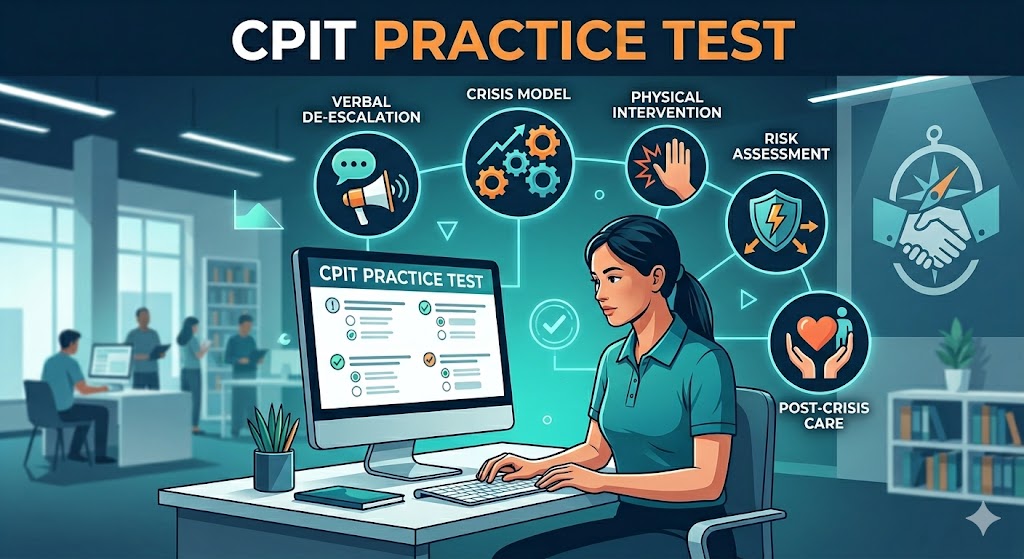
Additional Information
What the Course Entails and Exam Details
The CPIT course provides a balanced mix of theoretical knowledge and practical application. Core topics include the stages of crisis development, effective communication strategies (verbal and non-verbal), active listening techniques, decision-making frameworks, and risk assessment protocols. Students learn how to employ non-violent verbal interventions and, when absolutely necessary, safe and restrictive physical intervention procedures as a last resort. The curriculum emphasizes early identification of warning signs and the psychological aspects of crisis management, providing actionable tools for maintaining composure and professional detachment under pressure.
What to Expect in the Final Exam
The final CPIT certification exam evaluates proficiency in both knowledge and application. Candidates can expect a written component, usually in a multiple-choice format, testing comprehension of crisis theories, ethical guidelines, and intervention protocols. This is typically followed by a practical skills assessment where candidates must demonstrate competence in physical intervention techniques or verbally manage a simulated crisis scenario evaluated by a certified instructor. A passing score is mandatory for both components; this score is generally around 80% for the written test, and the practical portion is evaluated on a pass/fail basis based on strict safety guidelines.
How to Study and Exam Centers
Effective preparation for the CPIT practice test requires a mix of self-study and hands-on practice. Utilize official study guides, training manuals, and online practice exams (like those this guide supports) to solidify your theoretical knowledge. Focus heavily on behavioral indicators and the specific response protocols for each stage of a crisis. Reviewing the practical techniques with a qualified trainer or colleague is critical for mastering the physical components safely. CPIT exams are typically administered through the training organization that provided the coursework, which may include on-site training facilities at a workplace (such as a hospital or school) or authorized training providers in community college settings or private training centers.
Job Opportunities from the Course
Earning your CPIT certification opens doors to a wide range of career opportunities across multiple sectors where behavior management skills are essential. Below is a list of job opportunities that frequently require or highly value this certification:
Registered Nurse (RN) and Licensed Practical Nurse (LPN)
Certified Nursing Assistant (CNA)
Mental Health Technician
Special Education Teacher
Paraeducator / Teacher's Aide
Behavioral Intervention Specialist
Security Officer (Hospital or School setting)
Residential Care Worker
Social Worker / Case Manager
Juvenile Justice Officer
Frequently Asked Questions
Reviews
5.0
Based on 0 reviews
Leave a Review
No reviews yet. Be the first to review!