
Critical Care Abnormal Cardiac Functioning 1 Practice Exam
$69.00
- Buy to unlock unlimited access to all Quiz questions and Answers in this Quiz.
- After purchase you can print a PDF of the whole quiz at any point. The PDF will contain the questions and the correct answers.
About this Exam
The Critical Care Abnormal Cardiac Functioning 1 Practice Exam is a specialized assessment designed for healthcare professionals working in high-acuity environments. This includes intensive care unit (ICU) nurses, cardiac care unit (CCU) staff, and advanced emergency responders. It focuses on the rapid recognition, interpretation, and management of complex cardiovascular pathologies. By utilizing this practice exam, clinicians can validate their ability to make critical decisions under pressure, ensuring optimal patient outcomes in life-threatening situations. It serves as an essential tool for those preparing for advanced certification or seeking to refine their clinical expertise.
Ready to test your knowledge?
Buy Now to Access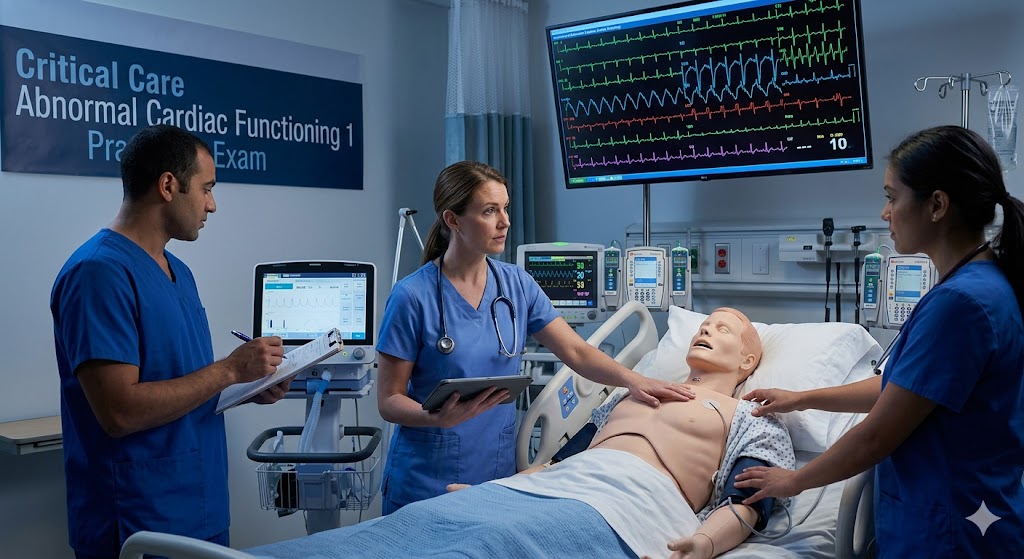
Additional Information
What the Course Entails and Exam Details
This practice exam covers a comprehensive range of advanced cardiovascular concepts required for critical care practice. The core content includes in-depth analysis of complex dysrhythmias and lethal rhythms. Candidates must demonstrate proficiency in interpreting 12-lead ECGs for dynamic changes, such as myocardial infarction or electrolyte imbalances. The syllabus also details hemodynamic monitoring interpretation, including invasive catheter data and cardiac output calculations. Furthermore, it addresses advanced pharmacological interventions and mechanical circulatory support devices.
What to Expect in the Final Exam
The actual exam is typically delivered in a computerized, multiple-choice format designed to test both knowledge and clinical application. Students generally have a specific time limit, often around 2 to 3 hours, to complete the assessment. A passing score is usually set between 70% and 80%, depending on the specific accrediting body. The questions are scenario-based, requiring candidates to analyze patient data and select the most appropriate immediate intervention. Specific rules regarding calculator usage or reference materials will vary by testing center.
How to Study and Exam Centers
Effective preparation requires a combination of rigorous theoretical review and practical application. We recommend utilizing comprehensive critical care nursing textbooks and practice question banks that simulate the exam's format. Forming study groups to discuss complex case studies and practicing ECG interpretation daily are highly effective strategies. For the official certification, candidates typically register through accredited organizations such as the American Association of Critical-Care Nurses (AACN). The physical exams are administered at authorized testing centers like Pearson VUE, or sometimes via secure proctored online portals.
Job Opportunities from the Course
Mastery of this content and subsequent certification opens numerous advanced career paths in specialized healthcare settings.
Critical Care Registered Nurse (ICU/CCU)
Cardiac Cath Lab Nurse
Emergency Department Nurse Practitioner
Flight Nurse / Transport Nurse
Clinical Nurse Specialist (Cardiovascular)
ICU Nurse Manager or Educator
Frequently Asked Questions
Reviews
5.0
Based on 0 reviews
Leave a Review
No reviews yet. Be the first to review!