
CTCE Early Childhood Education Certification Practice Exam
$69.00
- Buy to unlock unlimited access to all Quiz questions and Answers in this Quiz.
- After purchase you can print a PDF of the whole quiz at any point. The PDF will contain the questions and the correct answers.
About this Exam
Welcome to your comprehensive guide to the CTCE Early
Childhood Education Certification! This certification exam is thoughtfully
designed for dedicated individuals aspiring to become early childhood
educators. Whether you're looking to start your journey in a preschool setting
or advance your existing career in childcare, obtaining the CTCE certification
is a critical step towards demonstrating your expertise and commitment to
quality early childhood education. This credential evaluates your knowledge of
child development, effective teaching practices, and professional
responsibilities, ensuring you are well-equipped to support the learning and
growth of young children during these foundational years.
Ready to test your knowledge?
Buy Now to Access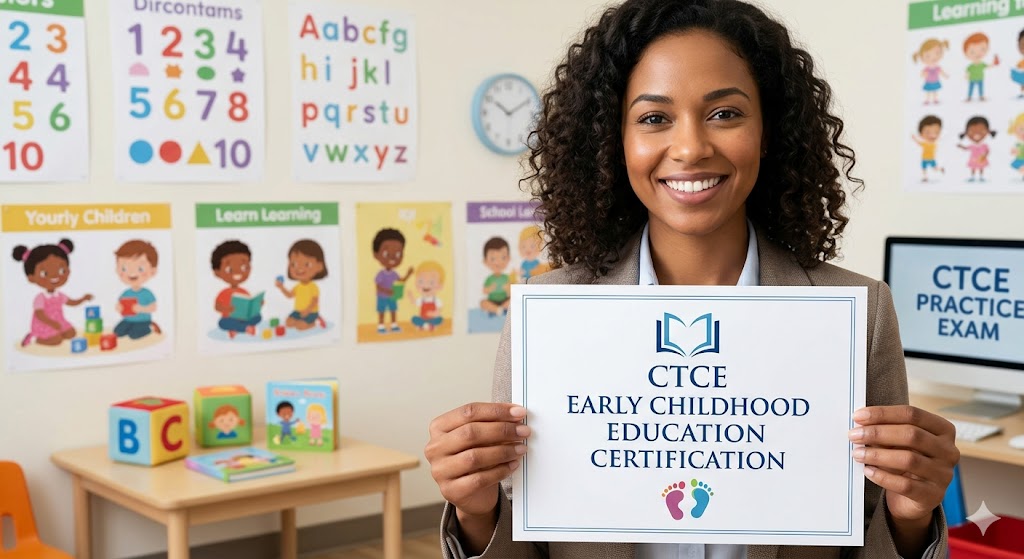
Additional Information
What the Course Entails and Exam Details
The CTCE Early Childhood Education Certification exam
covers a wide spectrum of essential knowledge and skills, structured around
core domains vital to early childhood education practice. While specific course
syllabus or skills might vary depending on prep programs, typically candidates
can anticipate assessments across several key areas:
- Child
Growth and Development: Understanding physical, cognitive, social, and
emotional development milestones and their implications for learning.
- Curriculum
Planning and Implementation: Developing and assessing age-appropriate,
engaging, and developmentally appropriate learning activities and
environments.
- Health,
Safety, and Nutrition: Knowledge of regulatory requirements, health
practices, safety protocols, and nutritional guidelines for young
children.
- Observation,
Assessment, and Instruction: Utilizing various observational tools and
assessment methods to inform instruction and track child progress.
- Family,
Community, and Professionalism: Fostering positive relationships with
families and communities, understanding ethical standards, and adhering to
professional responsibilities.
- Early
Childhood Education Theories and Approaches: Exploring prominent
educational theories and pedagogical approaches.
- Diverse
Learners and Inclusive Practices: Strategies to support the development
and learning of all children, including those with special needs.
The certification exam is meticulously crafted to assess
both your conceptual understanding of these areas and your ability to apply
best practices in real-world early childhood settings.
What to Expect in the Final Exam
The CTCE Early Childhood Education Certification exam is
typically a comprehensive, computer-based assessment consisting of
approximately 100-120 multiple-choice questions, which is typically
administered in English. Candidates generally have a time limit, often around
2.5 to 3.5 hours, to thoughtfully complete all sections of the exam. The
questions are designed to evaluate your depth of knowledge across the diverse
domains of early childhood education. To receive certification, a specific
scaled passing score or percentage of correct answers will be required, with
detailed results typically provided shortly after exam completion. You will be
expected to strictly adhere to all exam rules, including presenting valid
identification upon arrival and avoiding prohibited personal items.
How to Study and
Exam Centers
Effective preparation is key to achieving success on the
CTCE Early Childhood Education Certification exam. Here are some actionable
study strategies:
- Utilize
Comprehensive Study Materials: Look for official or recommended CTCE study
guides, practice tests, and textbooks covering the core exam domains.
- Engage
in Practice Exams: Regularly taking practice tests that simulate the real
exam format and timing is crucial. Identify knowledge gaps and review
relevant concepts.
- Review
Early Childhood Education Concepts: Focus on thoroughly understanding
child development stages, curriculum planning theories, safety procedures,
and ethical considerations.
- Consider
a Preparatory Course: Some institutions and online platforms may offer
dedicated courses designed specifically to prepare candidates for early
childhood certifications, including potentially the CTCE.
- Create
a Structured Study Schedule: Dedicate consistent time each day or week to
review different exam topics systematically.
When you are ready to schedule your exam, you can
typically do so through the official CTCE exam administration website. This
website, or an associated testing service provider, will allow you to:
- Locate
Authorized Exam Centers: Identify physical testing locations near you,
which may be universities, colleges, or specialized testing centers with
appropriate proctoring and computer facilities.
- Explore
Secure Online Proctoring: Investigate if secure online proctoring options
are available, which could offer convenience from your home environment,
provided you meet strict technical and proctoring requirements.
- Choose
a Test Date and Time: Select an available date and time slot that fits
your schedule, ensuring you are fully prepared to take the exam. Be sure
to check for any associated registration fees.
Job Opportunities
from the Course
Obtaining your CTCE Early Childhood Education
Certification unlocks a multitude of fulfilling career paths within the early
childhood education and care sector. Here is a selection of some of the diverse
job titles and career paths this certification can empower you to pursue:
- Preschool
Teacher: Leads learning activities and supports development in preschool
settings.
- Childcare
Worker/Director: Provides care and supervision, often in childcare
centers, and may manage operations as a director.
- Head
Start/Pre-K Teacher: Educates young children in government-funded early
childhood programs.
- Curriculum
Coordinator: Develops and oversees the implementation of early childhood
curriculum in educational programs.
- Child
and Family Advocate: Supports children and their families in accessing
resources and quality early childhood programs.
- Family
Support Specialist: Works with families to promote child well-being and
development.
- Early
Childhood Administrator: Manages early childhood programs, ensuring
compliance with regulations and standards.
- Teaching
Assistant: Supports lead teachers in early learning environments.
- Home
Visitor: Provides guidance and support to families with young children in
their homes.
Frequently Asked Questions
Reviews
5.0
Based on 0 reviews
Leave a Review
No reviews yet. Be the first to review!