
Current Digital Forensics Tools Practice Test
$69.00
- Buy to unlock unlimited access to all Quiz questions and Answers in this Quiz.
- After purchase you can print a PDF of the whole quiz at any point. The PDF will contain the questions and the correct answers.
About this Exam
The Current Digital Forensics Tools exam is a pivotal assessment designed to validate an individual's practical knowledge and skill in using modern digital forensics software to investigate cyber incidents and collect evidence. This certification practice test is specifically crafted for aspiring digital forensic examiners, incident response professionals, law enforcement personnel, and IT security specialists looking to establish or advance their careers. It serves as a crucial benchmarking step, ensuring candidates can effectively utilize standard and specialized tools to identify, preserve, analyze, and present digital findings from various data sources.
Ready to test your knowledge?
Buy Now to Access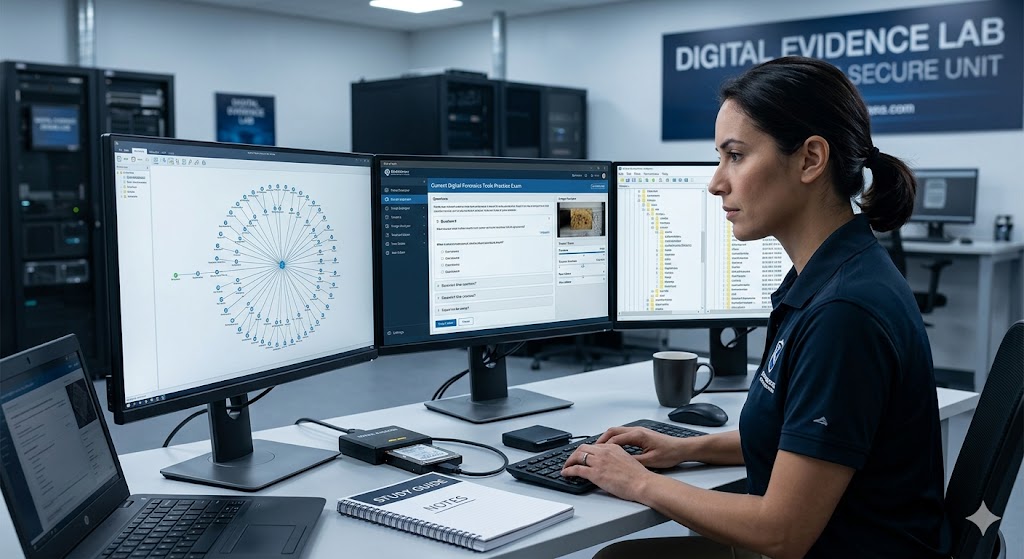
Additional Information
What the Course Entails and Exam Details
This comprehensive practice exam meticulously covers the core competencies required for current digital forensics professionals. The syllabus focuses on hands-on application and procedural knowledge, with detailed attention to the full investigation lifecycle.
Candidates can expect questions and scenarios spanning these critical areas:
Digital Investigation Fundamentals: Defining digital forensics, understanding legal prerequisites, and maintaining ethical standards.
Chain of Custody and Evidence Handling: Proper documentation, identification, collection, preservation, and transportation of digital evidence to ensure admissibility in court.
Data Acquisition and Imaging: Validating the creation of forensic duplicates using hardware and software write blockers with key tools like FTK Imager and dd.
File System and Artifact Analysis: Deep dives into analyzing Windows (Registry, Event Logs, Prefetch, Jump Lists, Recycle Bin), macOS, and Linux systems.
Memory Forensics: Using advanced utilities like Volatility to analyze RAM for running processes, open network connections, and hidden malware.
Browser and Email Forensics: Investigating internet history, cache, cookies, and analyzing email headers and content.
Using Modern Forensic Suites: Application of integrated tools such as Autopsy, EnCase, FTK (Forensic Toolkit), and The Sleuth Kit.
Anti-Forensics Detection: Identifying and countering data obfuscation, encryption, and trail wiping techniques.
The practice test is designed to mirror the knowledge required for a leading professional-level examination, typically spanning several modules of learning.
What to Expect in the Final Exam
When sitting for the actual Current Digital Forensics Tools final exam, candidates should prepare for a challenging and comprehensive evaluation. The final exam typically uses a combination of multiple-choice questions to test theoretical understanding and practical, scenario-based questions that require direct tool application or analysis of pre-captured evidence.
The exam structure often includes:
Format: Approx. 60-80 questions, split between theoretical multiple-choice and interactive/scenario-based tasks.
Time Limit: Usually 2 to 3 hours, depending on the number of practical components.
Passing Score: Typically set between 70% and 75% correct responses.
Rules: The exam is typically proctored, prohibiting external resources, notes, or internet access, simulating a realistic, controlled investigation environment. Candidates must present valid photo identification and adhere to a strict code of conduct.
This practice exam is your best tool to familiarize yourself with the question types, difficulty, and time pressure you will face.
How to Study and Exam Centers
Effective preparation for the Current Digital Forensics Tools exam requires a balanced blend of practical experience and theoretical knowledge. We recommend a structured study plan that includes the following strategies:
Build a Personal Lab: Create a virtualized environment with dummy evidence files (disk images, memory dumps, network captures) to practice using open-source tools like Autopsy, Volatility, Wireshark, and trial versions of commercial software.
Follow Hands-on Tutorials: Engage with online labs, walkthroughs, and guided investigation exercises that simulate real-world cybercrime scenarios.
Review Procedural Documentation: Study industry best practices, legal guidelines (such as the ACPO guidelines), and user manuals for standard forensic tools.
Utilize this Practice Exam: Take this practice test multiple times to identify your weak points and reinforce your knowledge under simulated exam conditions.
For the final exam, candidates take the assessment through authorized online portals, allowing for remote, proctored testing from a personal computer in a quiet, secure environment. In some cases, the certification provider may require testing at specific physical testing centers or authorized training schools. Examples of prominent exam delivery networks include Pearson VUE or specific vendor-proprietary online examination platforms.
Job Opportunities from the Course
A strong performance on this practice test and subsequent certification in Current Digital Forensics Tools unlocks numerous career paths across the public and private sectors. The specialized skills in evidence analysis and reporting are in high demand as organizations globally face an increasing number of cyber threats and legal cases involving digital evidence.
A list of specific job titles and career paths this course prepares you for includes:
Digital Forensics Analyst
Computer Forensic Examiner
Cyber Security Incident Responder (CSIRT Member)
Information Security Analyst
Threat Intelligence Analyst
Litigation Support Specialist (Law Firms)
Corporate Investigator
eDiscovery Specialist
Cyber Crime Investigator (Law Enforcement/Government)
Forensic Consultant
Frequently Asked Questions
Reviews
5.0
Based on 0 reviews
Leave a Review
No reviews yet. Be the first to review!