
DCF Facility Rules and Regulations Practice Test
$69.00
- Buy to unlock unlimited access to all Quiz questions and Answers in this Quiz.
- After purchase you can print a PDF of the whole quiz at any point. The PDF will contain the questions and the correct answers.
About this Exam
The DCF Facility Rules and Regulations competency knowledge and the corresponding official exam are cornerstones of professionalism and compliance within child care settings, particularly those regulated by the Florida Department of Children and Families. This certification is specifically designed for child care center directors, teachers, assistants, and all personnel working in licensed facilities. Its primary goal is to ensure that every individual tasked with caring for children has a thorough understanding of the state’s rigorous standards for safety, health, quality of care, and legal operational procedures. Achieving competency in this area demonstrates a commitment to providing a secure and nurturing environment while adhering to the critical legal framework that governs these essential services. The related DCF Facility Rules and Regulations Practice Test is a vital preparatory tool, helping aspiring and current professionals gauge their readiness and consolidate their knowledge before attempting the official assessment.
Ready to test your knowledge?
Buy Now to Access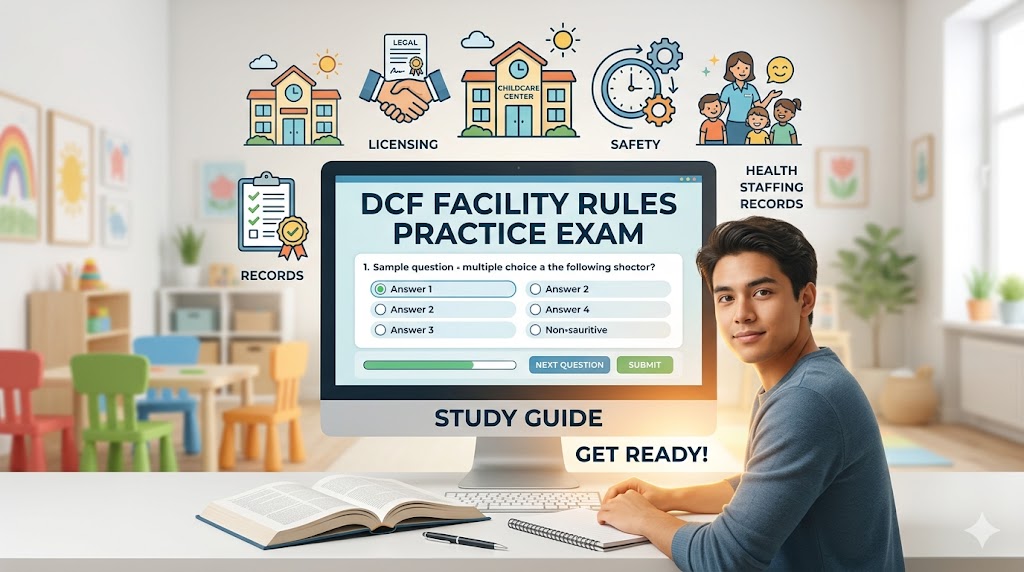
Additional Information
What the Course Entails and Exam Details
A comprehensive preparation for the DCF Facility Rules and Regulations often involves a specific training course, which in Florida is typically a 6-clock-hour introductory module. This course and the competency knowledge the exam assesses cover crucial modules designed to equip you with the legal and operational know-how necessary for a compliant and successful childcare facility. The core syllabus and skills you can expect to master include:
Licensing and Regulatory Standards: In-depth study of the specific Florida Administrative Code and statutory requirements for operating a child care facility. This includes understanding licensing types, applications, inspections, renewals, and enforcement actions.
Facility Safety and Environment: Detailed rules regarding the physical plant, indoor and outdoor space requirements, equipment safety, and maintaining a secure environment for children.
Health and Nutrition Guidelines: Requirements for food preparation, service, and storage; sanitation practices; handling illness; and ensuring the overall well-being and proper nutrition of children in care.
Child Abuse and Neglect: Training on identifying signs of child abuse and neglect and the mandatory reporting procedures that all child care personnel must legally follow.
Personnel Requirements and Records: Standards for staff-to-child ratios, group sizes, personnel qualifications, background screenings, and maintaining essential records (children's enrollment, health info, staff files, etc.).
Transportation and Water Safety: Specific regulations and safety protocols for transporting children and operating any water activities.
Operational Policies: Establishing clear rules for admission, attendance, disciplinary methods, and communication with families.
The related DCF Facility Rules and Regulations Practice Test is structured to mirror the content and complexity of the official competency exam, enabling you to test your understanding in each of these critical areas.
What to Expect in the Final Exam
After completing your training, the final official competency exam requires dedication and a sharp focus on the details you’ve learned. It is important to remember that while this study guide focuses on practice materials, the final official assessment generally has specific parameters:
Format: The official DCF competency exam is typically a multiple-choice test, designed to evaluate your ability to identify and apply the correct rules and regulations to various scenarios.
Passing Score: To demonstrate competency and achieve certification, a score of 70% or higher is generally required. This benchmark ensures that only those with a strong, functional knowledge of the facility rules are certified.
Time Limit: While specific time allowances may vary by jurisdiction or testing system, it is common to have a set duration, often around 90 minutes, to complete the exam. Efficient time management, which you can practice using practice tests, is crucial.
Number of Questions: The final official assessment typically consists of approximately 50 multiple-choice questions, which are randomized from a larger pool.
Rules & Integrity: The exam is typically proctored, and you will need proper photo identification and possibly other specific items. Strict academic integrity is expected to maintain the credibility of the certification. Practice tests provided by reputable sources aim to reflect these conditions to help you build comfort and stamina for test day.
How to Study and Exam Centers
Preparation is the key to success. Here are actionable study strategies to help you conquer the DCF Facility Rules and Regulations material:
Utilize Official Training Materials: Thoroughly review the complete training material provided during your required DCF course. Pay special attention to exact rule numbers, definitions, and specific procedural steps.
Take Advantage of the DCF Facility Rules and Regulations Practice Test: Repeatedly take practice exams and mock tests. Analyze your answers, especially the incorrect ones, to identify knowledge gaps. This repetitive practice builds familiarity with the question types and reinforces memory. Look for practice tests that provide detailed rationales for each answer.
Create Flashcards and Study Guides: Transform key regulations, required ratios, safety protocols, and important definitions into flashcards for quick, regular review. Condense the entire material into a concise personal study guide.
Simulate Test Conditions: When taking practice tests, set a timer and create a quiet, distraction-free environment to simulate the pressure and format of the official exam.
Form Study Groups: Collaborating with peers can provide diverse perspectives and help explain complex concepts. Teaching a rule to someone else is also a powerful way to solidify your own understanding.
Focus on Problem Areas: Dedicate extra study time to the modules or rules where you consistently struggle or answer practice questions incorrectly.
Where and How to Take the Official Exam: In Florida, official competency exams for DCF Child Care Training are typically administered through a centralized system or authorized test centers, often requiring pre-registration. For information on scheduling, test locations, and potential fees, you should:
Check the Official Department of Children and Families Website: Look for sections related to child care training, testing, and credentialing. They will have up-to-date links to official testing services and center lists.
Contact an Authorized Child Care Training Coordinating Agency: Specific local organizations are often tasked with organizing and providing access to both training and official testing.
Review Official State Portals: In many cases, you must create a profile and register for your specific exam through a designated state portal or authorized third-party testing service, which will provide a list of physical testing locations, times, and potentially online testing options if available. Do not attempt to take an official DCF competency exam at unauthorized centers.
Job Opportunities from the Course
Successfully demonstrating competency in DCF Facility Rules and Regulations and achieving associated certifications unlocks diverse and rewarding career paths in the child care and early childhood education sectors. This essential credential is a foundational requirement for many vital roles. Here are some of the career paths you can pursue:
Lead Preschool Teacher: Direct a classroom, design compliant lesson plans, and supervise children's development while adhering strictly to safety and licensing standards.
Childcare Center Director: Oversee the complete operational and educational aspects of a childcare facility, ensuring all staff, programs, and the physical building remain in compliance with all DCF regulations.
Assistant Teacher/Caregiver: Provide vital support in the classroom, maintaining direct supervision, and ensuring child safety and following established policies.
VPK (Voluntary Pre-Kindergarten) Instructor: Be a lead or supporting teacher in a specific VPK classroom, focused on preparing young children for kindergarten, within a regulated environment.
After-School Program Counselor: Plan and lead activities for school-age children in licensed after-school programs, ensuring they remain safe, supervised, and engaged after the school day.
Infant/Toddler Teacher: Specialized roles working with very young children, requiring a deeper knowledge of specific infant/toddler safety, health, and developmental rules.
Childcare Licensing Specialist: This role, often within a regulatory agency, involves inspecting facilities to ensure they meet and maintain all state licensing rules and regulations.
Quality Assurance Specialist (Child Welfare/Care): Review facility and program practices to ensure they meet quality and regulatory standards, often with a focus on child well-being.
Social Services Coordinator: Use your understanding of child and facility regulations to connect families with appropriate care and resources.
Frequently Asked Questions
Reviews
5.0
Based on 0 reviews
Leave a Review
No reviews yet. Be the first to review!