
DECA Hospitality and Tourism Cluster Practice Exam
$69.00
- Buy to unlock unlimited access to all Quiz questions and Answers in this Quiz.
- After purchase you can print a PDF of the whole quiz at any point. The PDF will contain the questions and the correct answers.
About this Exam
The DECA Hospitality and Tourism Cluster Exam is a core component of DECA's competitive events, designed for high school and collegiate students passionate about careers in the dynamic world of hospitality, travel, events, and food services.
This challenging examination validates a student's comprehensive understanding of industry-specific concepts, strategic management, marketing principles, and financial operations.
A dedicated DECA Hospitality and Tourism Practice Exam serves as an essential preparatory tool, allowing candidates to assess their current knowledge, familiarize themselves with the testing style, and identify critical areas for focused study.
Successfully navigating this exam is not only key to advancement within DECA competitions but also a strong indicator of readiness for professional opportunities in this exciting global sector.
Ready to test your knowledge?
Buy Now to Access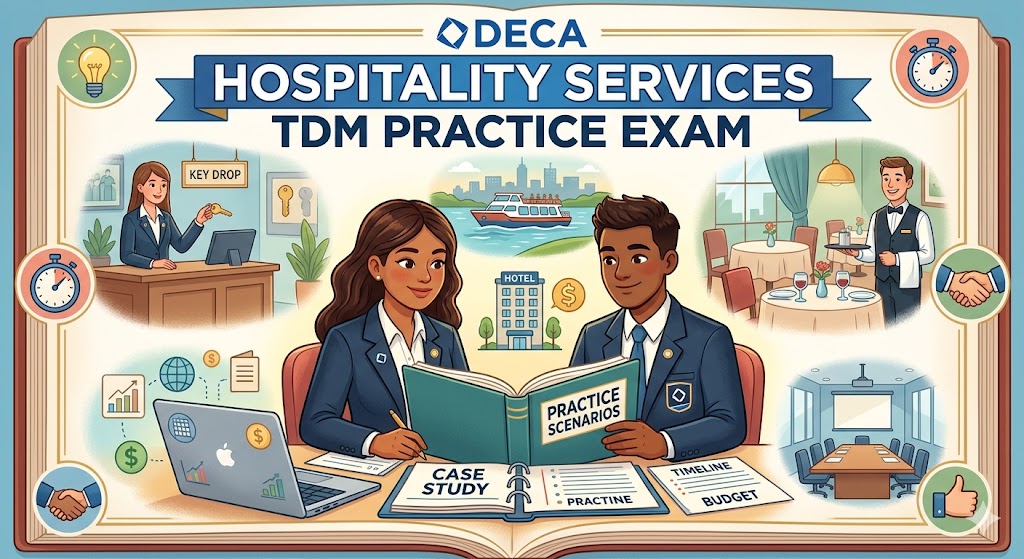
Additional Information
What the Course Entails and Exam Details
This examination does not represent a specific pre-requisite course, but rather a comprehensive assessment of knowledge gained through relevant coursework, self-study, and practical experience in business and hospitality principles.
The following core areas are typically covered, reflecting key instructional areas of the Hospitality and Tourism Career Cluster:
Marketing and Sales for Hospitality
Management and Operations in Lodging, Events, and Food & Beverage
Financial Analysis and Budgeting
Communication Skills and Customer Relations
Human Resources Management
Professional Development and Career Planning within the Sector
Legal and Ethical Considerations in Hospitality
Economics of Tourism and Industry Trends
These topics test critical thinking, problem-solving, and the ability to apply conceptual knowledge to realistic industry scenarios.
What to Expect in the Final Exam
The actual DECA Hospitality and Tourism Cluster Exam is primarily a standardized, objective assessment with the following typical features:
Exam Format
Expect a rigorous multiple-choice examination consisting of approximately 100 questions. These questions range from direct knowledge recall to scenario-based problems that require strategic reasoning and application of industry principles.
Time Limit
Candidates are generally allotted a specific time to complete the full exam, with a standard limit of around 75 to 90 minutes. Effective time management is crucial to ensure all questions are addressed.
Performance Assessment and Competitive Scores
DECA cluster exams, including the Hospitality and Tourism exam, do not generally have a singular, universal "passing score" in the sense of a certification benchmark. Instead, scores are numerical, representing proficiency levels, and are used to rank students within competitive events.
A high score is essential for several reasons:
It determines your competitive standing against other students.
It significantly contributes to your overall score in team decision-making or individual series events, which typically also include a role-play component.
A strong performance can earn you performance certificates of excellence or qualification for advanced competition levels, such as state/provincial or the prestigious International Career Development Conference (ICDC).
While specific "passing score requirements" for certification vary by program and jurisdiction, aim for the highest possible score to maximize your competitive edge and potential for recognition.
Specific Rules and Materials
Strict rules are in place for all official DECA testing. Candidates are typically not permitted to use any notes, textbooks, electronic communication devices, or reference materials. Simple, non-programmable calculators are generally allowed and are often recommended for financial calculation questions. Always consult the specific DECA competitive event guidelines for the current year and your competition level regarding allowed materials and calculator policies.
How to Study and Exam Centers
Preparation for the DECA Hospitality and Tourism Cluster Exam requires a consistent and multi-faceted study approach.
Actionable Study Strategies
Utilize Practice Exams: Make extensive use of resources like the DECA Hospitality and Tourism Practice Exam. This helps you build familiarity with the question types and develops critical time-management skills.
Review Core Concepts: Study DECA instructional resources, textbooks, and class materials covering the key topics listed in Section 2. Focus on both general business principles and their specific application within hospitality and tourism.
Engage with Study Groups: Collaborative learning with fellow DECA members can provide fresh perspectives and clarify complex topics. Use flashcards for key terms and formulas.
Practice Case Study Analysis: The cluster exam often presents scenarios that mirror the type of thinking required for DECA role-plays. Practice thinking strategically about real-world business challenges in a hospitality context.
Simulate Exam Conditions: For practice sessions, eliminate distractions, set a timer for the actual exam duration, and take a full practice test in one sitting to build your testing stamina and realistic assessment.
Exam Centers and How to Take the Exam
Access to both the practice and the official exam is generally structured through DECA's organization and competitive structure.
Practice Exams: These are frequently accessible online through educational portals, official DECA chapter resources, and sometimes special testing platforms provided by educators or regional DECA organizations. Candidates should consult their local DECA chapter advisor for recommended and accessible practice materials.
Official Exams (Competition-Level): The actual official cluster exams that contribute to your performance in competitive events are administered in specific proctored settings.
Chapter/Regional Level: Preliminary or regional competitive cluster exams are often held at participating schools or designated regional testing sites, often organized and proctored by DECA advisors.
State/Provincial Level: Exams for advanced qualifiers are typically integrated into state or provincial DECA conferences.
International Level (ICDC): The culmination of the DECA competitive year, exams for top-level qualifiers are held at the site of the International Career Development Conference.
Process: Consult your DECA chapter advisor for precise details on registration, access to study materials, and the location/process for official examination within your specific competition structure. These exams are generally not public testing services but are exclusive to registered DECA members participating in the competitive program.
Job Opportunities from the Course
A strong understanding of the concepts tested in the DECA Hospitality and Tourism Cluster can serve as a robust foundation for numerous rewarding career paths.
Here is a list of job titles and specific career opportunities that this knowledge base can unlock or support, particularly when combined with formal education and practical experience:
Event Planner / Event Manager
Hotel Manager / Front Office Manager
Food and Beverage Manager / Restaurant Manager
Travel Agent / Tour Guide
Convention and Visitors Bureau (CVB) Manager
Destination Marketing Manager / Tourism Director
Club Manager
Recreation and Leisure Program Coordinator
Catering Manager / Banquet Manager
Concierge / Guest Services Manager
Transportation Industry Roles (Airline, Cruise, Rail)
Specialized Roles (Event Technology, Sustainable Tourism)
Business Development & Sales for Hospitality
Human Resources Management in the Sector
Marketing & Promotions Manager for H&T
Financial Analyst for Hospitality Firms
Executive Housekeeper
Flight Attendant / Ground Staff (Airline)
Frequently Asked Questions
Reviews
5.0
Based on 0 reviews
Leave a Review
No reviews yet. Be the first to review!