
Dental Hygiene (DHYG) Concepts Practice Test
$69.00
- Buy to unlock unlimited access to all Quiz questions and Answers in this Quiz.
- After purchase you can print a PDF of the whole quiz at any point. The PDF will contain the questions and the correct answers.
About this Exam
The Dental Hygiene (DHYG) Concepts Practice Test is an essential preparatory tool designed for aspiring dental hygienists. This comprehensive practice exam serves as a foundational benchmark, allowing students to assess their readiness for the rigorous licensing and certification exams required to practice clinically. By providing a realistic simulation of the final assessment, it helps candidates identify knowledge gaps, build testing stamina, and gain the confidence needed to succeed. Whether you are nearing the end of your accredited DHYG program or are a recent graduate, this practice test is engineered to fine-tune your understanding of core dental hygiene principles.
Ready to test your knowledge?
Buy Now to Access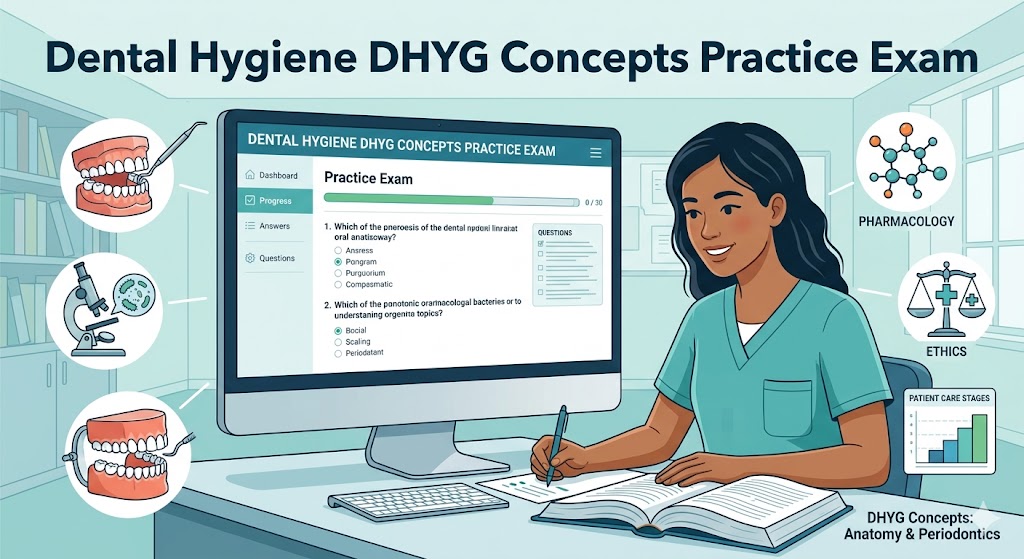
Additional Information
What the Course Entails and Exam Details
To excel on the practice test, candidates must demonstrate proficiency across the entire spectrum of dental hygiene education. The content mirrors the complexity of a accredited curriculum. The primary domains covered include:
Scientific Basis for Dental Hygiene: This includes head and neck anatomy, oral embryology, histology, microbiology, immunology, and pathology.
Provision of Clinical Dental Hygiene Services: You must understand patient assessment, dental radiography techniques, periodontal therapy, preventive agents, and supportive treatment services.
Community Health and Research Principles: This covers the dental hygienist’s role in public health, including biostatistics, epidemiology, and the development of community-based oral health programs.
Professional Responsibility, Ethics, and Law: Questions in this section assess knowledge of ethical theories, professional conduct, the legal scope of practice, and current regulatory frameworks.
What to Expect in the Final Exam
While the DHYG Concepts Practice Test is a preparatory resource, it is designed to simulate the format and pressure of the official comprehensive examinations (such as the National Board Dental Hygiene Examination, or NBDHE).
When taking the final official exam, you can typically expect a highly structured, computer-based format. The final exam often consists of 200 to 400 multiple-choice questions, which may include both discrete questions and case-based scenarios. Case scenarios usually provide a patient history, dental charts, radiographs, and clinical photographs, requiring you to apply your cumulative knowledge to make sound clinical decisions. You are generally given a total testing time of 7 to 9 hours, divided into multiple sessions with scheduled breaks. A passing scaled score of 75 or higher is standard for licensure. Strict identification and security protocols are enforced at testing centers.
How to Study and Exam Centers
Effective preparation requires a multi-faceted strategy. We recommend starting with a full-length, timed practice test to establish your baseline score. From there, create a structured study calendar that allocates dedicated time to each major content domain.
Utilize trusted resources, including current DHYG textbooks, official board review guides, and dynamic tools like flashcards for rapid recall of anatomy and pharmacology facts. Form study groups with peers to discuss complex case studies and practice ethical problem-solving. Practice with additional mock exams to build your speed and improve your accuracy under pressure.
Where to Take the Exam: The preparatory DHYG Concepts Practice Test is usually available online through authorized educational platforms, your school's learning management system, or dedicated test-prep providers.
The official final comprehensive licensure exam (e.g., NBDHE) is administered by appointment at specialized computer-based testing centers across the United States and Canada. The primary vendor for these high-stakes tests is Pearson VUE. Candidates must register through the appropriate joint commission or regulatory body to schedule their final, official exam date at an authorized center.
Job Opportunities from the Course
Successfully mastering DHYG concepts and passing your practice and final exams unlocks a dynamic career path in oral healthcare. Completing a Dental Hygiene program opens the door to numerous professional opportunities across clinical, educational, corporate, and public health sectors.
Registered Dental Hygienist (RDH) in private practice
Clinical Instructor in a dental hygiene program
Dental Sales Representative
Public Health Dental Hygienist (community clinics/schools)
Dental Office Manager
Corporate Educator for dental product companies
Dental Insurance Claims Reviewer
Oral Health Researcher
Hospital Dental Hygienist
Frequently Asked Questions
Reviews
5.0
Based on 0 reviews
Leave a Review
No reviews yet. Be the first to review!