
Development of Self II Test 1 Practice
$69.00
- Buy to unlock unlimited access to all Quiz questions and Answers in this Quiz.
- After purchase you can print a PDF of the whole quiz at any point. The PDF will contain the questions and the correct answers.
About this Exam
Welcome to your essential first step towards mastering self-awareness and unlocking your potential! The Development of Self II Test 1 serves as a crucial foundational assessment within a larger personal growth curriculum.
This exam isn't just about knowledge; it’s a reflective milestone designed to evaluate your initial understanding of key concepts related to emotional intelligence, goal setting, effective communication, and resilience. Whether you are a student exploring these transformative topics for academic credit or an individual committed to structured personal development, this test marks a significant point in your journey.
Designed for those enrolled in or preparing for the Development of Self II course, successfully navigating this first test demonstrates both commitment to growth and comprehension of the fundamental principles of self-improvement.
Ready to test your knowledge?
Buy Now to Access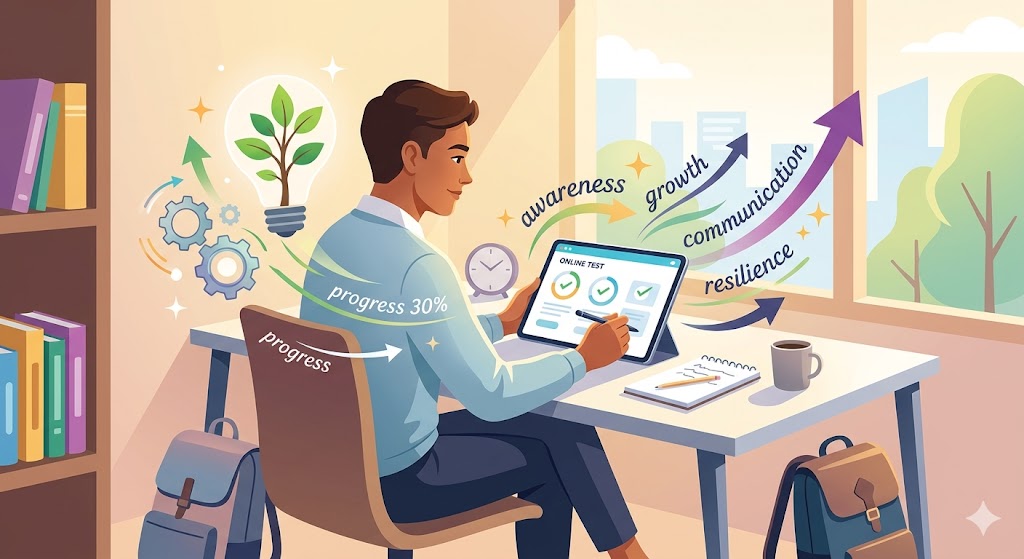
Additional Information
What the Course Entails and Exam Details
The broader Development of Self II course delves deeply into practical strategies for enhanced personal effectiveness and meaningful interaction. Before attempting Test 1, you will explore various modules encompassing topics such as self-perception, understanding personal values, advanced communication techniques, navigating conflict, setting and achieving ambitious yet realistic goals (SMART goals), cultivating emotional intelligence (EI), time management strategies, and building mental resilience in the face of challenges.
Development of Self II Test 1 specifically focuses on foundational comprehension derived from the first few key modules of this course. Students can expect coverage typically including initial self-reflection exercises, foundational theories of emotional intelligence (awareness of self and others), introductory goal-setting frameworks, and basic principles of active listening and respectful communication. For precise syllabus coverage, always consult your specific course materials and instructor guidelines.
Typically administered through your educational institution's online portal or a dedicated testing platform, this first test assesses your ability to define core terms, understand key models, and potentially apply basic concepts to straightforward scenarios, setting the stage for more complex applications later in the course.
What to Expect in the Final Exam
Welcome to our comprehensive guide on navigating the final assessment for the initial phase of your Development of Self II course – Test 1! While this section is titled "What to Expect in the Final Exam" per standard guidelines, please be aware this section details what you can typically anticipate for this pivotal first major examination, rather than a cumulative end-of-course final.
Format: The exam predominantly consists of objectively scored questions. Expect a mix of multiple-choice, true/false statements, and potentially brief short-answer questions. Some online formats might incorporate matching or sequencing exercises for key personal development steps.
Passing Score: Requirements can vary widely by institution and specific program standards. However, a common benchmark for passing internal course examinations is around 70%. It is imperative to check your individual course syllabus or with your instructor for the precise score required for successful completion and progression.
Time Limit: To ensure efficient testing of initial understanding, you will likely encounter a set time limit, commonly between 45 to 60 minutes for this first test. This constraint is designed to assess both understanding and familiarity with the foundational concepts, encouraging efficient recall and application.
Rules: For this foundational test, you should expect closed-book conditions, especially when taken through a supervised online proctoring system or within a physical testing center at your school. You will typically access the exam via a unique login and may be required to present valid student identification. Consistency with your institution's specific testing integrity policies is paramount. Always confirm exactly what materials (if any) are permitted well in advance.
How to Study and Exam Centers
Preparation is key to succeeding in Development of Self II Test 1. Employ these effective study strategies to build confidence and ensure comprehension:
Review Course Material: Revisit all initial lecture notes, textbook chapters, and supplementary resources thoroughly. Focus on definitions, key models (e.g., emotional intelligence components, SMART goals), and examples discussed in class.
Create Flashcards: Digital or physical flashcards are exceptional tools for mastering key terms, foundational theories, and common techniques associated with self-development and effective interaction.
Utilize Practice Questions: Seek out any available practice questions, sample quizzes, or past test examples specific to your course. Attempting these questions under timed conditions is invaluable practice for navigating the real test format.
Summarize Key Concepts: Write concise summaries or create mind maps for each major module covered for Test 1. Connecting different concepts visually can deepen understanding.
Form Study Groups: Collaborating with peers allows for discussion, clarification of complex points, and mutual support. Explaining concepts to others reinforces your own knowledge.
Exam Centers & Access: As an internal component of the Development of Self II course, you will typically take Test 1 either online through your university or college's official learning management system (e.g., Canvas, Blackboard, Moodle) or, for certain programs, in a physical computer lab or testing center specified by your institution. Online proctoring, where required, will likely use platforms specified by your school. For precise instructions on how and where to access and take your actual Test 1, closely monitor announcements from your instructor and refer to the guidelines within your specific course portal. Authorized access and potential proctoring requirements are unique to each educational setting, ensuring academic integrity for this significant step in your personal development journey.
Job Opportunities from the Course
While completing Development of Self II and its initial test doesn't usually unlock a specific professional certification directly tied to a single job title, the skills you cultivate are exceptionally valuable and widely applicable, enhancing your employability and performance in numerous fields and roles:
Team Leader / Supervisor: Enhanced communication and initial understanding of EI are critical for effective leadership and team motivation.
Customer Service Manager: Strong interpersonal skills, empathy (a component of EI), and problem-solving abilities significantly impact customer satisfaction.
Project Manager: Effective time management, goal setting (SMART), and communication across teams are fundamental requirements for successful project execution.
Sales Representative: Resilience, strong communication, and the ability to understand and connect with clients (EI) are key to building relationships and closing sales.
HR Assistant / Coordinator: Insights into human behavior, communication, and self-awareness provide a valuable foundation for many aspects of human resources.
Non-Profit Program Coordinator: Goal orientation, effective interaction with diverse groups, and commitment to growth align well with community-focused initiatives.
Educator / Trainer (especially entry-level workshops): Foundational understanding of personal growth and communication is invaluable for developing and delivering educational content.
Public Relations Specialist: Strong communication, strategic thinking for personal effectiveness, and resilience to public feedback are essential in this field.
Frequently Asked Questions
Reviews
5.0
Based on 0 reviews
Leave a Review
No reviews yet. Be the first to review!