
Diagnostic Medical Sonography Program – Exam One: Applied II Practice
$69.00
- Buy to unlock unlimited access to all Quiz questions and Answers in this Quiz.
- After purchase you can print a PDF of the whole quiz at any point. The PDF will contain the questions and the correct answers.
About this Exam
The Sonography Applied II Practice Exam One is a critical assessment designed for students currently enrolled in an accredited Diagnostic Medical Sonography (DMS) program.
This exam serves as a bridge between foundational ultrasound physics and the practical, hands-on application of imaging protocols.
It is specifically tailored for aspiring sonographers who have completed introductory coursework and are preparing to demonstrate their readiness for clinical rotations.
By focusing on real-world scenarios, this practice exam ensures students can apply theoretical knowledge to produce diagnostic-quality images.
Ready to test your knowledge?
Buy Now to Access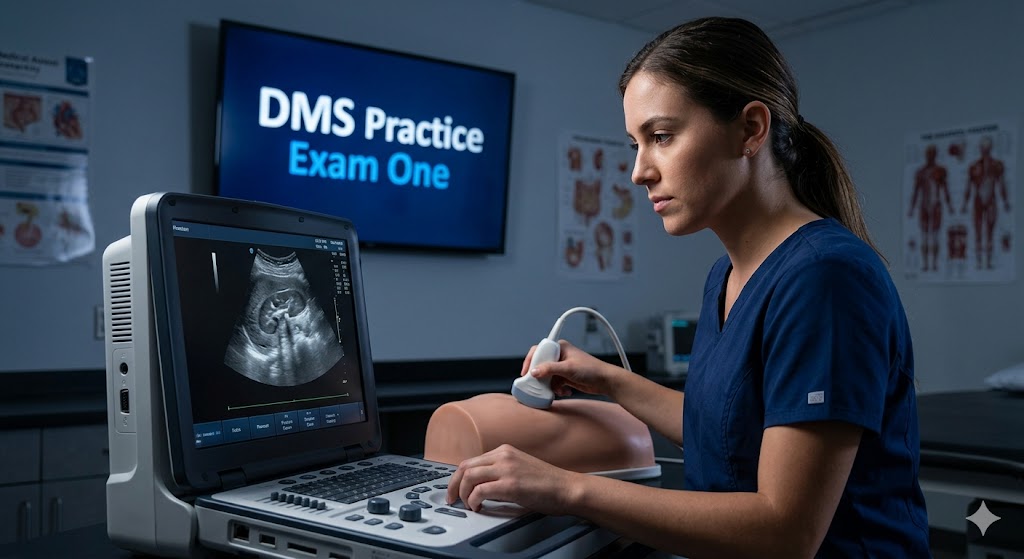
Additional Information
What the Course Entails and Exam Details
This examination focuses on advanced positioning, advanced pathology identification, and complex scanning protocols.
Students are expected to master the sonographic appearance of normal anatomy versus pathological states in varying patient body habitus.
Core topics covered within this course and exam include:
Comprehensive scanning protocols for the abdomen, including the liver, gallbladder, pancreas, and renal system.
Small parts imaging protocols, specifically covering the thyroid, scrotum, and breast.
Basic obstetrical and gynecological scanning techniques and measurements.
Integration of patient history and laboratory laboratory values with sonographic findings.
Advanced optimization of instrumentation settings, such as Depth, Gain, and Time Gain Compensation (TGC), to achieve diagnostic images.
What to Expect in the Final Exam
Since this is an "Applied" practice exam, students should expect a format that mimics physical scanning conditions as closely as possible in a written or digital environment.
The exam usually consists of complex multiple-choice questions based heavily on visual aids.
You will be presented with high-resolution sonographic images, cine loops, and diagrams.
Questions will require you to identify anatomy, describe pathology, or determine the correct dynamic maneuver to clear an artifact.
While a physical scanning component is usually reserved for a separate lab final, this practice exam tests the critical thinking behind the scan.
Passing requirements and time limits are set by individual DMS programs, but students are generally expected to achieve a score of 75% or higher to demonstrate competence before entering a clinical setting.
How to Study and Exam Centers
The key to success in Applied Sonography is muscle memory combined with deep anatomical knowledge.
Spend extensive time in the scan lab practicing protocols on classmates until the motions are automatic.
When studying images, do not just memorize the diagnosis; understand why the image looks that way and what settings made it visible.
Utilize registry review books, flashcards for pathology, and peer-to-peer scanning assessments.
Because this is an internal program exam rather than a national registry (like ARDMS), testing is conducted at authorized schools and specific physical testing centers located on your college campus.
Consult your DMS program director for specific scheduling details and authorized laboratory locations.
Job Opportunities from the Course
Successfully passing your Applied II coursework and this practice exam is a major milestone toward graduation and eligibility for national registry exams.
Securing your credentials opens doors to a diverse range of stable and high-paying career paths.
Graduates of a full Diagnostic Medical Sonography program can seek employment in the following roles:
General Medical Sonographer (Abdomen and OB/GYN)
Registered Vascular Technologist (RVT)
Cardiac Sonographer (Echocardiographer)
Pediatric Sonographer
Breast Sonographer
Clinical Lead Sonographer
Ultrasound Department Manager
Clinical Applications Specialist (Working for ultrasound equipment manufacturers)
Frequently Asked Questions
Reviews
5.0
Based on 0 reviews
Leave a Review
No reviews yet. Be the first to review!