
Digital Audio Network Through Ethernet (DANTE) Level 1 Practice Exam
$69.00
- Buy to unlock unlimited access to all Quiz questions and Answers in this Quiz.
- After purchase you can print a PDF of the whole quiz at any point. The PDF will contain the questions and the correct answers.
About this Exam
DANTE Level 1, developed by Audinate, is the essential first step into the world of digital audio networking. This certification serves as a foundational validation of your understanding of how Dante-enabled devices interact on an IP network.
It is designed for a broad spectrum of professionals, including audio engineers, systems integrators, AV technicians, and IT personnel who manage audio environments. Whether you are new to networked audio or looking to codify your existing knowledge, this course establishes a solid base for advanced Dante mastery.
Ready to test your knowledge?
Buy Now to Access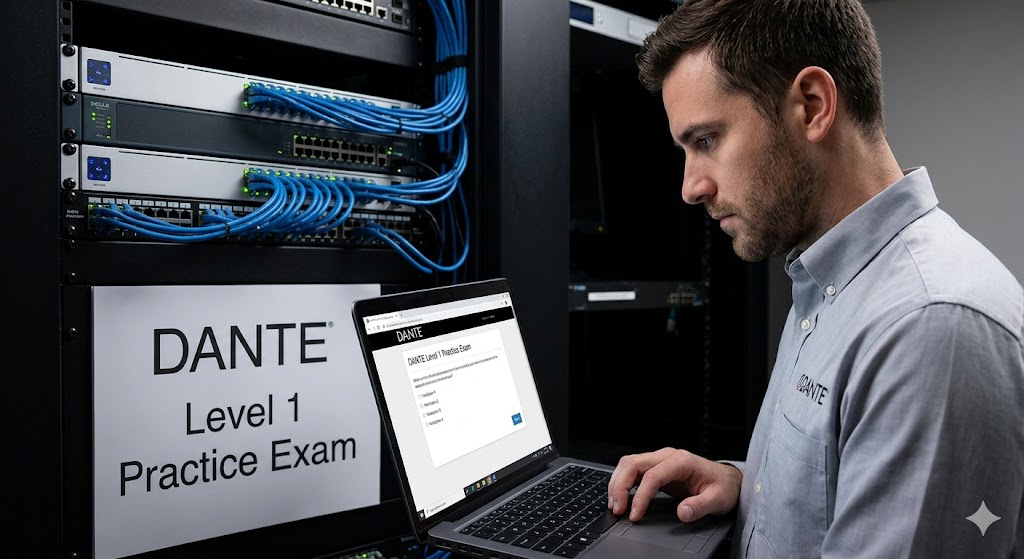
Additional Information
What the Course Entails and Exam Details
The Dante Level 1 course covers fundamental concepts required to deploy and maintain a basic Dante network. You will master the essential principles of transmitting digital audio over standard Ethernet.
Key skills and topics include:
Understanding basic network concepts, such as IP addressing and DHCP.
Configuring a simple Dante network for reliable performance.
Utilizing the Dante Controller application for device discovery and routing.
Navigating Dante routing basics for unicast and multicast streams.
Recognizing the components of a small scale Dante setup.
What to Expect in the Final Exam
The Dante Level 1 exam is a critical checkpoint for validating the skills learned in the course. Prepare for a structured assessment designed to test both theoretical and practical understanding.
What you can expect:
Format: The exam typically consists of multiple-choice and single-choice questions. It is a non-proctored, online examination.
Practical Component: While not a separate hands-on lab, the questions frequently simulate real-world scenarios, testing your ability to troubleshoot, configure settings in a virtual environment, or interpret Dante Controller feedback.
Passing Score: A strong score, often 80% or higher, is required to achieve certification, depending on the current iteration of the exam from Audinate.
Time Limit: You are usually given approximately 60 to 90 minutes to complete the exam.
Specific Rules: The exam is open-book, meaning you can reference course materials, but the time constraints emphasize efficient application over rote memorization.
How to Study and Exam Centers
Achieving Dante Level 1 certification requires dedicated preparation. Here is your action plan to ensure success:
Immerse in the Official Training: The most direct route to passing is through Audinate’s free self-paced online course, available on their official certification portal. Consume every video and read all supporting documentation thoroughly.
Get Hands-on with Dante Controller: The software is the heart of Dante management. Download the free Dante Controller software and, if you have access to two or more Dante-enabled devices, practice discovering, naming, and routing signals. If you don't have hardware, study the application's interface layout and functions intensely using screenshots and videos.
Master Networking Basics: Level 1 is simple, but you must understand IP addressing and how Ethernet switches function within a small local network. Use free online resources to solidify these basic concepts before taking the practice test.
Take the Dante Level 1 Practice Exam: This is your best assessment tool. Audinate provides official practice tests that mimic the structure, wording, and difficulty of the actual examination. Identify your weak areas and revisit the training materials.
Exam Centers: The actual Dante Level 1 final exam is administered exclusively online through the Audinate Certification Portal.
You can access the exam directly from your personal computer at any time, eliminating the need to visit physical testing centers like Pearson VUE or authorized schools. Simply register on the Audinate website and navigate to their certification section.
Job Opportunities from the Course
The Dante Level 1 certification is globally recognized and demonstrates a verifiable understanding of modern digital audio technology. It frequently opens doors to numerous job roles across multiple industries, including:
Audio Engineer / Sound Technician: For live sound, studios, and broadcast, validating foundational networking skills.
AV (Audiovisual) Systems Integrator: For professionals who design and install integrated conferencing, education, or entertainment systems.
Live Sound Engineer: For experts managing complex setups in concerts and performance venues.
Broadcast Engineer: For those working in television, radio, or podcasts, supporting networked audio distribution.
IT Specialist for AV/UC: A rising field focusing on the intersection of networking and Unified Communications, managing voice and video streams.
Corporate AV Support Specialist: Providing in-house technical support for conferencing and media systems.
Installation Technician: For the physical deployment of networked audio infrastructure.
Frequently Asked Questions
Reviews
5.0
Based on 0 reviews
Leave a Review
No reviews yet. Be the first to review!