
Digital Forensic Certification Practice Exam
$69.00
- Buy to unlock unlimited access to all Quiz questions and Answers in this Quiz.
- After purchase you can print a PDF of the whole quiz at any point. The PDF will contain the questions and the correct answers.
About this Exam
The landscape of modern crime and investigation is rapidly shifting online. From data breaches to financial fraud, digital footprints have become critical evidence. Achieving a respected digital forensics certification like the one this practice exam prepares you for signals to employers that you possess the skills necessary to identify, preserve, analyze, and present digital evidence effectively. This certification is designed for a wide range of professionals, including law enforcement officers specializing in cybercrime, information security analysts, IT administrators looking to pivot into forensics, corporate investigators, and legal professionals seeking a deeper understanding of electronic evidence. It demonstrates a commitment to technical proficiency, methodological rigor, and legal ethical standards in handling sensitive digital information.
Ready to test your knowledge?
Buy Now to Access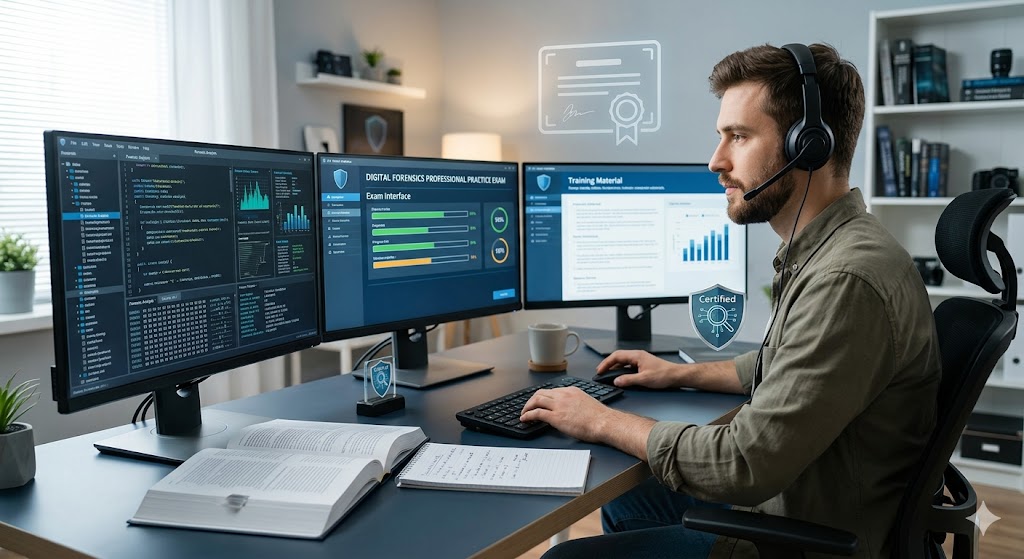
Additional Information
What the Course Entails and Exam Details
Preparing for this comprehensive Digital Forensics Professional (DFP) certification requires mastering a blend of technical knowledge, analytical skills, and understanding legal frameworks. A typical course leading to this exam will cover the foundational pillars of digital forensics. You can expect to dive deep into topics such as incident response procedures, safe and forensically sound data acquisition from various sources (hard drives, mobile devices, cloud storage, live memory), and detailed analysis of filesystem structures like NTFS, FAT, and ext.
Beyond data recovery, the course entails understanding different operating systems—Windows, Linux, macOS, and mobile platforms—including how they manage data, logs, and user activity artifacts. Network forensics, involving traffic analysis and log review, is often included, along with specialization areas like email and internet forensics. Practical skills are highly valued, covering the use of industry-standard forensic tools, hash analysis, file signature identification, and complex data carving techniques. Furthermore, a strong emphasis is placed on reporting, documentation, ethics, and relevant laws governing digital evidence admissibility. The comprehensive practice exam covers all these domains to ensure a thorough grasp of the entire forensic lifecycle.
What to Expect in the Final Exam
While the exact structure can vary depending on the specific certification body, most Digital Forensics Professional exams are rigorous and test both conceptual understanding and practical application. You should generally expect a time-limited, proctored exam, often ranging from two to four hours. The final exam typically uses a combination of multiple-choice questions, which evaluate your theoretical knowledge across all core domains, and practical, scenario-based or simulation questions.
The passing score requirements are usually high, often around 70-80% or higher, reflecting the need for mastery in this critical field. Practical questions might ask you to perform data acquisition, analyze provided forensic images, identify specific artifacts, or reconstruct timelines from evidence. Rules are strictly enforced to maintain the integrity of the certification: no external aids (like unauthorized websites or notes) are permitted, exams are often monitored via webcams, and candidates may be required to clear their testing area or present identification. Practice exams like this one are crucial to familiarize yourself with the question styles, difficulty, time constraints, and interface.
How to Study and Exam Centers
Successfully preparing for a high-level digital forensics certification demands a structured approach. Start by thoroughly reviewing the official course syllabus or exam objectives. Utilize the recommended textbooks, online modules, and training materials from reputable providers. The most critical component of study is hands-on practice. Create your own lab environment using virtual machines and practice using open-source (like Autopsy or Sleuth Kit) and potentially commercial forensic tools on sample data images.
Crucially, integrate comprehensive practice exams like this one into your study routine early and often. Take the practice test in exam-like conditions, including timing yourself, to build stamina and identify weak points. Don't just check the score; analyze the explanations for both correct and incorrect answers to understand the why behind each solution. Actively research areas where you consistently struggle. Engage with online forums, study groups, and relevant blogs for support and differing perspectives.
When you feel ready for the actual certification, scheduling is done through authorized platforms. Most major certifications partner with global exam center networks. Online proctoring is now very common, allowing you to take the exam from a quiet, private location using a webcam and reliable internet connection through services like Pearson VUE's OnVUE or PSI Exams. Alternatively, you can book a slot at a physical testing center operated by organizations like Pearson VUE or Prometric, which have locations worldwide, ensuring a controlled environment for your exam. Check the specific certification body's website for their authorized delivery partners and procedures.
Job Opportunities from the Course
Earning a Digital Forensics Professional certification opens doors to diverse and in-demand career paths. Organizations across various sectors require specialized talent to handle digital evidence and secure their data. Here are some key job opportunities that this qualification typically unlocks or enhances:
Digital Forensic Analyst
Cyber Security Investigator
Computer Forensics Examiner
Incident Response Specialist
eDiscovery Analyst
Forensic Consultant (in legal or consulting firms)
Threat Intelligence Analyst
Information Security Manager
Law Enforcement Officer (Specialized in Digital Crime Units)
Corporate Security Manager (with a focus on insider threats or data breaches)
Frequently Asked Questions
Reviews
5.0
Based on 0 reviews
Leave a Review
No reviews yet. Be the first to review!