
Digital Imaging Practice Test
$69.00
- Buy to unlock unlimited access to all Quiz questions and Answers in this Quiz.
- After purchase you can print a PDF of the whole quiz at any point. The PDF will contain the questions and the correct answers.
About this Exam
The Digital Imaging Practice Exam is a crucial stepping stone for aspiring visual creatives.
It assesses proficiency in manipulating digital visuals, a core skill for graphic design, photography, and web production.
This assessment is perfect for students and professionals looking to validate their ability to work with raster graphics and industry-standard software.
By simulating the actual exam experience, it helps test-takers gauge their readiness for official certification.
Ready to test your knowledge?
Buy Now to Access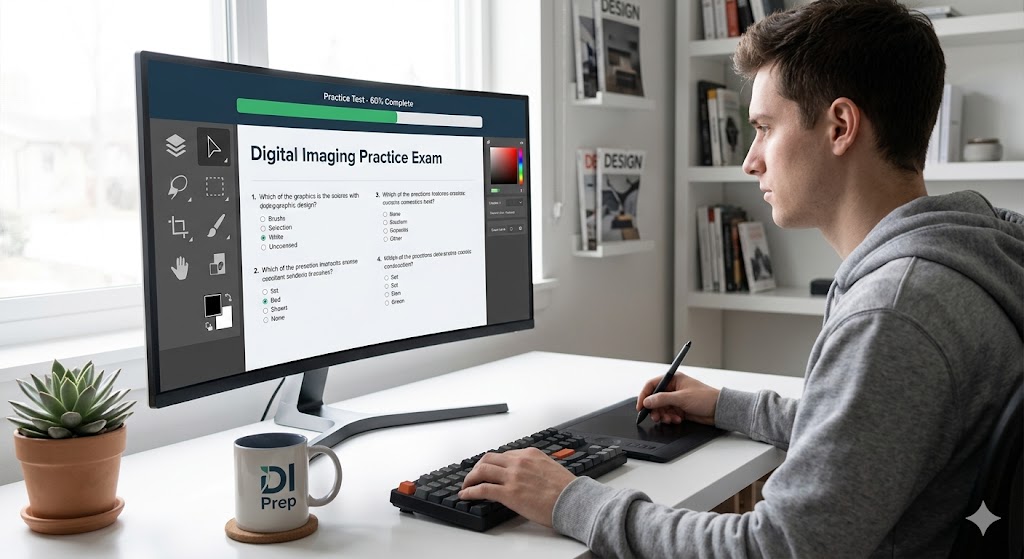
Additional Information
What the Course Entails and Exam Details
This comprehensive practice exam covers a wide spectrum of essential digital imaging concepts and techniques. Expect questions surrounding image acquisition, processing, editing, composition, and file management. You will delve into topics such as:
Digital camera operation and settings.
Image resolution, file formats (JPEG, TIFF, RAW, etc.), and compression.
Color theory, color spaces, and calibration.
Exposure, contrast, and tonal adjustments.
Non-destructive editing techniques and layers.
Selection tools and masking.
Retouching and restoration procedures.
Basic graphic design principles and composition.
Understanding and managing digital workflows.
Output considerations for web and print media.
Mastering these areas is key to success in both the practice test and the final examination.
What to Expect in the Final Exam
While formats can vary slightly depending on the specific certification body, most final exams in digital imaging consist primarily of multiple-choice questions designed to test your theoretical understanding. Some exams may also include practical or scenario-based questions to evaluate your application of skills in a simulated environment. Typically, you can expect:
A specified time limit, often ranging from 60 to 90 minutes.
A pre-determined passing score, commonly between 70% and 80%.
Strict adherence to exam rules, which usually prohibit external resources and collaboration.
Registration and delivery through official online portals or proctored testing centers.
Be sure to carefully review the specific details provided by your chosen certification provider.
How to Study and Exam Centers
Effective preparation involves a combination of theoretical study and practical application.
Leverage the Practice Test: Use this Digital Imaging Practice Test extensively. Analyze each question and understand why correct answers are right and distractors are wrong. Track your progress.
Review Official Material: Study recommended textbooks, online resources, and any study guides provided by the certification body.
Hands-on Practice: Spend ample time working with digital imaging software (like Adobe Photoshop, GIMP, etc.). Replicate techniques covered in the exam topics.
Online Courses and Tutorials: Enroll in relevant courses or watch tutorials on specific tools and concepts.
Join Study Groups: Connect with fellow students or professionals online or in person.
When you are ready, you will typically register for the final exam through an official online portal. Many certifications are administered at designated exam centers, such as Pearson VUE centers worldwide, or via secure online proctoring from your own location. Consult the certification provider's website for specific testing center locations and registration procedures.
Job Opportunities from the Course
A certification in digital imaging can open doors to numerous exciting and creative career paths. Here are some specific job titles and opportunities that this expertise can unlock:
Digital Photographer
Graphic Designer
Photo Editor / Retoucher
Digital Imaging Specialist
Web Designer
Pre-press Technician
Content Creator
Freelance Image Editor
E-commerce Product Photographer
Digital Marketing Assistant
Videographer (often utilizes strong imaging skills)
Art Director (with further experience)
Visual Effects (VFX) Artist (entry level)
Frequently Asked Questions
Reviews
5.0
Based on 0 reviews
Leave a Review
No reviews yet. Be the first to review!