
Digital Photography 1A Practice Test
$69.00
- Buy to unlock unlimited access to all Quiz questions and Answers in this Quiz.
- After purchase you can print a PDF of the whole quiz at any point. The PDF will contain the questions and the correct answers.
About this Exam
Welcome to your essential resource for the Digital Photography 1A Practice Test. This study guide is meticulously designed for students and photography enthusiasts preparing for their first formal assessment in digital imagery. The Digital Photography 1A course serves as the gateway into the world of professional photography, unlocking the potential of modern digital cameras. This certification is ideal for beginners looking to build a rock-solid foundation, art students integrating visual media into their portfolios, and aspiring professionals seeking to validate their technical skills. Mastering this exam demonstrates your competency in the fundamental mechanics and artistic principles of photography.
Ready to test your knowledge?
Buy Now to Access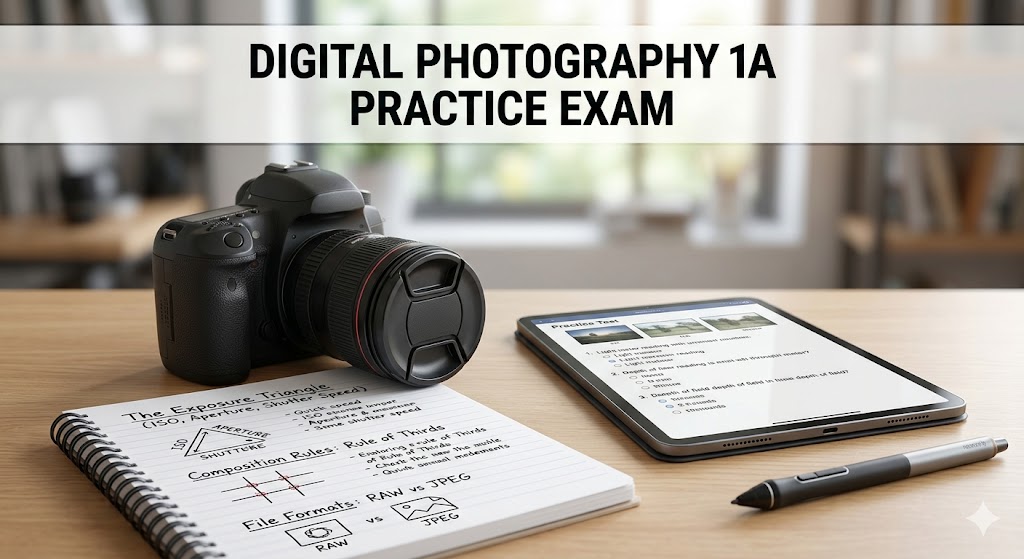
Additional Information
What the Course Entails and Exam Details
The Digital Photography 1A curriculum focuses primarily on technical proficiency and composition basics. You will be expected to understand the core functions of a Digital Single-Lens Reflex (DSLR) or mirrorless camera. A primary focus of the exam is the Exposure Triangle, requiring a deep understanding of how Aperture (f-stops), Shutter Speed, and ISO work together to create a balanced image. Candidates must differentiate between depth of field effects and motion capture techniques. Beyond technical settings, the course covers vital compositional rules, such as the Rule of Thirds, Leading Lines, and Framing. You must also be familiar with essential digital concepts, including file formats (JPEG vs. RAW), white balance settings, resolution, and basic lighting principles (natural vs. artificial light).
What to Expect in the Final Exam
The Digital Photography 1A final exam is typically a comprehensive written test, though some institutions may include a small practical component. The exam format is predominantly multiple-choice, designed to quickly assess your knowledge of terminology, camera operations, and compositional theory. There may also be true/false questions and visual identification sections, where you must analyze an image and identify the settings used or the composition rules applied. The passing score required varies by the certifying body but generally ranges between 70% and 80%. Students are typically allowed 60 to 90 minutes to complete the test. Strict academic integrity rules apply, and digital devices other than the testing computer (if applicable) are usually prohibited.
How to Study and Exam Centers
Effective studying requires a balanced approach of theory and practice. Utilize flashcards for key terms like "Exposure Triangle," "Histogram," "Aperture Priority," and "Depth of Field." Review your course textbook and any practical assignments you completed during the class. However, the most critical step is picking up your camera and shooting with intention. Do not just read about Aperture—go outside, change your f-stop, and observe the results. Create specific "challenges," such as capturing motion blur with a slow shutter speed or isolating a subject with a shallow depth of field. Leverage this Digital Photography 1A Practice Test to simulate the exam experience. This test is often administered through online educational portals (like Canvas, Blackboard, or Moodle) provided by your school or institution. If you are taking the exam through a professional organization, check their authorized testing center network or Pearson VUE for scheduling options.
Job Opportunities from the Course
Successfully passing this exam is your first credential on the path to a rewarding career in visual media. While this is an introductory course, it validates the core competencies required for entry-level positions in various fields.
Career paths this certification unlocks include:
Assistant Photographer
Junior Photo Editor
Portrait Studio Assistant
Social Media Content Creator (Visual Focus)
Product Photography Assistant
Real Estate Photography Assistant
Freelance Photographer (Entry Level)
Visual Merchandiser Assistant
Stock Photography Contributor
Digital Imaging Technician (Trainee)
Frequently Asked Questions
Reviews
5.0
Based on 0 reviews
Leave a Review
No reviews yet. Be the first to review!