
Direct Care Staff Pre-Service Dementia Training Practice Test
$69.00
- Buy to unlock unlimited access to all Quiz questions and Answers in this Quiz.
- After purchase you can print a PDF of the whole quiz at any point. The PDF will contain the questions and the correct answers.
About this Exam
The qualification process associated with the Direct Care Staff Pre-Service Dementia Training is a foundational step for those looking to provide care in settings like long-term care facilities, assisted living communities, and home health care. This essential training is designed to equip aspiring and new direct care workers with a fundamental understanding of dementia.
It focuses on building empathy, practical communication techniques, and the critical skills necessary to provide safe, compassionate, and person-centered care to individuals living with various forms of the disease. While the final qualification often involves a course completion certificate, many programs incorporate a formal final exam or competency test to validate that caregivers have grasped these vital principles and are ready to be entrusted with resident well-being.
Preparing effectively, often with the help of specialized practice materials, is the key to demonstrating competence and embarking on a rewarding career.
Ready to test your knowledge?
Buy Now to Access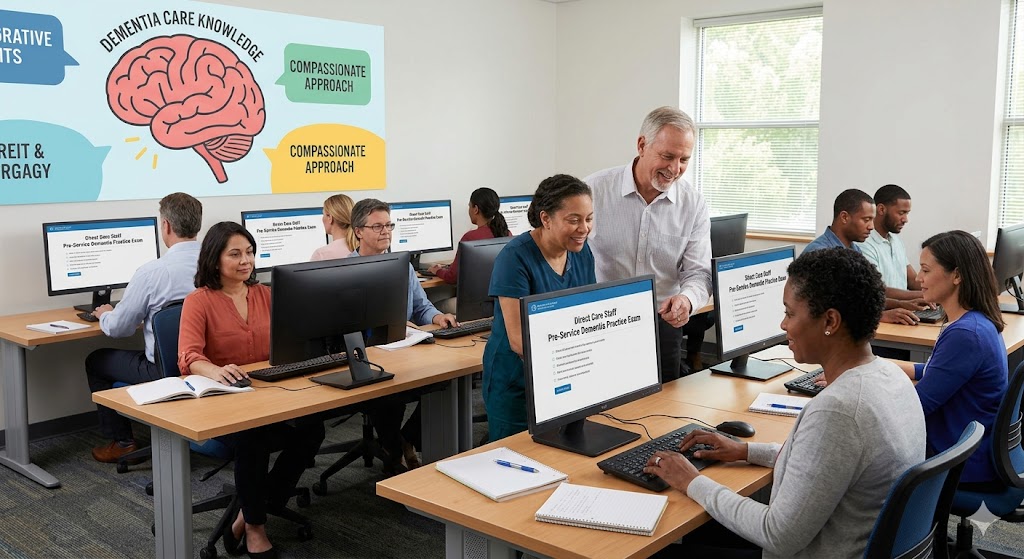
Additional Information
What the Course Entails and Exam Details
This comprehensive pre-service training course covers several key pillars of dementia care. While the specific syllabus may vary slightly, you can generally expect to learn about:
Understanding Dementia: Defining dementia types (like Alzheimer’s), their progression, common symptoms, and how it impacts brain function.
Person-Centered Care Principles: Moving beyond basic physical needs to focus on the individual’s preferences, history, and current abilities, and integrating this into daily care.
Effective Communication: Learning how to adapt communication styles for individuals with different stages of dementia, focusing on non-verbal cues, simple language, and active listening.
Behavioral Management & Support: Techniques to understand the underlying meaning of behaviors (often as unmet needs) and strategies to address them positively and reduce distress.
Safety and Environmental Consideration: Strategies for ensuring the physical safety of individuals, preventing wandering or elopement, and creating supportive and recognizable environments.
Assistance with Activities of Daily Living (ADLs): Practical skills for helping individuals with bathing, dressing, eating, and other personal tasks with dignity and respect.
Ethics, Legal Issues, and Rights: Understanding the ethical considerations, legal rights of persons with dementia, and regulatory requirements relevant to direct care staff.
The final qualification or competency assessment often reflects these core topics. It usually has specific details, although these illustrative details can vary significantly by training provider and location:
Format: A primary component of the assessment is typically a timed final exam.
Type of Questions: Predominantly multiple-choice questions (MCQs), which may test fact recall and apply scenarios.
Illustrative Passing Score: A common threshold is around 70% to 80% to demonstrate sufficient knowledge, but always check your provider’s requirements.
Illustrative Time Limit: Exams are usually timed, sometimes allowing between 60 to 120 minutes depending on the length and number of questions (e.g., 50 to 100 questions).
Rules: Rules around proctoring, permitted materials (usually closed-book), and repeat attempts vary greatly. Some online assessments are secure but self-paced before a designated time limit.
What to Expect in the Final Exam
While the exact nature will depend on your specific course, the final competency assessment often mirrors the training’s core objectives. Here’s a general idea of what you might expect:
Scenario-Based Questions: Many multiple-choice questions will present real-world care scenarios. You might be asked to identify the best course of action, the reason behind a particular behavior, or the most effective way to communicate with a person living with dementia in that specific context.
Factual Recall: Expect questions on the fundamental concepts you learned, such as different types of dementia, typical stages and symptoms, and key ethical and safety principles.
Multiple-Choice Dominance: The multiple-choice format is standard for testing knowledge across a broad range of topics efficiently. This allows the exam to cover many aspects of the course in a reasonable timeframe.
Potential Practical Components (Varies Significantly): In some formal certification processes or specific programs, there might be a practical skills demonstration. This could involve showing your ability to perform certain tasks like assisting with mobility, demonstrating communication techniques in a simulated interaction, or showcasing specific safety protocols. However, for most pre-service training completion certificates, the final step is typically a knowledge-based exam.
Online Format (Common): Most modern training providers offer the final exam in an online format that you access through their secure learning portal, possibly following a certain course completion requirement. In-person testing is less common for pre-service training completion, but not impossible.
It is crucial to understand that the final qualification is about validating your preparedness. Using practice exams specifically designed for this purpose is an exceptionally effective way to familiarize yourself with the question styles, timing, and areas where you may need more review.
How to Study and Exam Centers
Preparation is key to succeeding in the final qualification process. Here are actionable study strategies and information on where to potentially take your exam:
Leverage Practice Exams Heavily: As implied by the title, dedicated Dementia Care Pre-Service Training Practice Exams are one of the best tools you can use. They help you get used to the multiple-choice format, identify knowledge gaps, and become familiar with typical scenario-based questions. Aim to take multiple practice tests to build confidence and test your knowledge across the entire syllabus.
Review Course Materials Thoroughly: Don’t just read through, actively study all textbooks, online modules, lecture notes, and any provided resources. Focus on key definitions, principles of person-centered care, communication techniques, and behavior management strategies. Create summaries, outlines, and flashcards for important concepts.
Focus on Scenario Application: When studying, always try to visualize real-world care situations. Ask yourself: "How would I apply this principle to help Mrs. Smith today?" practicing this application will help immensely with scenario-based questions in the final exam.
Form Study Groups (If Applicable): Discussing concepts and going through practice scenarios with other students can provide diverse perspectives, reinforcing knowledge and clarifying any confusing points.
Seek Hands-on Practice: If your program includes practical training or access to a clinical setting, maximize that opportunity. Apply the concepts you are learning. Practice communication and assistance techniques under the guidance of instructors.
Regarding exam centers and locations:
Authorized Training Providers & secure Online Portals: The vast majority of the time, the final qualification exam or competency test for pre-service training is administered directly by the authorized training provider. This means you will likely take the exam online through their secure platform, sometimes after completing all the course requirements.
Specific Physical Testing Centers (Less Common for Pre-Service): In some jurisdictions, for very formal or large-scale assessments, there might be specific, authorized physical testing centers. This is often more typical for broader certifications (like CNAs) where dementia training is a component, rather than the niche pre-service training itself. I would advise checking with your specific training program for the exact procedure. Your provider will provide clear instructions on how, where, and when to access the final assessment.
Job Opportunities from the Course
A completed Direct Care Staff Pre-Service Dementia Training and qualification can significantly enhance your employability and open doors to several rewarding roles in various health care settings where you will be caring for individuals with dementia.
Here are some job titles and career paths this training can help unlock:
Direct Care Worker: The primary role where you will directly support individuals with daily tasks and provide companionship.
Home Health Aide / Caregiver: Providing essential personal care and support to individuals living with dementia in their own homes.
Certified Nursing Assistant (CNA): While additional training and certification are required for CNA, this dementia pre-service course is often a valuable foundation or required pre-requisite, and many CNAs specialize or primarily care for dementia residents.
Assisted Living Resident Aide: Providing care and assistance within an assisted living community, often with many residents who have dementia.
Personal Care Assistant: Helping with daily living activities, ensuring well-being, and providing support tailored to the needs of each resident.
Activity Assistant (Dementia Focus): Designing, leading, and engaging persons with dementia in meaningful activities appropriate for their stage, and incorporating person-centered principles.
Memory Care Unit Staff: Specialized roles within dedicated memory care settings, often requiring this foundation and a deeper commitment to specialized dementia care practices.
Care Coordinator (Potential Future Path): With experience, this initial training and qualification can be a step towards broader care management or coordinator roles, ensuring quality and tailored care plans for individuals with dementia.
Frequently Asked Questions
Reviews
5.0
Based on 0 reviews
Leave a Review
No reviews yet. Be the first to review!