
Direct Care Worker (DCW) Practice Test
$69.00
- Buy to unlock unlimited access to all Quiz questions and Answers in this Quiz.
- After purchase you can print a PDF of the whole quiz at any point. The PDF will contain the questions and the correct answers.
About this Exam
The Direct Care Worker (DCW) certification is a vital credential that ensures caregivers possess the essential skills needed to safely assist individuals with daily living activities.
This certification is specifically designed for compassionate individuals who want to provide hands-on care to the elderly, people with disabilities, or those managing chronic illnesses.
By passing the DCW exam, you demonstrate your competence in providing safe, ethical, and high-quality personal care.
Whether you are just entering the healthcare field or looking to formalize your caregiving experience, this credential serves as a powerful stepping stone for your professional journey.
Ready to test your knowledge?
Buy Now to Access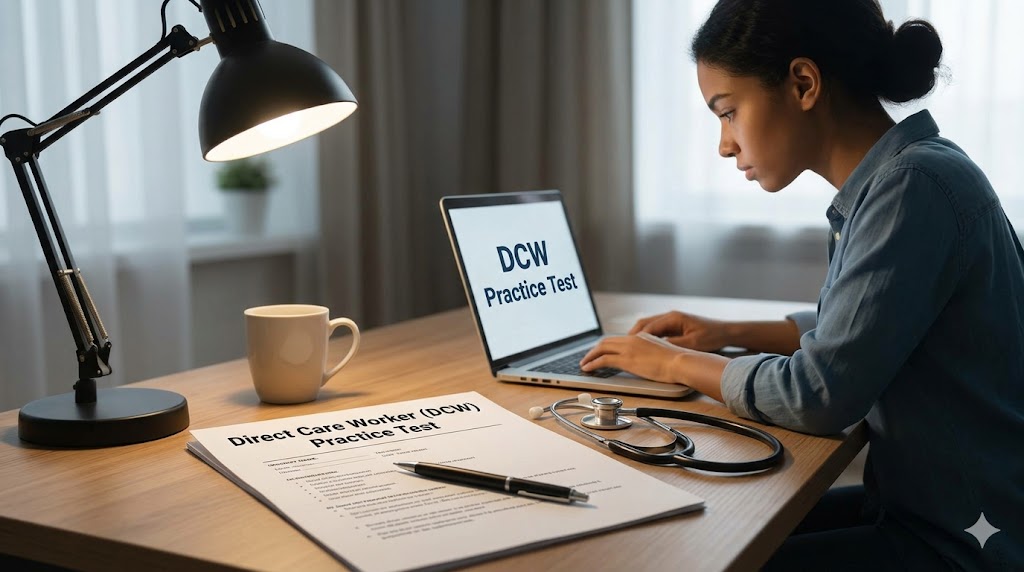
Additional Information
What the Course Entails and Exam Details
A comprehensive Direct Care Worker training program covers a wide array of essential caregiving skills necessary to excel in the field.
You will learn the fundamentals of personal care, including safe bathing, grooming, dressing, and mobility assistance.
The syllabus also delves deeply into vital signs monitoring, infection control protocols, and safe patient transfer techniques to protect both the worker and the client.
Additionally, the course emphasizes critical soft skills like effective communication, recognizing signs of abuse or neglect, and providing emotional support to clients and their families.
Ethical considerations, HIPAA regulations, and patient rights are also core pillars of the curriculum, ensuring you are fully prepared to provide respectful and legally compliant care.
What to Expect in the Final Exam
The Direct Care Worker final exam typically consists of two main components to thoroughly assess both your theoretical knowledge and your practical abilities.
The first part is a written or computerized knowledge test, generally featuring 50 to 75 multiple-choice questions that cover healthcare theory, safety procedures, and medical terminology.
You usually have about 90 minutes to two hours to complete this written section.
The second part is a clinical skills evaluation, where an evaluator watches you perform a random selection of standard caregiving tasks on a volunteer or anatomical mannequin.
A passing score for the written exam is typically around 75% to 80%, depending on your state. Meanwhile, the clinical portion requires you to perform all critical safety steps flawlessly in order to pass.
How to Study and Exam Centers
Achieving success on your DCW exam requires a balanced approach to studying both theory and practical, hands-on skills.
Start by taking a high-quality Direct Care Worker practice exam to identify your weak areas and get comfortable with the pacing of the multiple-choice format.
Using flashcards is incredibly useful for memorizing medical terms, specific infection control procedures, and patient safety protocols.
For the practical portion, practice your physical skills repeatedly in a mock setting with a friend or family member, paying close attention to the step-by-step rubrics outlined in your training manual.
When it comes to taking the test, exams are usually administered through your state's Department of Health, authorized nursing boards, or specialized testing vendors like Prometric, Headmaster, or Pearson VUE.
Many states also allow authorized regional training programs, local Red Cross chapters, and community colleges to act as official physical testing centers.
Job Opportunities from the Course
Earning your DCW certification opens the door to a wide variety of secure, in-demand, and fulfilling healthcare roles. Below are some of the fantastic career paths this certification unlocks:
Home Health Aide (HHA): Assisting patients with daily living activities, hygiene, and light housekeeping in the comfort of their own homes.
Personal Care Assistant (PCA): Providing companionship, running errands, and helping clients manage their daily schedules and appointments.
Assisted Living Technician: Working within residential care facilities to support seniors with mobility, meals, community engagement, and hygiene.
Hospice Caregiver: Offering specialized, compassionate end-of-life care and deep emotional support to patients and their grieving families.
Adult Daycare Worker: Supervising, assisting, and engaging with elderly or disabled adults in community-based daytime program settings.
Rehabilitation Aide: Working alongside physical and occupational therapists to help patients recover mobility and independence after an injury or surgery.
Frequently Asked Questions
Reviews
5.0
Based on 0 reviews
Leave a Review
No reviews yet. Be the first to review!