
Direct Support Professional (DSP) Practice Test
$69.00
- Buy to unlock unlimited access to all Quiz questions and Answers in this Quiz.
- After purchase you can print a PDF of the whole quiz at any point. The PDF will contain the questions and the correct answers.
About this Exam
The Direct Support Professional (DSP) certification is a vital credential for individuals dedicated to supporting people with intellectual and developmental disabilities to lead fulfilling, independent lives within their communities. This certification validates the essential knowledge, skills, and ethical values required to deliver high-quality, person-centered support. This exam is designed for current DSPs seeking to professionalize their role and advance their careers, as well as for new entrants to the field who want to demonstrate their competence to potential employers. By earning this certification, you prove your commitment to the core principles of direct support, which focus on empowerment, inclusion, and respecting the rights and dignity of every individual. The practice test acts as a crucial stepping stone, helping you gauge your readiness and identify key areas for further study.
Ready to test your knowledge?
Buy Now to Access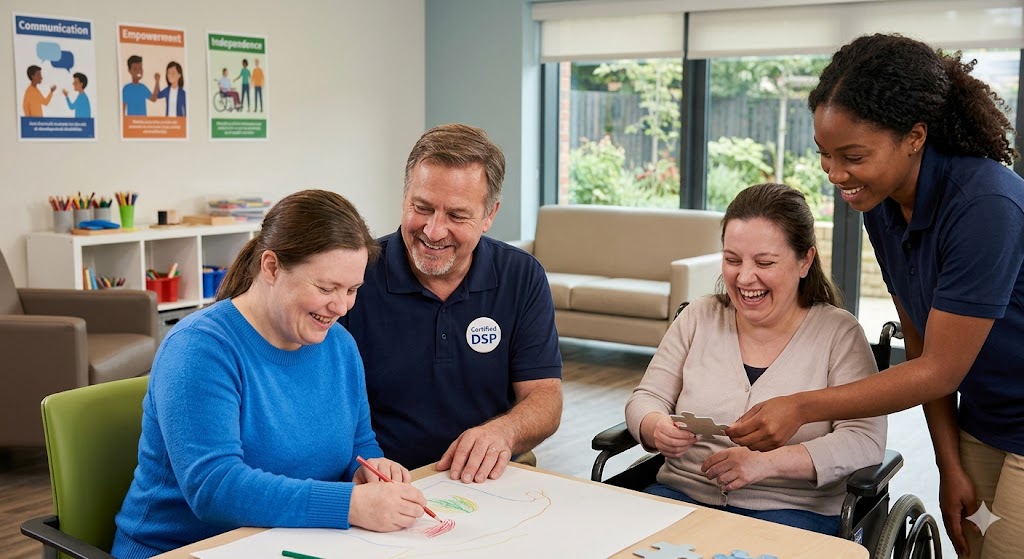
Additional Information
What the Course Entails and Exam Details
This comprehensive practice exam and the underlying study material cover a wide range of topics critical to the DSP role. The curriculum and subsequent test are typically structured around core competencies that are universally recognized in the field. Key areas of focus include:
Foundations of Direct Support: Understanding the history of disability services, the DSP's role, and the importance of person-centered planning.
Ethics and Professionalism: Adhering to the Direct Support Professional Code of Ethics, maintaining professional boundaries, and demonstrating respect and integrity.
Individual Rights and Advocacy: Promoting and protecting the civil, legal, and human rights of individuals receiving support, including self-advocacy and empowerment strategies.
Communication: Mastering effective communication techniques, including "People First Language," and conflict resolution skills.
Health and Safety: Knowledge of health promotion, medication administration (within scope), risk assessment, and crisis prevention and intervention.
Facilitating Community Inclusion: Strategies for supporting individuals to participate in social, recreational, and employment opportunities in their communities.
Crisis Prevention and Intervention: Recognizing and responding to challenging behaviors in a safe and supportive manner.
What to Expect in the Final Exam
While the specific structure, length, and passing requirements for the final Direct Support Professional certification exam can vary based on the state or certifying body (such as the NADSP or a state's Department of Developmental Services), you can generally expect a computer-based test composed of multiple-choice questions.
These questions will assess not only your recall of facts and regulations but also your ability to apply that knowledge to real-world scenarios you might encounter on the job. You may be presented with situation-based questions where you must determine the most ethical and effective course of action, demonstrating your understanding of core values like choice, dignity, and respect. It is essential to consult the official handbook of your specific certifying agency for the most accurate and up-to-date information regarding the total number of questions, the time limit for completion, and the required score to pass.
How to Study and Exam Centers
Preparation is the key to success on the DSP certification exam. Your study plan should be comprehensive and combine theoretical knowledge with practical application. Here are some actionable strategies:
Utilize the DSP Practice Test: Make this your primary tool to identify knowledge gaps. Analyze not only your incorrect answers but also the rationale for the correct ones. This simulates the actual exam experience.
Review Foundation Materials: Refer to training manuals, code of ethics, and relevant legislation like the Americans with Disabilities Act (ADA) or your state's specific disability acts (e.g., the Lanterman Act in California).
Master Scenario-Based Thinking: Practice reasoning through situations to determine the best person-centered approach. Consider factors like the individual's safety, choice, and dignity.
Focus on Communication and Ethics: Pay close attention to topics like "People First Language" and the Code of Ethics, as these are foundational.
Join Study Groups: Interacting with peers can provide new perspectives and reinforce your learning.
Regarding exam delivery, the location and method will depend on your certifying organization.
NADSP Certification: This is often managed through the online NADSP E-Badge Academy.
State-Specific Exams: These may be taken through online portals, approved training academies, authorized regional centers, or specialized physical testing sites such as Pearson VUE centers.
Authorized Training Schools: Some recognized vocational or human service schools are authorized to administer the exam as part of their training programs.
Job Opportunities from the Course
Earning your Direct Support Professional (DSP) certification opens doors to a rewarding and growing field. This credential is often required or highly preferred by employers in the community human services sector. It unlocks multiple career pathways that go far beyond caregiving, focusing on community integration and empowerment.
A clear list of career paths unlocked by this certification includes:
Direct Support Professional (DSP)
Job Coach
Employment Support Professional
Community Integration Specialist
Vocational Instructor
Residential Manager
Case Manager (with further education)
Habilitation Specialist
Peer Support Specialist
Frequently Asked Questions
Reviews
5.0
Based on 0 reviews
Leave a Review
No reviews yet. Be the first to review!