
Dr. High Yield Family Medicine Practice Test
$69.00
- Buy to unlock unlimited access to all Quiz questions and Answers in this Quiz.
- After purchase you can print a PDF of the whole quiz at any point. The PDF will contain the questions and the correct answers.
About this Exam
The Dr. High Yield Family Medicine Practice Test is an indispensable study tool designed primarily for third-year medical students. Its principal purpose is to serve as a focused, high-yield review resource for students preparing for the National Board of Medical Examiners (NBME) Family Medicine Subject (Shelf) Examination. This resource acts as a comprehensive "recap" of the most critical concepts encountered during a family medicine clerkship, translating complex clinical scenarios into manageable, board-style practice questions. By synthesizing essential information, it bridges the gap between clinical rotation experience and standardized test success, providing the confidence needed to excel on exam day.
Ready to test your knowledge?
Buy Now to Access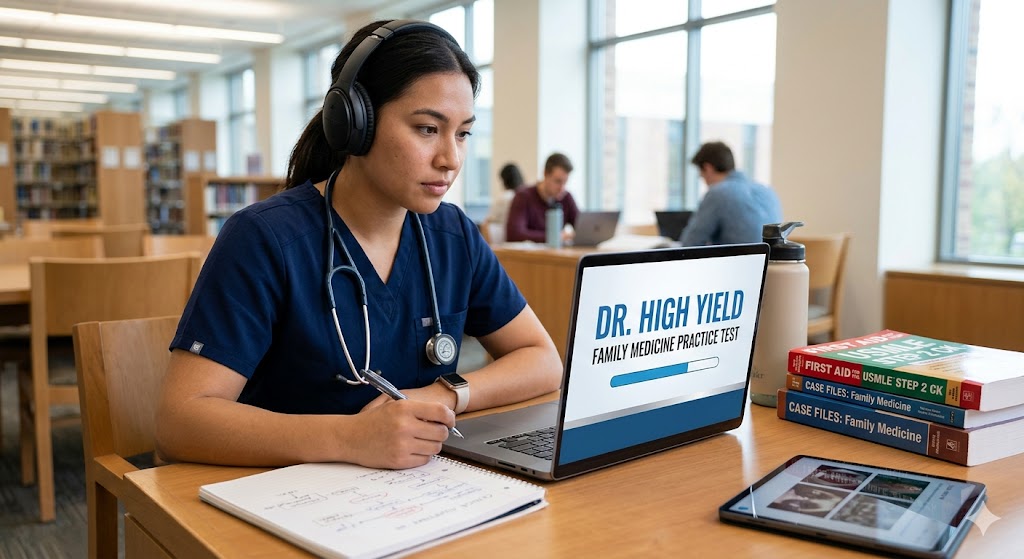
Additional Information
What the Course Entails and Exam Details
This comprehensive review tool outlines the core topics and skills expected of a rotating medical student in a primary care setting. While the "Dr. High Yield" series is often encountered as a structured audio review course, its corresponding practice materials cover the breadth of the official Family Medicine syllabus. Students can expect to face practice questions focused on common outpatient and inpatient scenarios. The material entails a mastery of: preventative medicine guidelines (including age-appropriate screening and immunizations), chronic disease management (such as hypertension, diabetes, and asthma), acute respiratory infections, musculoskeletal complaints, behavioral health screenings (including depression and anxiety), and unique aspects of pediatric and geriatric care within a family practice context. The course material emphasizes diagnosing, managing, and counseling patients efficiently, reflecting real-world primary care expectations.
What to Expect in the Final Exam
It is critical to note that the final exam this resource prepares you for is the official NBME Family Medicine Shelf Exam, not a standalone certification from "Dr. High Yield." The NBME Shelf Exam is a standardized, computer-based examination. It typically consists of approximately 110 multiple-choice questions (MCQs), formatted as clinical vignettes followed by a single best answer choice. The time limit is strictly enforced, usually providing students with around 2 hours and 45 minutes to complete the test.
The exam is designed to assess your ability to apply medical knowledge to clinical situations, prioritizing high-yield, high-probability scenarios. Rules are dictated by individual medical schools in collaboration with the NBME, and standard protocol includes strict prohibitions against external resources or devices. While the NBME provides a raw score, your medical school determines the final passing threshold for your rotation grade.
How to Study and Exam Centers
Effective study strategies for the Family Medicine Shelf Exam revolve around active recall and consistent practice. Actionable strategies include: (1) integrating the "Dr. High Yield" review audios or materials consistently throughout your rotation to reinforce daily learning, (2) pairing these high-yield reviews with a robust question bank (QBank) such as UWorld or Kaplan to build familiarity with the vignette format, and (3) dedicating time for focused reviews of preventative care guidelines, which are heavily tested.
The official NBME Shelf Exam is not taken at general public testing centers like Pearson VUE. Instead, these exams are administered directly by your medical school, usually in a controlled computer lab or testing center on campus at the conclusion of your rotation. Information regarding specific testing times, dates, and locations will be provided directly by your clerkship director or medical school administration.
Job Opportunities from the Course
Successfully preparing for and passing the Family Medicine Shelf Exam is a required milestone within your medical school curriculum. While passing this specific shelf exam does not directly confer a new job title, it is a vital component of completing your clerkship and, ultimately, earning your Medical Doctorate (MD) or Doctor of Osteopathic Medicine (DO) degree. Your performance on shelf exams also contributes significantly to your residency application strength. Achieving your medical degree unlocks a defined career path that leads directly to job titles such as:
Family Medicine Physician
General Practitioner
Primary Care Physician
Outpatient Clinic Physician
Hospitalist (General Medicine)
Medical Director (Clinics)
Frequently Asked Questions
Reviews
5.0
Based on 0 reviews
Leave a Review
No reviews yet. Be the first to review!