
Drill Competition Inspection Practice Test
$69.00
- Buy to unlock unlimited access to all Quiz questions and Answers in this Quiz.
- After purchase you can print a PDF of the whole quiz at any point. The PDF will contain the questions and the correct answers.
About this Exam
The Drill Competition Inspection Practice Exam is the ultimate preparatory tool designed for JROTC cadets, military personnel, and aspiring drill team inspectors who need to master the meticulous standards of uniform inspection and formal drill procedures. This comprehensive assessment evaluates knowledge, attention to detail, and a candidate's understanding of standardized inspection regulations across multiple service branches. Success in this practice test validates that a candidate is fully prepared for high-stakes competitive environments, ensuring they can perform under pressure with confidence, precision, and a professional military appearance. It is an essential resource for anyone serious about achieving excellence in military drill and ceremonies.
Ready to test your knowledge?
Buy Now to Access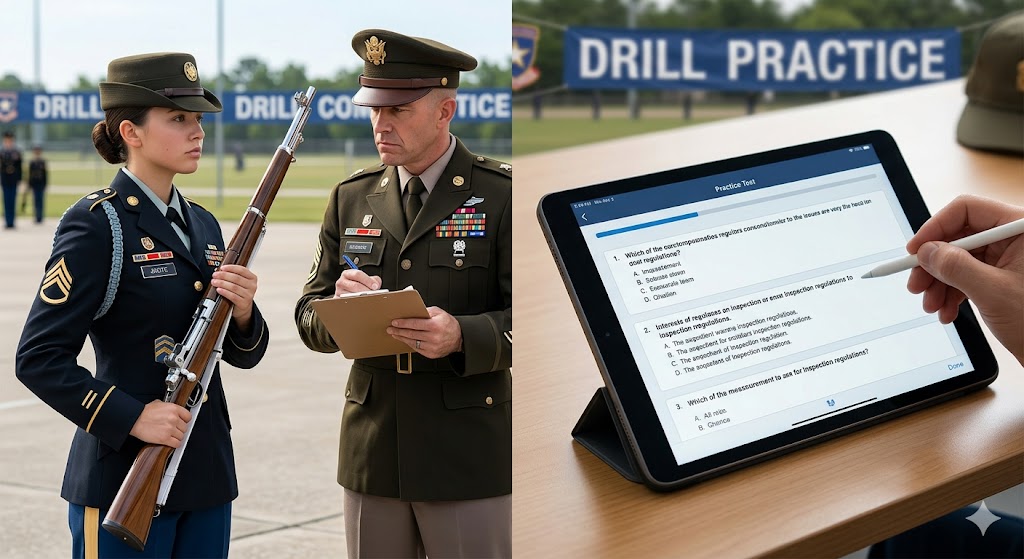
Additional Information
What the Course Entails and Exam Details
To excel on this practice test, candidates must possess a thorough understanding of the specific regulations governing uniform wear, bearing, and equipment during a formal inspection. Preparation for this exam involves rigorous study of official military training circulars (such as Army TC 3-21.5 or branch-specific equivalents) and uniform appearance standards. The core syllabus covered includes proper measurement standards for insignia and ribbon placement, the acceptable condition and appearance of boots and shoes, maintenance of rifles used for ceremonial drill, and the correct procedural execution of inspection commands while in formation. Mastery of the standard inspection checklist used by judges is critical.
What to Expect in the Final Exam
Candidates preparing for the full Drill Competition Inspection examination should expect a standardized written evaluation consisting of structured multiple-choice questions, matching exercises, and true/false assessments derived directly from inspection manuals. The passing score requirement for most formal drill exams is high, typically set at 80% or greater to emphasize precision. Candidates generally face a set time limit, often around 60 to 90 minutes, depending on the length and depth of the assessment. Strict rules of discipline and professional conduct are enforced, simulating the intensity of an actual competitive environment. Focus and recall speed are key factors in passing.
How to Study and Exam Centers
Effective studying requires a combination of rote memorization and practical, hands-on application. Candidates should create physical or digital flashcards to memorize exact measurements for uniform insignia placement and regulatory terms. Taking official practice exams like this one repeatedly will build familiarity with question formatting and pacing. It is crucial to supplement written study with mock inspection drills; use a detailed inspection checklist to inspect fellow cadets or uniforms on hangers, applying the knowledge gained in a practical setting. These exams are usually administered internally within local JROTC units, ROTC detachments, high schools, military installations, or authorized civilian-run drill competition training centers rather than public testing facilities.
Job Opportunities from the Course
A certification or strong performance in a Drill Competition Inspection curriculum demonstrates high levels of discipline, attention to detail, leadership, and expertise in military protocol. While this training often occurs early in a career, it unlocks professional paths such as: Drill Team Captain, Unit Platoon Sergeant, Junior ROTC Cadet Officer, specialized Drill Team Coach, Military Uniform and Protocol Instructor, or leadership roles within advanced Senior ROTC programs. This proficiency is invaluable for those planning to enlist in any branch of the armed forces, often positioning individuals as strong candidates for leadership roles early in their military service.
Frequently Asked Questions
Reviews
5.0
Based on 0 reviews
Leave a Review
No reviews yet. Be the first to review!