
Dyslexia Training Practice Test
$69.00
- Buy to unlock unlimited access to all Quiz questions and Answers in this Quiz.
- After purchase you can print a PDF of the whole quiz at any point. The PDF will contain the questions and the correct answers.
About this Exam
Dyslexia training certifications are designed for individuals who are passionate about supporting children and adults with dyslexia and related reading difficulties. This specialized training equips professionals with the deep understanding, evidence-based skills, and practical tools necessary to identify, assess, and provide effective, structured literacy intervention. Whether you are a classroom teacher, a special education specialist, a tutor, a speech-language pathologist, or a dedicated parent, this course of study provides essential knowledge in a rapidly growing and vital field. Completing such a program demonstrates a commitment to inclusive education and mastery of multisensory, structured language approaches proven to work for individuals with diverse learning profiles.
Ready to test your knowledge?
Buy Now to Access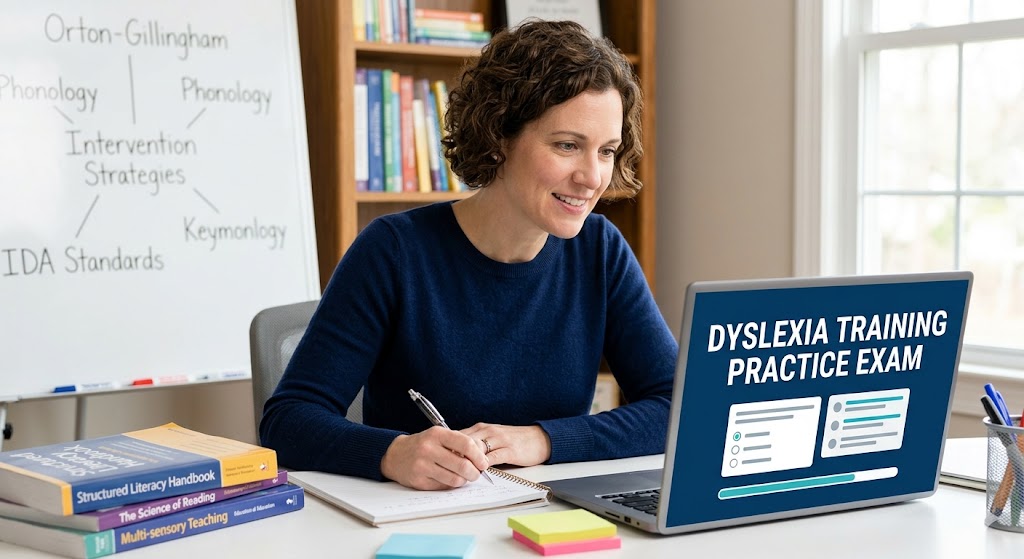
Additional Information
What the Course Entails and Exam Details
Comprehensive dyslexia training typically spans multiple modules, combining theoretical knowledge with crucial practical application. The core curriculum often revolves around established methodologies like the Multisensory Structured Literacy (MSL) principles, frequently incorporating aspects of or full training in the Orton-Gillingham approach. Students can expect to delve into topics such as the historical and neuroscience basis of dyslexia, effective screening and informal assessment strategies, and highly specific instructional techniques across various domain areas: phonological awareness, phonics, word analysis, vocabulary development, reading fluency, and comprehension. Many programs also include a substantial, supervised practicum component where trainees apply their learning directly with students, receiving feedback and coaching. These practical hours are fundamental to building real-world competence. The exam details of the final certification, which this practice test is designed to prepare you for, are as follows.
What to Expect in the Final Exam
The actual final exam for a dyslexia training certification can take various forms depending on the program and the certifying body, such as the International Dyslexia Association (IDA) or the Orton-Gillingham Academy. Most commonly, it is a comprehensive written exam, potentially delivered online or in a proctored setting. The format typically includes a significant number of multiple-choice questions designed to test theoretical knowledge across all course domains. Expect questions that assess your understanding of phonology, morphology, reading development, legal requirements, and specific instructional methods. Some exams may incorporate case study analysis, where you are given a student profile and asked to analyze data, identify needs, and design an appropriate intervention plan. The required passing score is generally within the 75% to 85% range, reflecting the need for high-level competency. The time limit for the exam can vary widely, from a few hours to a full-day, multi-session event, again dependent on the certification level and program rigor. Integrity and strict adherence to exam rules, often in proctored environments, are paramount for maintaining professional standards.
How to Study and Exam Centers
Successfully navigating both your course work and the final exam requires diligent study and strategic preparation. Start by actively engaging with all course materials, including lectures, readings, and discussion forums. Actively applying the multi-sensory techniques you learn—using physical objects, tracing, and vocalization—can solidify your own understanding. Spaced repetition and creating detailed study notes, especially on complex topics like phonetic rules and morphological structure, are highly effective. A key component of your preparation should be the [Dyslexia Training Practice Test]. Utilize this tool to not only test your knowledge but also to familiarize yourself with the type and style of questions you can expect on the final certification exam. Take the practice test in conditions that mimic the real exam as closely as possible, allowing you to gauge your readiness and identify areas that need additional review. Studying in groups and seeking feedback from your practicum supervisors are also invaluable strategies. As for taking the actual final exam, the method is dictated by the specific program or certifying body. For larger, standard certifications, exams may be administered through Pearson VUE centers or similar official testing portals, offering consistent and secure environments globally. Alternatively, some program-specific final exams might be delivered through the program's own secure online platform or at designated university or training center locations. Ensure you are aware of your specific path's requirements early in your studies.
Job Opportunities from the Course
Gaining a dyslexia training certification unlocks a wide range of rewarding career opportunities. Your specialized expertise will be in high demand across educational and private settings. Common job titles include:
Certified Dyslexia Practitioner or therapist, offering specialized intervention in schools, clinics, or private practice.
Special Education Teacher or Intervention Specialist, working within public or private schools to support identified students.
Reading Specialist or Interventionist, often taking on leadership roles in literacy support programs.
Private Tutor, providing one-on-one, structured literacy instruction.
Educational Consultant or Coach, advising schools, districts, or parents on dyslexia-related best practices and curriculum development.
School or Clinic-Based Dyslexia Coordinator, overseeing screening, intervention programs, and professional development in larger organizations.
Frequently Asked Questions
Reviews
5.0
Based on 0 reviews
Leave a Review
No reviews yet. Be the first to review!