
Electroencephalogram (EEG) Registry Practice Exam
$69.00
- Buy to unlock unlimited access to all Quiz questions and Answers in this Quiz.
- After purchase you can print a PDF of the whole quiz at any point. The PDF will contain the questions and the correct answers.
About this Exam
The Electroencephalogram (EEG) Registry exam is the benchmark certification for aspiring and practicing Neurodiagnostic Technologists aiming to validate their knowledge and skill in performing clinical EEGs. Specifically, this exam leads to the prestigious Registered Electroencephalographic Technologist (R. EEG T.) credential, typically administered by the American Board of Registration of Electroencephalographic and Evoked Potential Technologists (ABRET). Earning this registry demonstrates a high level of technical proficiency, critical thinking, and patient care knowledge essential for diagnosing neurological disorders. It is designed for technologists who have completed accredited training and accumulated the necessary clinical experience.
Ready to test your knowledge?
Buy Now to Access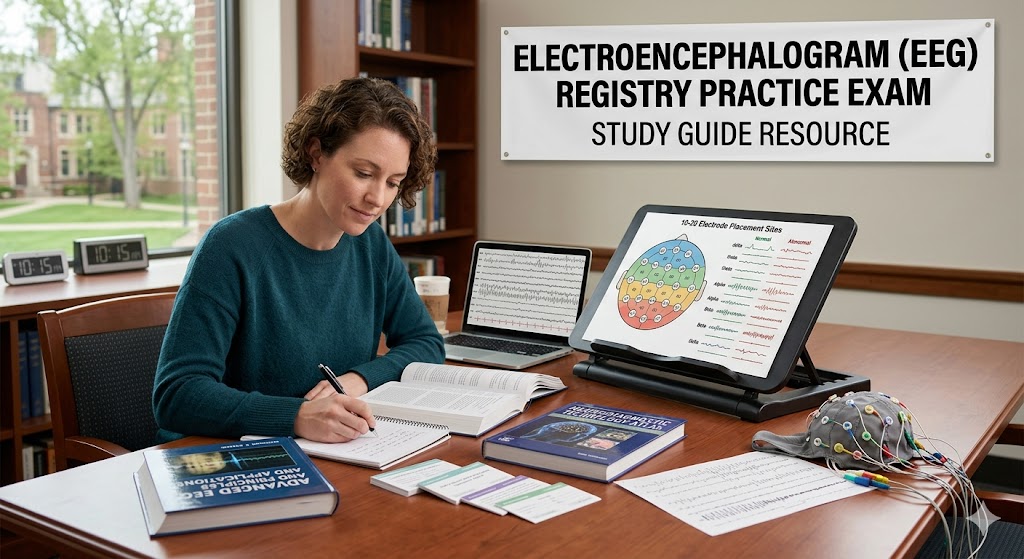
Additional Information
What the Course Entails and Exam Details
Preparing for the EEG Registry exam requires a comprehensive understanding of diverse topics within neurodiagnostics. The exam content, based on current practice analyses, meticulously covers a wide spectrum of essential domains.
The following core topics and syllabus elements are typically included:
Patient Care and Safety: This domain emphasizes appropriate patient preparation, history taking, safety protocols, and effective communication throughout the EEG procedure.
Instrument and Technical Preparation: Candidates are tested on their knowledge of EEG equipment calibration, electrode characteristics, 10-20 international system placement, and optimizing signal quality.
Recording Procedures: This section focuses on proper montage selection, utilization of activation procedures (like hyperventilation and photic stimulation), and recognizing and eliminating technical artifacts.
Pattern Recognition and Description: Crucially, the exam evaluates the ability to identify normal and abnormal EEG patterns across different age groups, wakefulness and sleep states, and pathological conditions.
Data Analysis and Interpretation Principles: While not requiring a neurologist's interpretation level, it includes understanding the fundamental physiological and pathophysiological principles behind the EEG findings.
What to Expect in the Final Exam
The actual R. EEG T. exam is typically administered as a computer-based testing (CBT) experience. Here are the common logistics and expectations:
Format: The exam predominantly consists of multiple-choice questions (MCQs), although some versions may include interactive item types. These questions assess recall, comprehension, and application of neurodiagnostic principles in clinical scenarios.
Passing Score: ABRET determines the minimum passing score through a rigorous psychometric cut-score process. It is not based on a raw percentage, reflecting a standardized level of competency expected of a registered technologist.
Time Limit: Candidates generally have a strict time limit of approximately 3 to 4 hours to complete the examination. Efficient time management is critical during the test.
Specific Rules: Strict testing protocols are enforced, often requiring identification verification and prohibiting personal items within the testing center. There may be a structured break offered during longer exams.
How to Study and Exam Centers
Effective preparation for the EEG Registry exam involves strategic and diligent effort. Utilize the following actionable strategies to maximize your chances of success:
Create a Detailed Study Plan: Break down the core exam domains into manageable sections. Dedicate consistent time each week to cover the material, focusing on areas where you require the most improvement.
Utilize Official Resources: Access the latest Candidate Handbook and practice analysis available from ABRET. These documents provide invaluable insights into the exam structure and content breakdown.
Study Authoritative Textbooks: Refer to definitive texts in the field, such as Current Practice of Clinical Electroencephalography and recognized Atlases of EEG Patterns. Mastery of these foundational materials is crucial.
Practice with High-Quality Exams: Utilize comprehensive, timed practice exams that mirror the format and difficulty level of the actual registry. This helps to build test-taking stamina and identify knowledge gaps.
Join Study Groups: Collaborating with peers or mentors allows you to discuss complex concepts, share resources, and gain diverse perspectives on clinical scenarios.
The R. EEG T. exam is widely administered globally. To take the actual exam, you must register through the ABRET website. The testing centers are typically managed by a third-party administrator, commonly Pearson VUE, which offers extensive, secure testing locations worldwide in major cities and academic centers. Some authorized neurodiagnostic technology schools may also be approved testing sites.
Job Opportunities from the Course
Earning the Registered Electroencephalographic Technologist (R. EEG T.) credential unlocks significant career pathways and opportunities within neurodiagnostics. Potential job titles and career avenues include:
Registered Electroencephalographic Technologist (R. EEG T.)
Neurodiagnostic Technologist (NDT)
EEG Technician / Technologist
Lead Neurodiagnostic Technologist / Supervisor
Clinical Applications Specialist
Epilepsy Monitoring Unit (EMU) Technologist
Long-Term Monitoring (LTM) / ICU EEG Technologist
Intraoperative Monitoring (IOM) Technologist (often with additional certification)
Frequently Asked Questions
Reviews
5.0
Based on 0 reviews
Leave a Review
No reviews yet. Be the first to review!