
Electrologist Practice Test
$69.00
- Buy to unlock unlimited access to all Quiz questions and Answers in this Quiz.
- After purchase you can print a PDF of the whole quiz at any point. The PDF will contain the questions and the correct answers.
About this Exam
This comprehensive study guide is designed to help individuals prepare for and excel in the Electrologist Practice Test, a critical stepping-stone toward professional licensure or board certification in the field of permanent hair removal. Electrology is the only FDA-recognized method of permanent hair removal, utilizing state-of-the-art electrical modalities (galvanic, thermolysis, and blend) to destroy hair follicles at the root. The certification exam validates that an aspiring electrologist possesses the necessary knowledge of skin anatomy, physiology, infection control, and technical skill to perform treatments safely and effectively on clients. This exam is for students who have completed their formal electrology training, practicing electrologists seeking to renew their license, or those pursuing advanced voluntary credentials to demonstrate expertise.
Ready to test your knowledge?
Buy Now to Access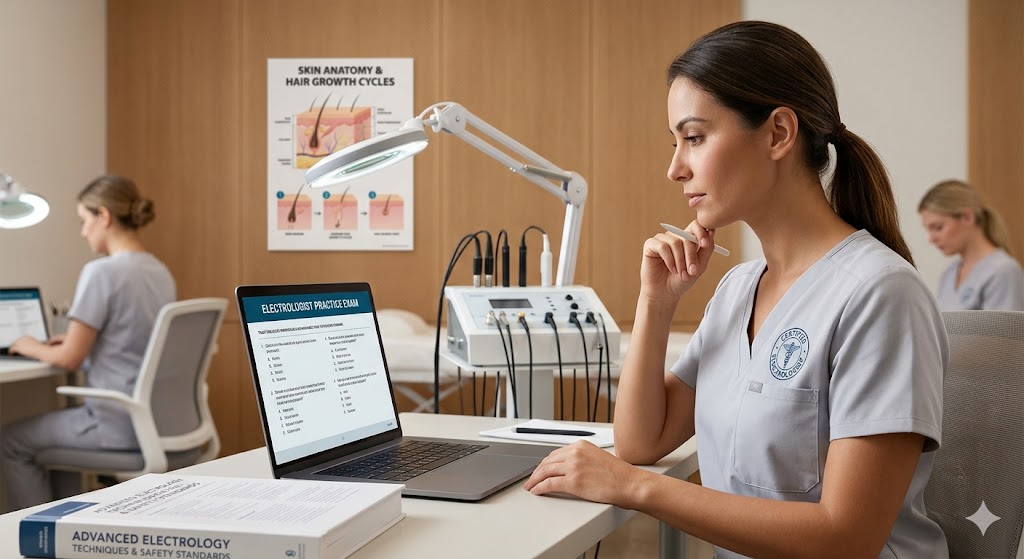
Additional Information
What the Course Entails and Exam Details
To pass the Electrologist Practice Test, candidates must have a deep understanding of several core curriculum areas, often covered in their training program.
The key domains include:
Electrology Modalities: Understanding the specific mechanics and application of Galvanic (chemical decomposition), Thermolysis (high-frequency heat), and the Blend (a combination of both) currents.
Anatomy and Physiology of Skin and Hair: Detailed knowledge of the layers of the skin (epidermis, dermis, subcutaneous), hair follicle structure, and the stages of hair growth (anagen, catagen, telogen).
Hormonal Influences and Skin Conditions: Recognizing how endocrine conditions like PCOS, adrenal disorders, and specific medications can impact hair growth patterns and client treatment plans.
Infection Control and Safety Standards: Mastery of sanitization, sterilization, and asepsis techniques, adhering to rigorous protocols set by regulatory bodies.
Client Consultation and Ethics: Developing effective communication skills, conducting thorough intake, documenting treatment, and maintaining professional business practices.
Physics and Equipment Knowledge: Grasping the fundamental electrical principles, the function of different needles/probes, and the correct operation and maintenance of electrology machines.
What to Expect in the Final Exam
While the format can vary depending on the certifying body or state regulatory board, most Electrologist exams consist of a written component, and some include a practical, hands-on demonstration.
Here is a typical breakdown of the final assessment:
Written Examination: A time-limited, computer-based or paper-and-pencil test comprising approximately 100–150 multiple-choice questions. It covers all knowledge areas and must be completed in a specific timeframe (often two to three hours).
Practical Examination (if required): A direct, proctored observation of the candidate's technique. You may be asked to demonstrate key skills such as setting up the treatment area, performing insertions on different body areas, applying various modalities, and executing infection control steps.
Passing Score: Requirements are set by the individual state or the American Electrology Association. A typical passing score for both components is between 70% and 75%.
Rules: Cell phones and reference materials are typically prohibited; you will need to present photo identification to enter the testing center.
How to Study and Exam Centers
Effective preparation is key to success.
Here are actionable strategies and information on where to take the test:
Take Practice Tests Often: Utilizing simulated Electrologist Practice Tests is essential. This not only reinforces your knowledge of the core topics but also gets you accustomed to the question format and time constraints.
Review Textbooks and State Guidelines: Re-study your electrology curriculum textbooks and pay close attention to your specific state's rules, regulations, and statutes regarding the practice.
Study the 'Infection Prevention Standards': For any exam, particularly the national AEA CPE exam, knowing the entire AEA Infection Prevention Standards document (2023 update) is mandatory.
Create Modality-Specific Flashcards: Map out the 'why' and 'how' of every modality, including the chemical reactions, heated area shape, and optimal application for specific hair types.
Where to Take the Exam: The actual exam is not taken online or at home. You must register to take the test through your state's licensing board or the testing company they contract with. For the Certified Professional Electrologist (CPE) credential, the exam is offered through the American Electrology Association and proctored by Prometric testing centers. State-specific written and practical exams are usually held at designated, physical testing sites, which may be approved electrology schools or government facilities. Contact your licensing board for a list of locations and a test bulletin.
Job Opportunities from the Course
A pass on the Electrologist certification or licensing exam unlocks diverse and rewarding career paths.
Here is a list of job opportunities that this credential enables:
Licensed Electrologist: The most common role, performing permanent hair removal in a private practice, salon, or med spa environment.
Permanent Hair Removal Specialist: A specialized title, often used in multi-modality clinics that offer laser, electrolysis, and IPL.
Medical Spa Technician / Electrolysis Clinician: Working within a dynamic medical environment, frequently alongside estheticians and medical professionals.
Clinic / Salon Owner: Managing and operating your own successful permanent hair removal business.
Electrology Instructor: Educating the next generation of professionals at an accredited electrology school.
Spa Manager / Coordinator: Leading a team of wellness and beauty providers.
Frequently Asked Questions
Reviews
5.0
Based on 0 reviews
Leave a Review
No reviews yet. Be the first to review!