
EMALB First Responders (FR) Practice EXAM
$69.00
- Buy to unlock unlimited access to all Quiz questions and Answers in this Quiz.
- After purchase you can print a PDF of the whole quiz at any point. The PDF will contain the questions and the correct answers.
About this Exam
Mastering the British Columbia Emergency Medical Assistants Licensing Board (EMALB) First Responder (FR) certification is the critical first step toward a rewarding career in pre-hospital care. This certification is designed for professionals who are often the very first on the scene of a medical emergency, such as aspiring firefighters, industrial medics, security personnel, lifeguards, and search and rescue volunteers. The FR license validates your ability to provide essential life-saving interventions before advanced medical personnel arrive. Obtaining this license ensures you possess the systematic approach, confidence, and specialized skills required to assess patients, manage trauma, and stabilize medical conditions effectively in high-pressure environments across British Columbia.
Ready to test your knowledge?
Buy Now to Access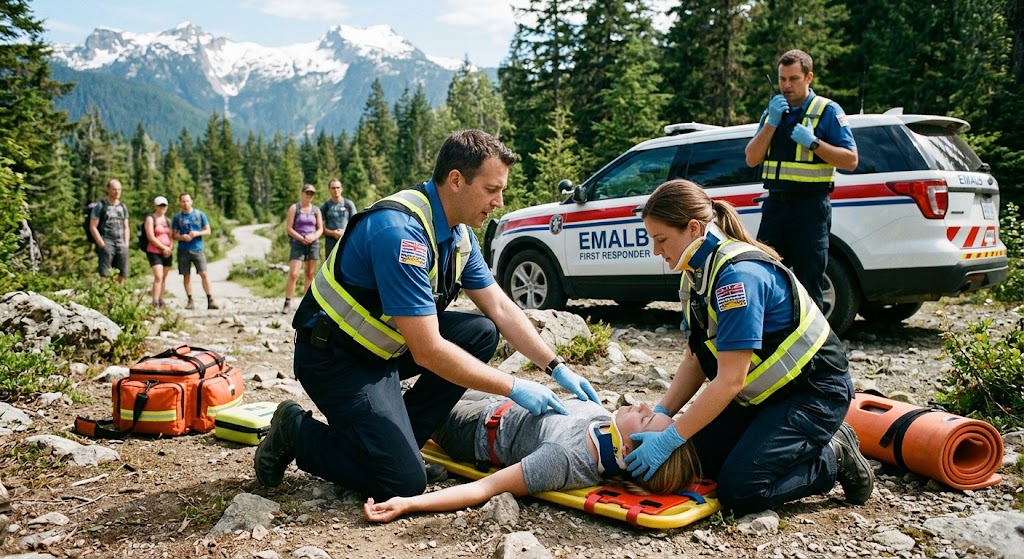
Additional Information
What the Course Entails and Exam Details
To gain your EMALB FR license, you must first complete a prerequisite First Responder training course through an approved training agency. This comprehensive curriculum adheres strictly to the EMALB Schedule 1 and Schedule 2 Scope of Practice.
The core syllabus covers a vast array of critical skills:
Scene Assessment and Safety: Identifying hazards, managing bystander safety, and establishing scene command.
Patient Assessment: The systematic process of primary and secondary assessments to identify life-threatening injuries or illnesses.
Airway and Breathing Management: Advanced techniques using specialized equipment to ensure oxygenation and ventilation.
Cardiopulmonary Resuscitation (CPR) and AED: Mastery of Basic Life Support (BLS) protocols for all age groups.
Trauma Management: Treatment of soft tissue injuries, musculoskeletal trauma, spinal care, and shock management.
Medical Emergencies: Recognizing and stabilizing conditions such as respiratory distress, cardiac incidents, strokes, and allergic reactions.
Pharmacology: Proper administration of approved Schedule 1 and 2 medications.
What to Expect in the Final Exam
The licensing process administered directly by EMALB consists of two separate, demanding components designed to thoroughly evaluate your competence and decision-making abilities. You must pass both segments to achieve licensure.
The Written Knowledge Examination
The written component is typically an online, multiple-choice exam administered through the EMALB portal. It assesses your theoretical understanding of the FR curriculum, including patient assessment protocols, anatomy and physiology, trauma pathophysiology, and medical emergency management. Candidates are usually allocated approximately 2 hours to complete this 100-question exam, and a score of 75% or higher is required to pass.
The Practical Scenario Evaluations
This is the hands-on assessment of your clinical skills. You will be evaluated by an EMALB examiner in two separate scenario-based tests: one focus on a Major Traumatic Incident and one focusing on a Medical Emergency. In these scenarios, you must demonstrate a fluid, systematic, and confident application of patient care protocols, prioritizing immediate life threats and maintaining scene control. Candidates must pass both scenarios to complete the practical component.
How to Study and Exam Centers
Successful preparation requires a blend of rigorous academic study and consistent practical application. Leverage an authoritative EMALB FR Practice Exam tool to familiarize yourself with the formatting, pacing, and types of questions found on the actual licensing exam.
Strategic Study Methods
Review your Textbook: Re-read the primary textbook from your training course (commonly "Emergency Medical Responder: A Skills Approach") religiously.
Master the BCEHS Guidelines: Familiarize yourself with current British Columbia Emergency Health Services (BCEHS) Clinical Practice Guidelines, as the exam aligns with these standards.
Practice with a Partner: Allocate significant time to running practical scenarios with colleagues, simulating the high-pressure environment of the practical evaluation.
Identify the Steps: For every procedure, know the "why" behind every step of the National Occupational Competency Profile (NOCP) guidelines.
Exam Centers and Portals
The EMALB Written Knowledge Exam is taken remotely via the board’s dedicated online testing portal. Candidates will receive specific access instructions and deadlines upon approval of their licensing application. The Practical Scenario Evaluations are typically scheduled through the authorized training school where you completed your prerequisite First Responder course or at an EMALB-designated regional testing location across British Columbia.
Job Opportunities from the Course
Earning your EMALB First Responder license unlocks a diverse range of crucial career paths within British Columbia's emergency services sector. This certification is highly regarded and often mandatory for the following professional roles:
Professional Firefighter
Industrial First Aid Attendant (Equivalent to OFA Level 3 roles)
Search and Rescue Volunteer (Licensed Responder)
Emergency Room Technician
Professional Lifeguard / Ski Patrol (Advanced Tier)
Industrial Medic / Remote Site Medic
Hospital Security Officer (Medical Responder)
Frequently Asked Questions
Reviews
5.0
Based on 0 reviews
Leave a Review
No reviews yet. Be the first to review!