
Emergency Nursing Pediatric Course (ENPC) 6th Edition Provider Practice Exam
$69.00
- Buy to unlock unlimited access to all Quiz questions and Answers in this Quiz.
- After purchase you can print a PDF of the whole quiz at any point. The PDF will contain the questions and the correct answers.
About this Exam
The Emergency Nursing Pediatric Course (ENPC) 6th Edition Provider Practice Exam serves as a vital tool for nursing professionals preparing to validate their expert skills in pediatric emergency medicine.
Developed by the Emergency Nurses Association (ENA), this globally recognized certification is specifically designed for Registered Nurses (RNs) who care for acute and critically ill pediatric patients.
It provides an essential framework to assess, prioritize, and treat infants, toddlers, and adolescents facing life-threatening medical or traumatic situations.
By utilizing this comprehensive practice exam, candidates can safely evaluate their clinical readiness, pinpoint structural gaps in their specialized knowledge, and build the analytical confidence required to pass the official provider test.
Ready to test your knowledge?
Buy Now to Access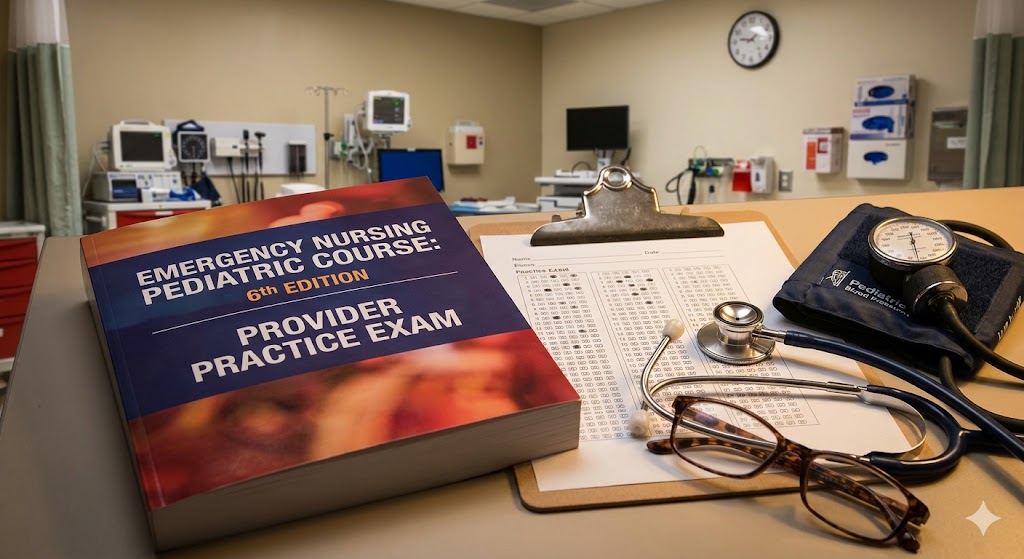
Additional Information
What the Course Entails and Exam Details
The core curriculum of this course emphasizes a rigorous, systematic approach to handling diverse pediatric emergencies.
Nurses delve deeply into the official Pediatric Assessment Triangle (PAT), a rapid visual and auditory tool used to determine initial patient stability.
The extensive syllabus covers critical primary and secondary surveys, respiratory distress, respiratory failure, shock resuscitation, and advanced pediatric trauma care.
Furthermore, the materials explicitly detail specific medical conditions such as neurological emergencies, toxicological exposures, and pediatric cardiac arrest protocols.
Crucial evidence-based nursing interventions, pharmacological safety measures, fluid administration guidelines, and techniques for identifying child abuse or human trafficking are integrated directly into the training.
What to Expect in the Final Exam
The final evaluation for the ENPC 6th Edition Provider designation is structured into two separate, rigorous components to test both theory and application.
The theoretical portion consists of an online, open-book written examination featuring 50 randomized multiple-choice questions.
Candidates are given a strict time limit of 2 hours to complete the test, and they must secure a minimum passing score of 80% to earn verification.
If the initial attempt is unsuccessful, a maximum of two total attempts is permitted before the entire provider course must be repeated.
The practical portion requires students to successfully demonstrate the hands-on Pediatric Nursing Process (PNP) systematic assessment during an interactive, live-action clinical scenario station.
How to Study and Exam Centers
Achieving success on this exam demands an organized study method combined with targeted, evidence-based preparation strategies.
Students should begin by reading the official ENA ENPC Provider Manual 6th Edition from cover to cover while taking highly structured notes.
Completing all required interactive pre-course online learning modules prior to the classroom session is absolutely mandatory for all participants.
Practicing with realistic online mock exams will help familiarize you with the formatting of the randomized questions and assist with time-management techniques.
The final written examination is taken completely online through the official ENA learning management system portal.
The practical skills portion and classroom lectures are hosted physically at accredited hospitals, specialized simulation labs, authorized universities, or via ENA-approved virtual classrooms.
Job Opportunities from the Course
Securing an ENPC 6th Edition Provider certification immediately elevates a nurse’s professional standing and unlocks premium career paths across the healthcare spectrum.
Hospitals and trauma centers frequently mandate or strongly prefer this certification for specialized roles within high-acuity environments.
Holding this credential unlocks career opportunities as a dedicated Pediatric Emergency Room Nurse (ER RN) handling incoming pediatric trauma.
It qualifies professionals to work as a Critical Care Transport and Flight Nurse managing complex pediatric transfers.
Nurses can advance into high-level positions such as a Pediatric Intensive Care Unit (PICU) Staff Nurse or a specialized Pediatric Urgent Care Nurse.
Additionally, this prestigious certification positions clinical professionals for leadership roles including Emergency Department Nurse Manager, Trauma Coordinator, or Clinical Nurse Educator.
Frequently Asked Questions
Reviews
5.0
Based on 0 reviews
Leave a Review
No reviews yet. Be the first to review!