
Emergency Nursing Pediatric Course (ENPC) Home Practice Exam
$69.00
- Buy to unlock unlimited access to all Quiz questions and Answers in this Quiz.
- After purchase you can print a PDF of the whole quiz at any point. The PDF will contain the questions and the correct answers.
About this Exam
The Emergency Nursing Pediatric Course (ENPC) is a premier certification program developed by the Emergency Nurses Association (ENA).
This highly specialized course is designed to empower emergency nurses with the foundational knowledge and advanced skills necessary to treat pediatric patients safely.
Caring for infants, toddlers, and adolescents requires unique clinical insights because children are not just miniature adults.
Whether you are a seasoned trauma nurse or a newly graduated RN entering the emergency department, this certification provides the critical tools needed to accurately assess and intervene during pediatric emergencies.
The ENPC Home Practice Exam serves as an essential preparatory benchmark to ensure candidates can confidently pass their official provider test on the first attempt.
Ready to test your knowledge?
Buy Now to Access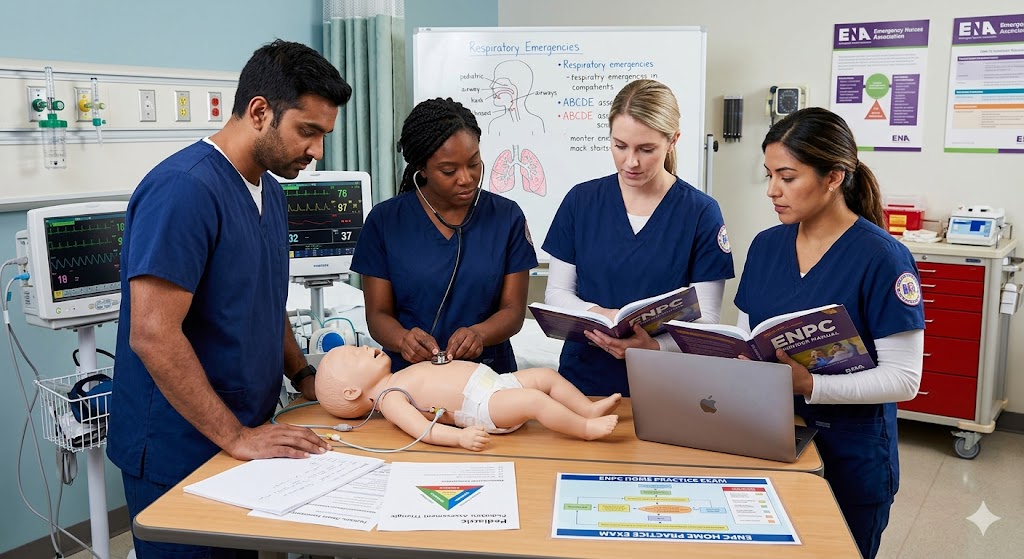
Additional Information
What the Course Entails and Exam Details
The core curriculum of this course focuses on rapid identification and life-saving interventions for acutely ill or injured children.
A foundational element of the syllabus is the Pediatric Assessment Triangle (PAT), a rapid assessment tool used to evaluate appearance, work of breathing, and circulation.
Students will dive deep into specific pediatric emergencies, including severe respiratory failure, various types of shock, and cardiac arrest.
The course also covers specialized topics such as pediatric trauma, toxicological exposures, environmental emergencies, and recognizing signs of child abuse or neglect.
Beyond theoretical knowledge, the training details critical hands-on psychomotor skills, teaching nurses how to systematically apply the Pediatric Nursing Process (PNP) in high-stress simulation environments.
What to Expect in the Final Exam
When transitioning from the practice material to the final official exam, students will face a two-part evaluation process.
The first component is a comprehensive cognitive exam, which consists of 50 multiple-choice questions administered online through the ENA portal.
Candidates are typically given a time limit of 2 hours to complete this portion, and it is traditionally an open-book, open-resource test.
To earn your official credential, you must achieve a minimum passing score of 80% on this cognitive assessment.
The second component is a practical psychomotor exam, where you must demonstrate your mastery of the Pediatric Nursing Process flowchart in a real-time clinical simulation.
Failing to meet the passing standard on either portion will require a remediation process, making home practice tests incredibly vital for your success.
How to Study and Exam Centers
Successfully clearing this exam requires a strategic blend of memorization, critical thinking, and hands-on simulation rehearsal.
Begin your preparation by thoroughly reading the official ENA ENPC Provider Manual, paying close attention to the highlighted clinical guidelines.
Utilize online practice portals and home mock exams repeatedly to familiarize yourself with the phrasing of multiple-choice questions and to build your testing endurance.
Dedicate significant time to practicing the Pediatric Nursing Process (PNP) flowchart out loud until the systematic assessment steps become absolute second nature.
When you are ready to take the formal exam, you will access it digitally through the official Emergency Nurses Association learning management system.
The practical skills portion is completed either virtually via an authorized instructor platform or in person at designated hospitals, nursing schools, and ENA-approved testing centers.
Job Opportunities from the Course
Earning your ENPC certification significantly elevates your professional standing and unlocks premium career paths across the healthcare industry.
Licensed professionals holding this credential are highly sought after for specialized positions in high-volume medical environments.
You can pursue a fulfilling career as a dedicated Pediatric Emergency Room Nurse, managing acute cases in specialized children's hospitals.
This certification is also a key requirement for Trauma Center Nurses who frequently stabilize critically injured pediatric patients.
Flight Nurses and Pediatric Transport Nurses rely heavily on these skills to keep young patients stable during critical care transit.
Additionally, you can find excellent opportunities as a Pediatric Intensive Care Unit (PICU) Nurse or a Lead Nurse in high-volume Pediatric Urgent Care centers.
Finally, experienced providers often transition into roles as Clinical Nurse Educators or Emergency Department Managers, using their expertise to train the next generation of healthcare heroes.
Frequently Asked Questions
Reviews
5.0
Based on 0 reviews
Leave a Review
No reviews yet. Be the first to review!