
Emergency Vehicle Operations Course (EVOC) Practice Test
$69.00
- Buy to unlock unlimited access to all Quiz questions and Answers in this Quiz.
- After purchase you can print a PDF of the whole quiz at any point. The PDF will contain the questions and the correct answers.
About this Exam
The Emergency Vehicle Operations Course (EVOC) is a critical certification designed for individuals tasked with operating authorized emergency vehicles, such as ambulances, fire trucks, and police cruisers. It is a foundational requirement for most first responders, including Emergency Medical Technicians (EMTs), paramedics, firefighters, and law enforcement officers.
The course is designed to transition standard driving skills into the specialized, high-stakes discipline of emergency response. It emphasizes safe maneuvering under pressure, legal liabilities, and advanced defensive driving techniques, ensuring that operators can reach their destinations quickly while minimizing risk to themselves and the public.
Ready to test your knowledge?
Buy Now to Access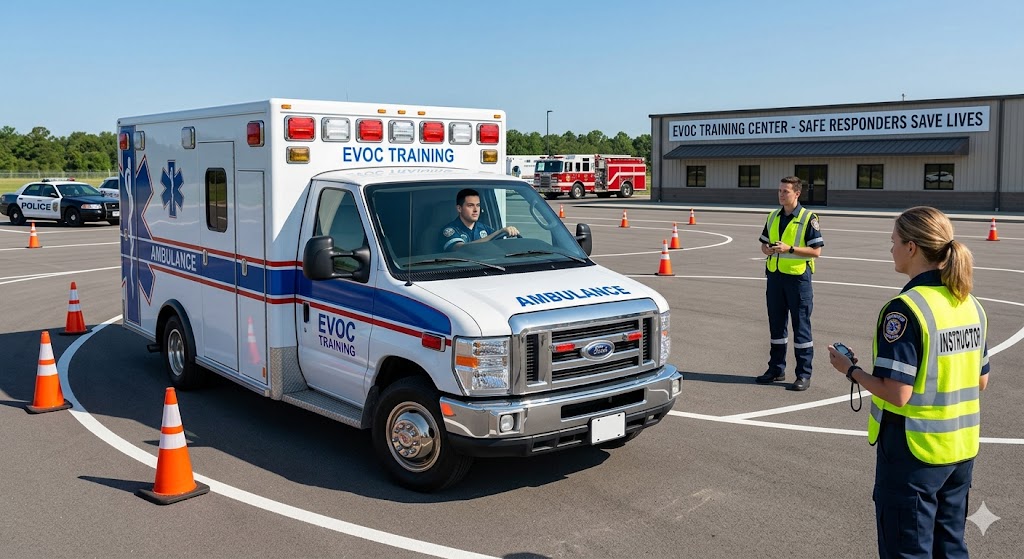
Additional Information
What the Course Entails and Exam Details
An EVOC program combines classroom instruction with extensive practical hands-on training on a closed driving course. While exact syllabi vary by jurisdiction, the following core topics are universally covered:
Legal Aspects of Emergency Driving: Understanding state and local vehicle codes, "due regard" clauses, and liability issues for operators.
Vehicle Dynamics and Physics: The science behind turning, braking, weight transfer, and handling large, top-heavy vehicles.
Defensive Driving and Collision Avoidance: Techniques for predicting potential hazards, maintaining a space cushion, and managing intersections safely.
Emergency Response Procedures: The proper use of warning lights and sirens, radio communication protocols, and strategic route planning.
Vehicle Inspection and Maintenance: Daily checks required to ensure the vehicle is operationally sound.
Specialized Driving Skills: Techniques like serpentine maneuvering, backing in tight spaces, and controlled braking.
What to Expect in the Final Exam
The EVOC final examination is rigorous and usually consists of two separate components:
Written Knowledge Test: A timed, multiple-choice exam testing theoretical knowledge on the laws of the road, vehicle physics, and safety protocols covered in class. You must achieve a high passing score, typically 80% or higher, to proceed.
Practical Driving Assessment: This is the heart of EVOC. You will be required to successfully navigate a closed-course simulation that replicates real-world scenarios. This will include obstacle courses, backing exercises, controlled intersections, and skid control management. You are evaluated on your ability to perform these tasks safely and efficiently. A mistake on the driving portion can result in an automatic failure of the entire exam.
How to Study and Exam Centers
Preparation is key to passing the EVOC exam. Use these actionable strategies to succeed:
Practice with Multiple-Choice Questions: The best way to prepare for the written part is by taking repeated EVOC practice tests. Focus on understanding the why behind each correct answer, particularly regarding traffic laws and vehicle physics formulas.
Review Class Materials Thoroughly: Dedicate substantial time to studying the course manual, notes on legal liabilities, and the diagram of vehicle dynamics.
Mental Rehearsal (Visualization): For the practical exam, visualize yourself completing the driving course maneuvers perfectly, noting the proper speed, steering inputs, and braking points.
EVOC exams are rarely taken through generic online portals or standard testing companies like Pearson VUE. Instead, they are administered by the authorized educational institutions where you take the course. This includes police, fire, or EMS training academies, standardized state training institutions, specialized private public safety training schools, or sometimes community colleges.
Job Opportunities from the Course
Earning your EVOC certification unlocks essential career paths in public safety and emergency response, including the following specific job titles:
Emergency Medical Technician (EMT)
Paramedic
Police Officer / Law Enforcement Officer
Firefighter
Fire Apparatus Driver/Operator
Ambulance Driver
Non-Emergency Medical Transport (NEMT) Driver
Paratransit Driver
Organ Transport Driver
Frequently Asked Questions
Reviews
5.0
Based on 0 reviews
Leave a Review
No reviews yet. Be the first to review!