
EMT Module 5 Practice Exam
$69.00
- Buy to unlock unlimited access to all Quiz questions and Answers in this Quiz.
- After purchase you can print a PDF of the whole quiz at any point. The PDF will contain the questions and the correct answers.
About this Exam
The Emergency Medical Technician (EMT) Module 5 curriculum is a critical component of any comprehensive EMS training program, focusing extensively on Trauma Emergencies. This module bridges the gap between basic life support and advanced assessment and management of patients who have suffered physical injury. This study guide and practice exam are designed specifically for current EMT students preparing for their course finals, as well as those gearing up for the National Registry of Emergency Medical Technicians (NREMT) cognitive exam. Mastering the content within this module is essential for making rapid, life-saving decisions in high-stress trauma scenarios.
Ready to test your knowledge?
Buy Now to Access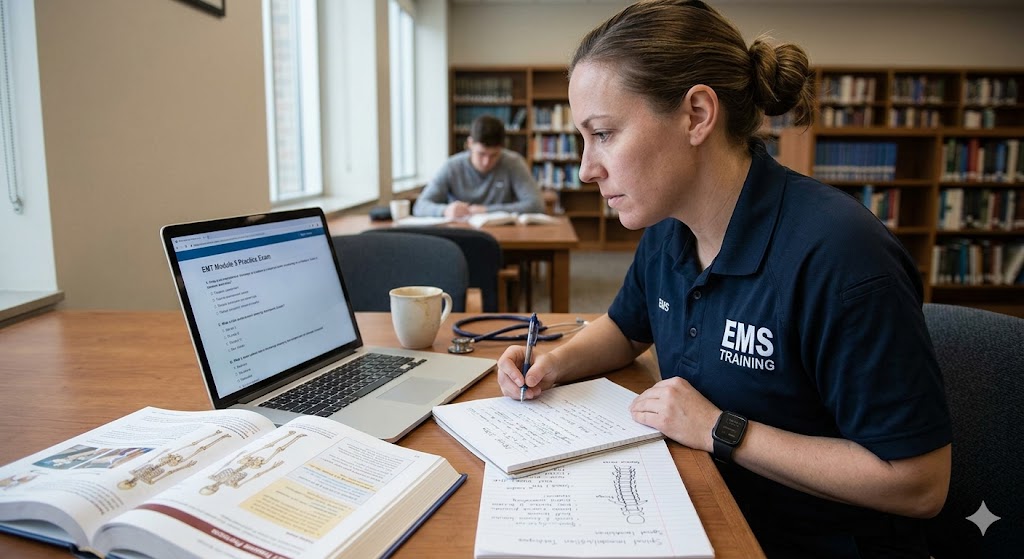
Additional Information
What the Course Entails and Exam Details
The EMT Module 5 course dives deep into the assessment and management of various traumatic injuries. The syllabus typically covers:
Trauma Overview: Understanding the mechanism of injury (MOI) and kinematics.
Bleeding and Shock: Recognizing and managing external and internal hemorrhage, and the different stages of shock.
Soft Tissue Injuries: Management of wound care, burns, and specific injuries.
Head and Spine Injuries: Assessment and critical management of traumatic brain injuries (TBIs) and spinal cord injuries, including immobilization techniques.
Chest and Abdominal Trauma: Recognizing life-threatening injuries like pneumothorax or evisceration.
Musculoskeletal Care: Proper splinting and management of fractures and dislocations.
Special Populations in Trauma: Considerations for pediatric, geriatric, and pregnant trauma patients.
What to Expect in the Final Exam
While this practice exam helps you prepare, the actual final exam for this module within your course, or the NREMT exam it prepares you for, typically features:
Multiple-Choice Questions: The cognitive exam primarily uses multiple-choice questions focusing on recall, application, and scenario-based decision-making.
Scenario-Based Assessment: Many questions will present a trauma scenario, asking you to identify the priority intervention or the next step in assessment.
Time Limits: Official exams are timed, requiring efficiency and confidence in your knowledge.
Passing Score: Requirements vary by program and certifying body, but a solid grasp of this material is mandatory. This practice exam allows you to self-assess against these standards.
How to Study and Exam Centers
Effective study strategies are crucial for mastering EMT Module 5. We recommend a multi-faceted approach:
Scenario-Based Practice: Use flashcards and review textbook scenarios focusing heavily on the prioritization of trauma care (e.g., managing the airway before splinting a limb).
Review Skills Sheets: Familiarize yourself with the psychomotor skills sheets for spinal immobilization (supine and seated), bleeding control/shock management, and joint/long bone splinting.
Form Study Groups: Practice assessment sequences (Primary and Secondary Assessment) out loud with peers.
Practice Exams: Utilize online resources like this practice exam to identify weak areas and improve time management.
Exam Centers: This practice exam is typically administered through your EMT training program's learning management system or an authorized online testing portal. The actual NREMT cognitive exam, once you complete your course, must be scheduled and taken at authorized Pearson VUE testing centers.
Job Opportunities from the Course
Successfully completing your EMT course, including mastery of Module 5, unlocks various fulfilling career paths in emergency medicine:
Emergency Medical Technician (EMT): Working on ambulances providing pre-hospital care.
Firefighter/EMT: Many fire departments require EMT certification as a condition of employment.
Emergency Room Technician: Providing essential patient care support within hospital emergency departments.
Wilderness EMT: Specialized roles in search and rescue or outdoor guiding.
Event Medic: Providing medical standby coverage for concerts, sporting events, and festivals.
EMT Module 5 Practice Exam
Description
The Emergency Medical Technician (EMT) Module 5 curriculum is a critical component of any comprehensive EMS training program, focusing extensively on Trauma Emergencies. This module bridges the gap between basic life support and advanced assessment and management of patients who have suffered physical injury. This study guide and practice exam are designed specifically for current EMT students preparing for their course finals, as well as those gearing up for the National Registry of Emergency Medical Technicians (NREMT) cognitive exam. Mastering the content within this module is essential for making rapid, life-saving decisions in high-stress trauma scenarios.
What the Course Entails and Exam Details
The EMT Module 5 course dives deep into the assessment and management of various traumatic injuries. The syllabus typically covers:
Trauma Overview: Understanding the mechanism of injury (MOI) and kinematics.
Bleeding and Shock: Recognizing and managing external and internal hemorrhage, and the different stages of shock.
Soft Tissue Injuries: Management of wound care, burns, and specific injuries.
Head and Spine Injuries: Assessment and critical management of traumatic brain injuries (TBIs) and spinal cord injuries, including immobilization techniques.
Chest and Abdominal Trauma: Recognizing life-threatening injuries like pneumothorax or evisceration.
Musculoskeletal Care: Proper splinting and management of fractures and dislocations.
Special Populations in Trauma: Considerations for pediatric, geriatric, and pregnant trauma patients.
What to Expect in the Final Exam
While this practice exam helps you prepare, the actual final exam for this module within your course, or the NREMT exam it prepares you for, typically features:
Multiple-Choice Questions: The cognitive exam primarily uses multiple-choice questions focusing on recall, application, and scenario-based decision-making.
Scenario-Based Assessment: Many questions will present a trauma scenario, asking you to identify the priority intervention or the next step in assessment.
Time Limits: Official exams are timed, requiring efficiency and confidence in your knowledge.
Passing Score: Requirements vary by program and certifying body, but a solid grasp of this material is mandatory. This practice exam allows you to self-assess against these standards.
How to Study and Exam Centers
Effective study strategies are crucial for mastering EMT Module 5. We recommend a multi-faceted approach:
Scenario-Based Practice: Use flashcards and review textbook scenarios focusing heavily on the prioritization of trauma care (e.g., managing the airway before splinting a limb).
Review Skills Sheets: Familiarize yourself with the psychomotor skills sheets for spinal immobilization (supine and seated), bleeding control/shock management, and joint/long bone splinting.
Form Study Groups: Practice assessment sequences (Primary and Secondary Assessment) out loud with peers.
Practice Exams: Utilize online resources like this practice exam to identify weak areas and improve time management.
Exam Centers: This practice exam is typically administered through your EMT training program's learning management system or an authorized online testing portal. The actual NREMT cognitive exam, once you complete your course, must be scheduled and taken at authorized Pearson VUE testing centers.
Job Opportunities from the Course
Successfully completing your EMT course, including mastery of Module 5, unlocks various fulfilling career paths in emergency medicine:
Emergency Medical Technician (EMT): Working on ambulances providing pre-hospital care.
Firefighter/EMT: Many fire departments require EMT certification as a condition of employment.
Emergency Room Technician: Providing essential patient care support within hospital emergency departments.
Wilderness EMT: Specialized roles in search and rescue or outdoor guiding.
Event Medic: Providing medical standby coverage for concerts, sporting events, and festivals.
Frequently Asked Questions
Reviews
5.0
Based on 0 reviews
Leave a Review
No reviews yet. Be the first to review!