
EMT Obstetrics and Neonatal Care Practice Exam
$69.00
- Buy to unlock unlimited access to all Quiz questions and Answers in this Quiz.
- After purchase you can print a PDF of the whole quiz at any point. The PDF will contain the questions and the correct answers.
About this Exam
The EMT Obstetrics and Neonatal Care Practice Exam is a crucial specialized assessment designed for current Emergency Medical Technicians (EMTs) who wish to prove their advanced knowledge in managing high-risk maternal and newborn care scenarios in the pre-hospital environment. This practice test is specifically engineered to prepare you for the challenges of responding to unpredictable childbirth and neonatal emergencies, ensuring you possess the quick critical-thinking skills and technical knowledge required for these high-stakes calls. It is designed for EMTs who want to advance their skillset, bridge to Paramedic training, or achieve specialized certification in pediatric and maternal transport services. By mastering this practice exam, you will be significantly more prepared for the types of tricky, scenario-based questions that appear on actual NREMT recertification assessments or state-level specialized provider exams.
Ready to test your knowledge?
Buy Now to Access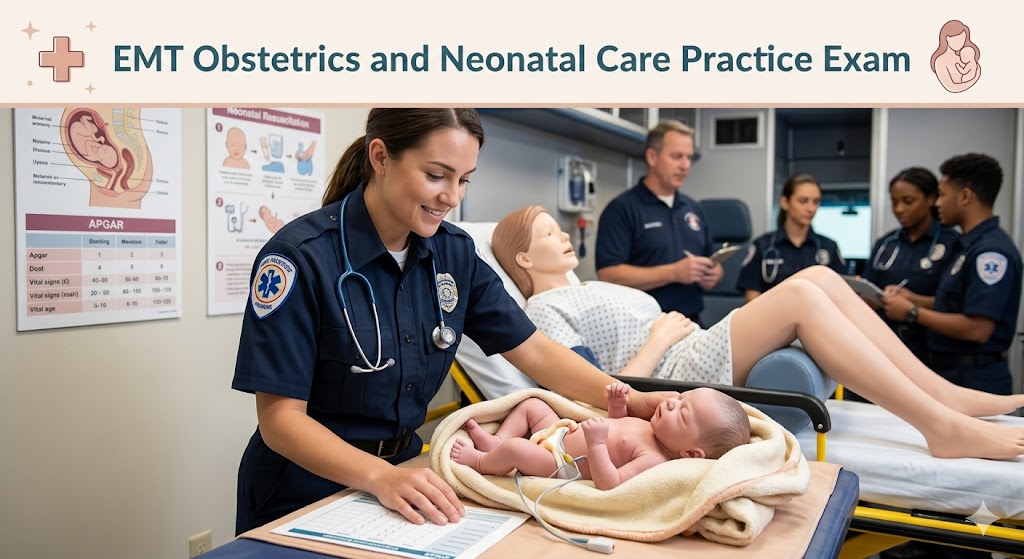
Additional Information
What the Course Entails and Exam Details
This focused area of study focuses intensely on the physiological and anatomical changes associated with pregnancy, different stages of labor, and the critical first minutes of neonatal life. While not a standalone course in itself, preparing for this exam requires a deep understanding of standard EMT curricula plus specialized knowledge in managing complex scenarios.
The exam content specifically tests proficiency in recognizing and managing pregnancy complications such as pre-eclampsia, placenta previa, abruptio placentae, and ectopic pregnancy. It places a heavy emphasis on understanding normal delivery procedures, including the critical skills of clamping and cutting the umbilical cord and delivering the placenta. Significant attention is given to managing complications, including nuchal cord, shoulder dystocia, and breech births. Finally, a significant portion of the exam is dedicated entirely to neonatal care, including APGAR scoring, proper neonatal resuscitation techniques, managing airway obstruction in newborns, and understanding the specific physiological differences of neonates that make them exceptionally vulnerable in emergency situations.
What to Expect in the Final Exam
When sitting for a formal version of this specialized EMT knowledge exam, often as part of advanced training or recertification, candidates can expect a computer-based test that is primarily composed of challenging, multiple-choice questions. These are not simple recall questions; they are largely scenario-based, presenting complex medical cases where the correct answer depends on selecting the most appropriate and prioritized treatment pathway under pressure.
While specific formats vary by credentialing body, these types of specialized assessments typically require a passing score of at least 75-80 percent, reflecting the critical nature of the skills involved. There is almost always a strict time limit, typically ranging from 90 minutes to two hours, which forces candidates to manage their time effectively across 60 to 100 questions. In certain certification programs, passing the written exam is only the first step and must be followed by a practical skill station assessment, where an evaluator directly observes your ability to perform techniques like managing an emergency field delivery or conducting neonatal resuscitation.
How to Study and Exam Centers
Preparation for this specialized exam must be thorough and must focus on both theoretical knowledge and the sequence of practical interventions.
Effective study strategies involve utilizing current EMT textbooks for in-depth foundational review and practicing extensively with focused practice exam modules to become comfortable with the scenario-based question format.
Dedicated online study portals and practice test providers offer specialized question banks specifically for EMT OB/GYN and Neonatal emergencies, providing invaluable feedback with rationale for correct answers. Do not just memorize facts; you must understand the 'why' behind each standard operating procedure for maternal and neonatal care. Group study with fellow EMTs can be extremely beneficial, especially for reviewing resuscitation algorithms and discussing the critical-thinking process required for prioritizing care in complex maternal/neonatal cases.
Where you take the final, formal exam depends on the context of the credential. State-level specialized certifications may require you to take the exam through specific physical testing centers or authorized training schools. For certifications recognized by larger organizations, examinations are often administered through secure, established testing services like Pearson VUE, which have professional testing centers located throughout the United States. If the exam is part of a local EMS system or fire department’s protocols, it might be conducted via an internal, secure online testing portal.
Job Opportunities from the Course
A strong score on the EMT Obstetrics and Neonatal Care Practice Exam—and subsequently, the actual certification or recertification assessment—validates expertise that is highly valued by EMS agencies across the spectrum, directly enhancing an EMT’s professional standing and enabling them to pursue specialized roles.
Career paths unlocked and strengthened by this demonstrated proficiency include advancing to the position of a Critical Care Transport EMT, particularly on dedicated Maternal-Fetal or Neonatal Transport Teams. This specialty is crucial in hospital systems that provide specialized care, as these teams are responsible for the high-risk transport of newborns from critical access hospitals to high-level NICUs (Neonatal Intensive Care Units). The enhanced skillset also makes EMTs highly competitive applicants for competitive Flight EMT roles on helicopter EMS crews, where OB/GYN and high-risk pediatric cases are frequent. Additionally, the mastery of these critical skills provides an excellent foundation for EMTs aiming to enroll in Paramedic training programs, where these concepts are expanded upon significantly. For those seeking leadership roles, this expertise can lead to opportunities as a specialized EMS Educator, training other first responders in emergency childbirth procedures and neonatal care. It can also open doors in community paramedicine and specialized event medicine roles that frequently serve populations with complex health needs.
Frequently Asked Questions
Reviews
5.0
Based on 0 reviews
Leave a Review
No reviews yet. Be the first to review!